XT30 Female to XT60 Male Adapter: Why Matching Plugs Can Hide a Dangerous Setup

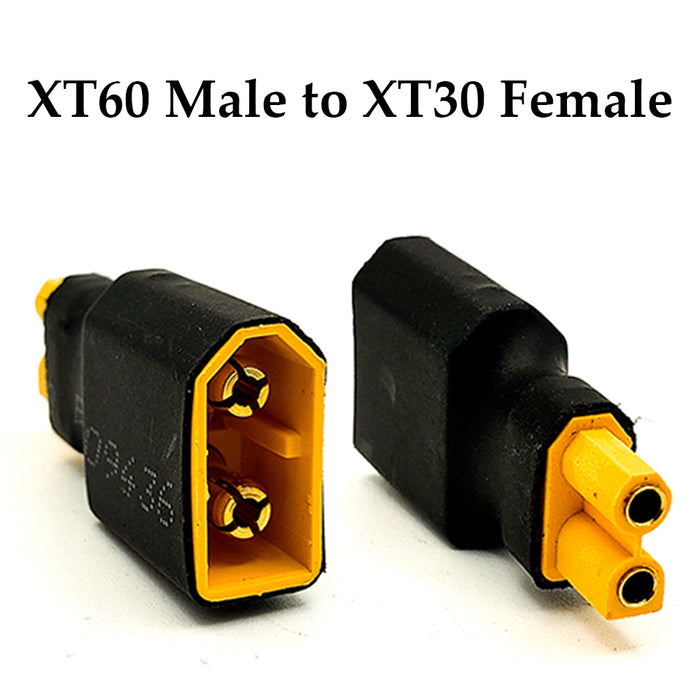
A pilot has a battery or device lead terminated in XT30 and an XT60 charging or power connector nearby. A compact XT30 female → XT60 male adapter physically bridges the two, but what exactly has been made compatible? Only the physical connection and electrical polarity—not battery cell count, safe current, charger configuration or electronic protection. The smaller XT30 contact remains part of the power path even when the other end looks like a larger XT60 plug.
Understand the connector direction before ordering
FalconFly’s XT30 Female to XT60 Male Adapter (Pack of 2) uses a female XT30 socket on one side and male XT60 contacts on the other. A buyer must check both mating connectors of the intended battery, charger or aircraft. “XT30 to XT60” does not identify which connector is male or female, and that direction determines whether an adapter can be safely fitted to a specific device.
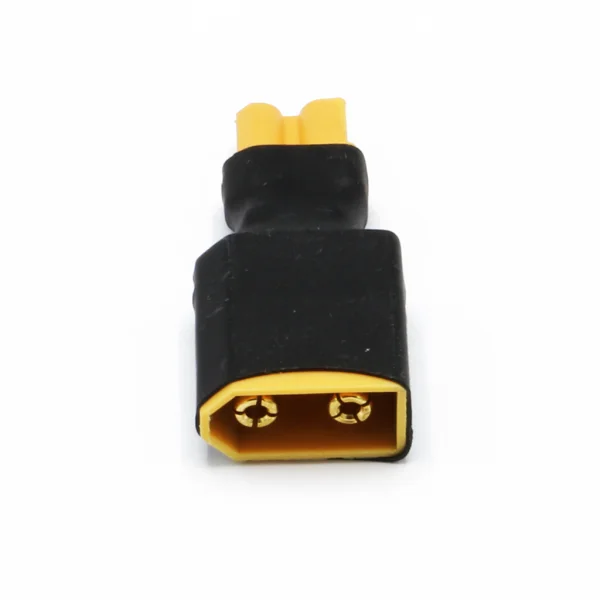
Direct-plug adapters can reduce cable clutter, but they also put mechanical stress on the mating socket if a heavy battery lead pulls at an angle. A short flexible extension with appropriate wire gauge and strain relief may be preferable when a rigid plug projects into a tight frame or charger, provided it is rated for the expected load.
The smallest connector limits the entire assembly
Amass makes XT30-family and XT60-family connectors with different published ratings and test conditions. The important engineering principle is that a chain’s safe continuous current is bounded by its least capable contact, conductor, solder joint and temperature environment. An XT30 end does not acquire the XT60’s current capability because an adapter is inserted between them. Do not quote a single continuous-ampere rating for an unbranded adapter without knowing its exact connector variant, construction and wire specification.
| Assumption | What the adapter actually does | Safe check |
|---|---|---|
| XT60 means higher permissible current | Only changes mating connector size | Limit by the smaller XT30 contact and verified adapter rating |
| A 6S battery fits the plug, so the electronics support 6S | Connects battery voltage directly | Check the device’s input-voltage and cell-count specification first |
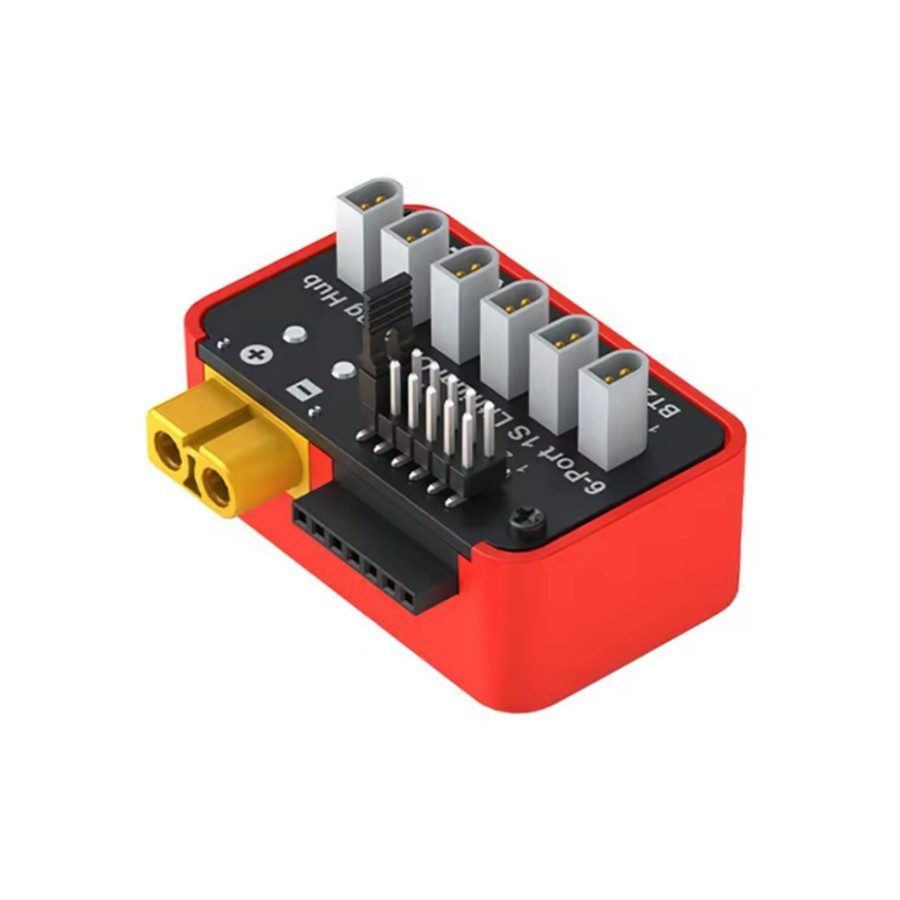
| The adapter makes an XT30 battery balance-charge through XT60 | Carries only main positive and negative | Use the correct charger settings and separate balance lead where required |
| A low-current test proves safe full-throttle performance | Tests only that limited load | Assess operating current, heat and mechanical security |
| Female/male direction is interchangeable | Gender cannot be changed by rotating the plug | Match both actual mating ends and polarity marks |
Battery voltage and charger configuration are separate decisions
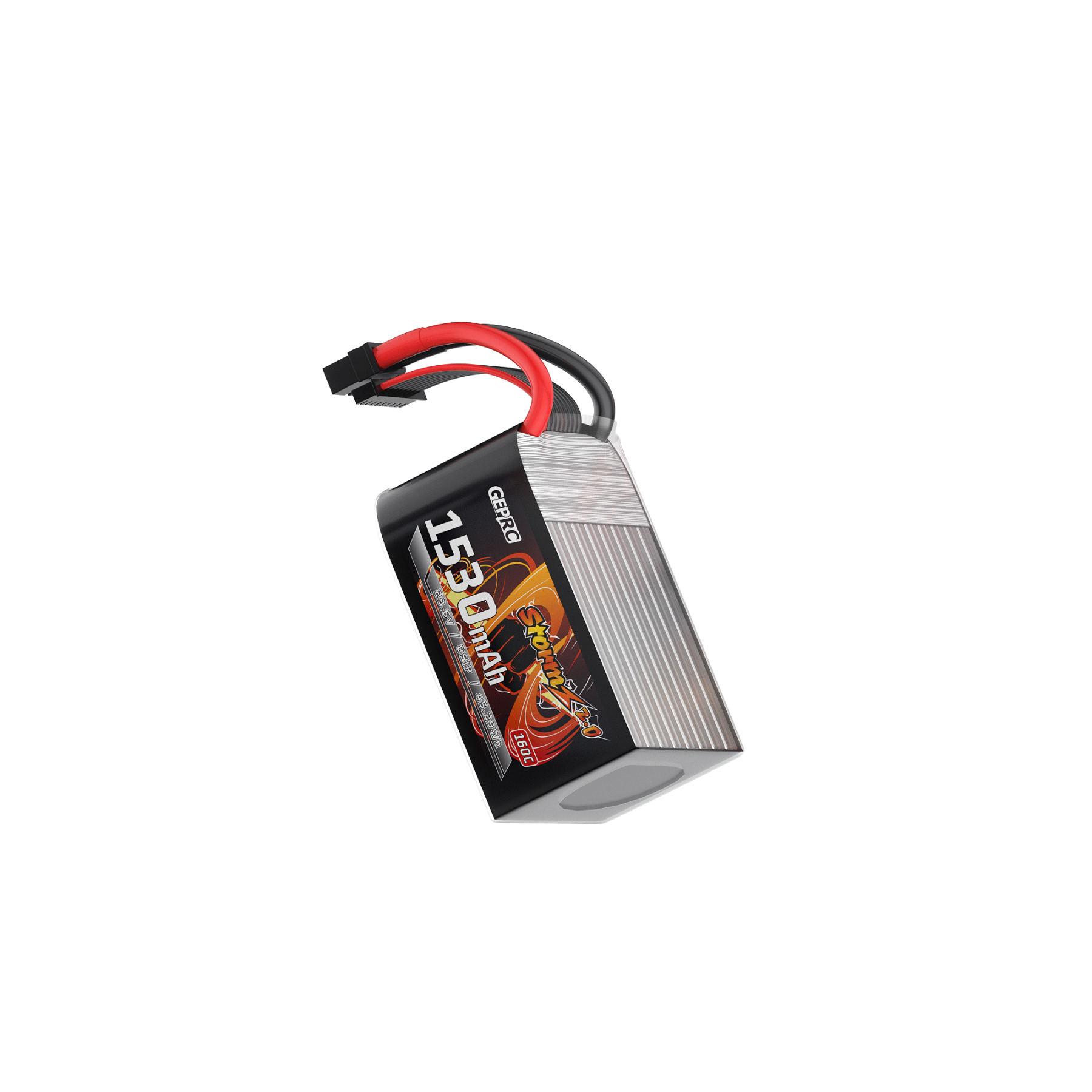
Consider a 4S LiPo. Its nominal voltage is about 14.8V, and its ordinary full-charge voltage is 16.8V. A 6S LiPo can reach 25.2V, while a 6S LiHV pack may reach 26.1V if the chemistry and charger support it. The adapter does not know which chemistry is connected, does not balance cells and does not select the correct charge end-voltage. A charger set to the wrong cell count can damage the battery regardless of the plug on its output lead.
Connect the main power lead and balance lead using the charger manufacturer’s documented procedure. Do not use the XT30/XT60 adapter to avoid a required balance connection or to bypass charger safety checks. If the battery shows abnormal swelling, heat, cell imbalance or damaged insulation, do not connect it to the charger merely to “see if the adapter works.”
When an adapter may be reasonable
A compact connector adapter may be appropriate for a verified low-current charging or accessory setup where both ends fit securely, the source and device voltage are compatible and the exact adapter and connector ratings are suitable. A charging setup typically involves a known, limited current and a stationary bench, which can make its load easier to validate than a high-current propulsion system.
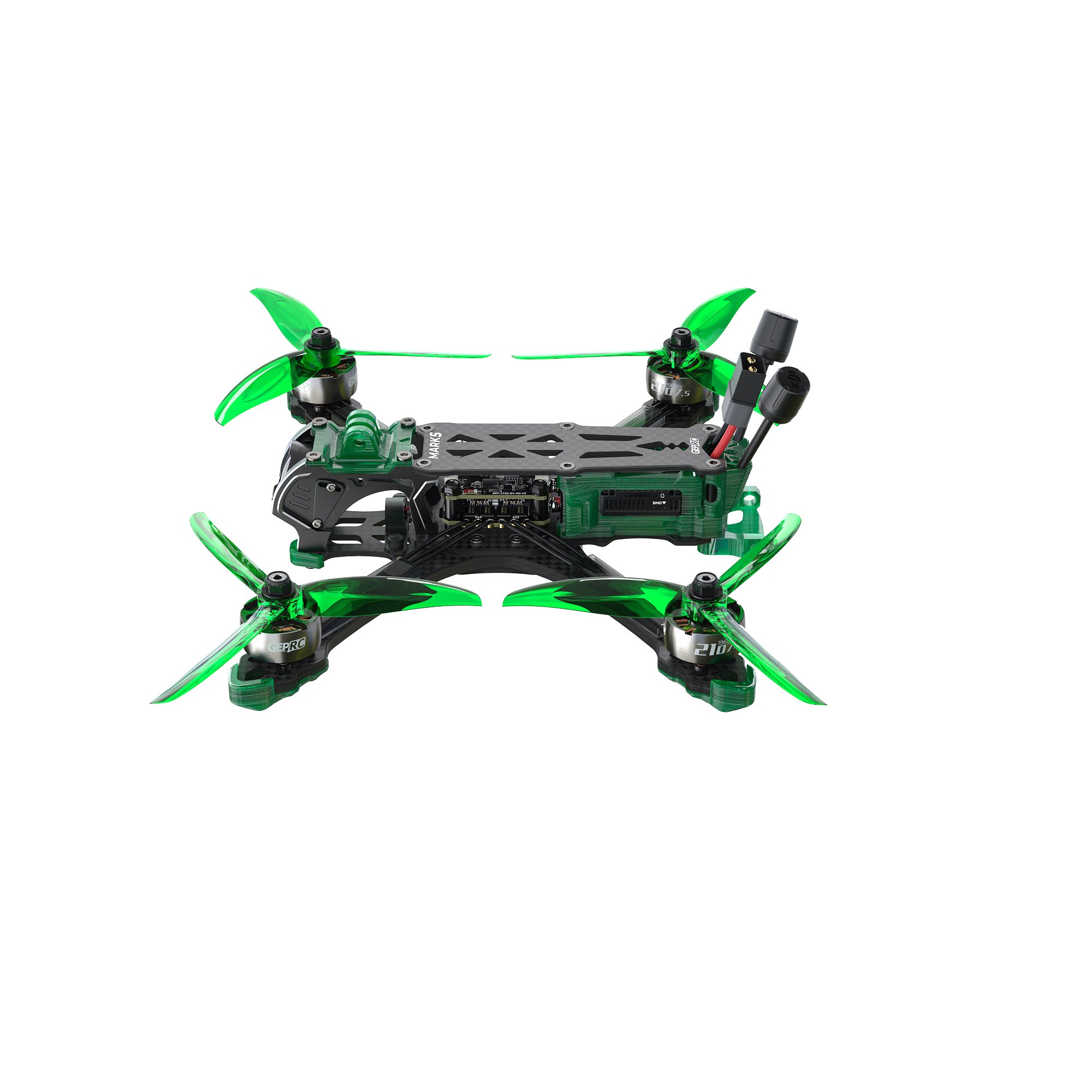
On the other hand, a large 6S freestyle or cinelifter aircraft that draws major current peaks should not use an underspecified XT30 connection merely because a conveniently shaped XT60 adapter exists. Likewise, a charger supplied with XT60 does not mean every XT30-equipped device is appropriate to charge at the charger’s maximum advertised current.
Six checks before applying power
- Identify both ends. Confirm female XT30 and male XT60 on the adapter and the gender of the two mating connectors. Check physical keying and polarity markings.
- Inspect the adapter. Reject cracked housing, deformed or loose contacts, overheated pins and exposed conductive surfaces. Never force a connector into the wrong housing.
- Check electrical compatibility. Confirm battery cell count, voltage at full charge, chemistry and the device or charger’s documented input/output limits.
- Assess current. Use the lower of all connector, wire, solder and adapter ratings with an appropriate thermal margin; do not assume the XT60 side overrides XT30 limitations.
- Reduce mechanical stress. Ensure the direct adapter will not be twisted, hit by a propeller, pulled by a heavy cable or flexed against fragile charger sockets.
- Run a controlled first-power test. With aircraft propellers removed and the correct charger or supply settings, monitor contact seating, temperature and warning indications. Disconnect immediately for unexpected heat or smell.
Five common faults
Hot XT30 contact: excessive current, poor contact, contamination or an underspecified adapter can increase resistance and heat. Intermittent restart: a loose mating connector can cause momentary power interruption and flight-controller brownouts. Reverse-polarity concern: inspect actual connector orientation and construction instead of guessing from red/black cable placement. Charger says connection break: inspect both main connector and separate balance wiring; the adapter has no battery management electronics. Connector that fits but voltage is wrong: matching mechanical form does not make a 4S-rated device safe on 6S.
Never repair a high-current connector with tape, bent contacts or makeshift solder bridging while the pack remains attached. Replace damaged parts with suitable genuine-rated connectors and appropriate professional wiring work.
Related reading and part selection
See FalconFly’s XT30 versus XT60 FPV connector guide and charger connection-break troubleshooting before using adapters with LiPo packs. Manufacturers such as Amass publish connector-specific ratings; the actual assembly should be assessed against its weakest part. The matching XT30 female to XT60 male adapter pack on FalconFly supplies physical plug conversion only, with no voltage converter or protection circuitry.