GEPRC 15×200mm FPV Battery Strap: Sizing and Fit Guide

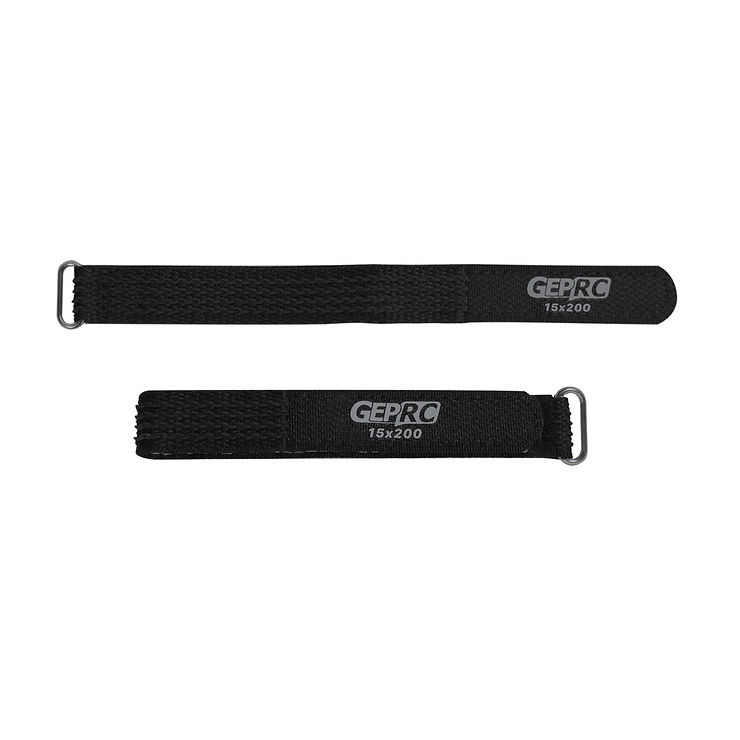
A battery that appears firmly strapped to a freestyle drone can still shift after a hard yaw move or pop free in a crash. The GEPRC 15×200 mm battery strap may be exactly the right replacement for a smaller FPV build, but only if the pack, frame slots, buckle position and anti-slip pad work together. This guide focuses on sizing and routing a 15×200 mm strap, rather than repeating general post-crash battery recovery advice.
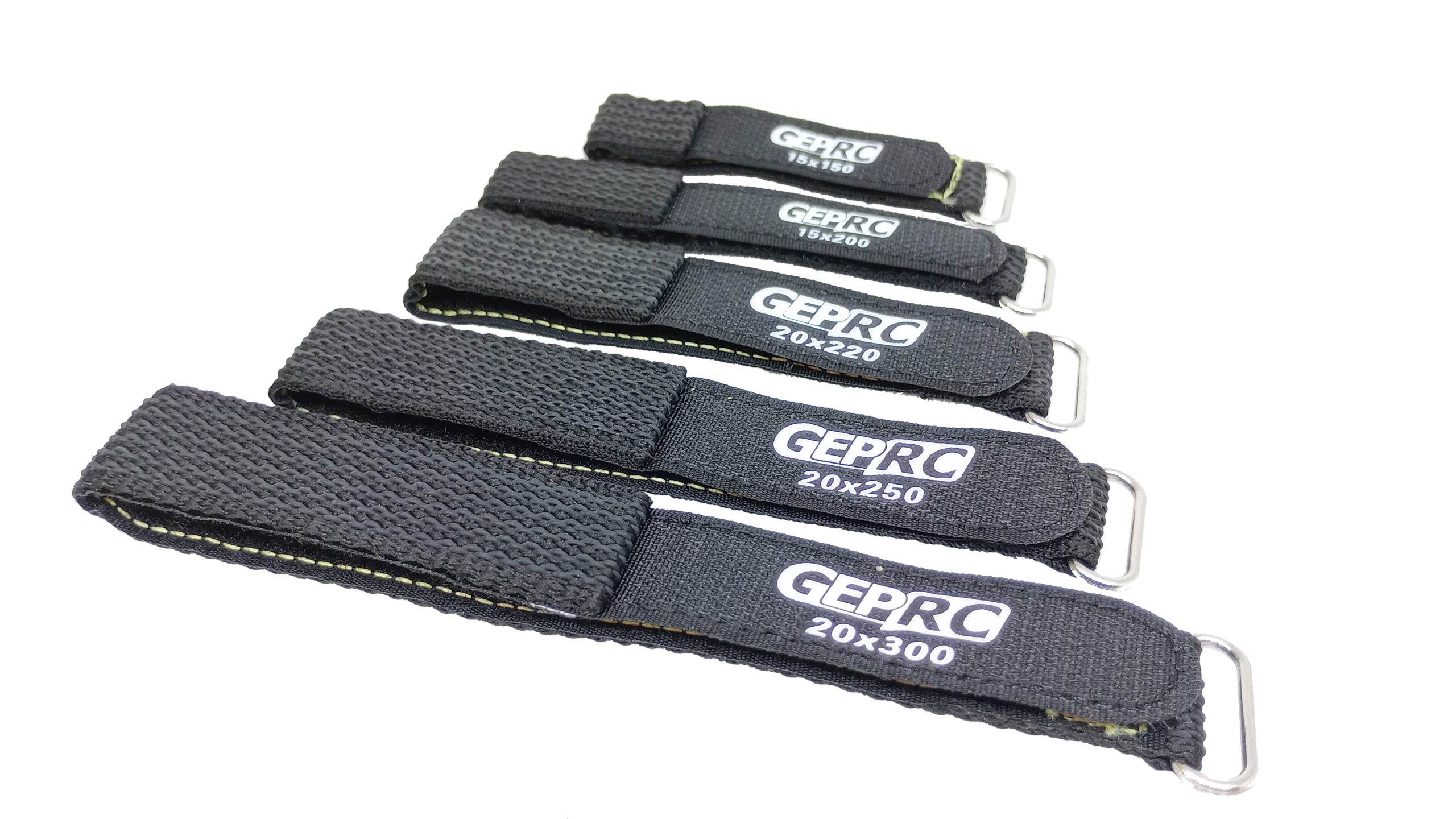
What “15×200 mm” actually measures
15 mm is the strap width; 200 mm is its overall length. It is not an approved battery-cell count or a guarantee that it fits every 4S or 6S pack. A short and thick 4S pack can require more routing length than a physically narrow 6S pack. GEPRC uses M15×200 mm straps in several compact frame kits, including its GEP-CL35 and GEP-ST35 families, whereas larger MARK5 airframes are commonly supplied with longer or wider straps. That difference is a useful clue about intended packaging, not an absolute compatibility table.
Measure the battery-plus-frame loop before ordering
With the aircraft disconnected from power, place the intended battery in its flight position on the anti-slip pad. Thread a nonconductive measuring ribbon along the exact route the strap will follow: through both frame openings, around the exposed sides and top of the battery, and back through the buckle location. Mark the length. Add enough free tail for the chosen buckle and secure hook-and-loop engagement; the amount depends on buckle shape and strap construction. A nominal 200 mm strap that technically makes the loop but leaves almost no hook-and-loop overlap is undersized.
| Measurement | Why it matters | Common failure |
|---|---|---|
| Battery width and height | Determines the pack perimeter | Assuming every 1300 mAh pack has the same shape |
| Distance through frame slots | Adds length hidden inside the frame | Estimating only the visible circumference |
| Required buckle and grip overlap | Prevents the free tail from peeling during manoeuvres | Choosing a strap that barely reaches the loop |
| Pad, edges and wire clearance | Protects the pack and balance lead | Pulling the strap over a sharp carbon edge |
Do not compensate for a short strap by cinching so hard that the lithium pack’s casing or individual cells deform. A strap is a retention device, not a crush clamp. Replace the strap or change mounting layout if enough engagement cannot be achieved safely.
Why the battery still ejects with a new strap
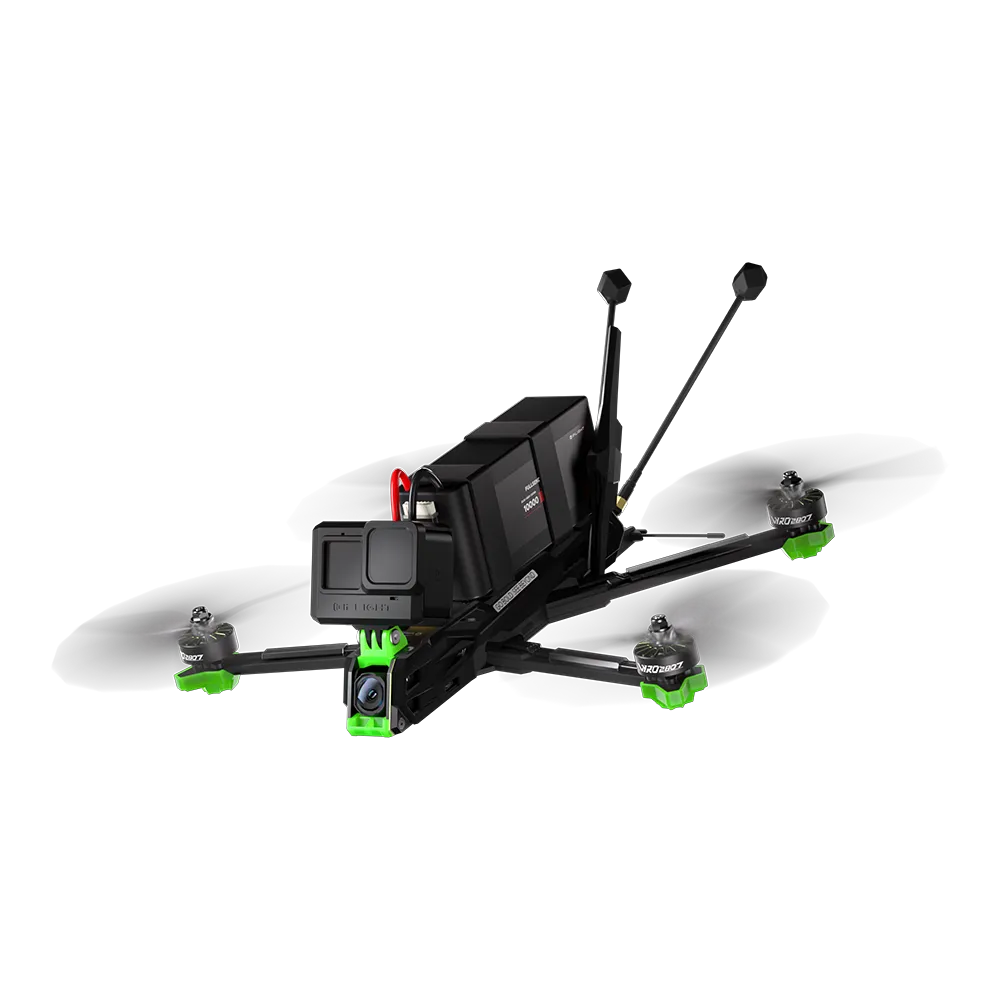
First, the pack may be slipping underneath the webbing. Smooth shrink wrap against smooth carbon can move during abrupt stops even when the buckle is tight. Clean and inspect the frame’s battery contact surface, then fit an appropriate silicone/rubber anti-slip pad without blocking cooling or crushing battery wiring. GEPRC includes both pads and straps in numerous frame kits for a reason.
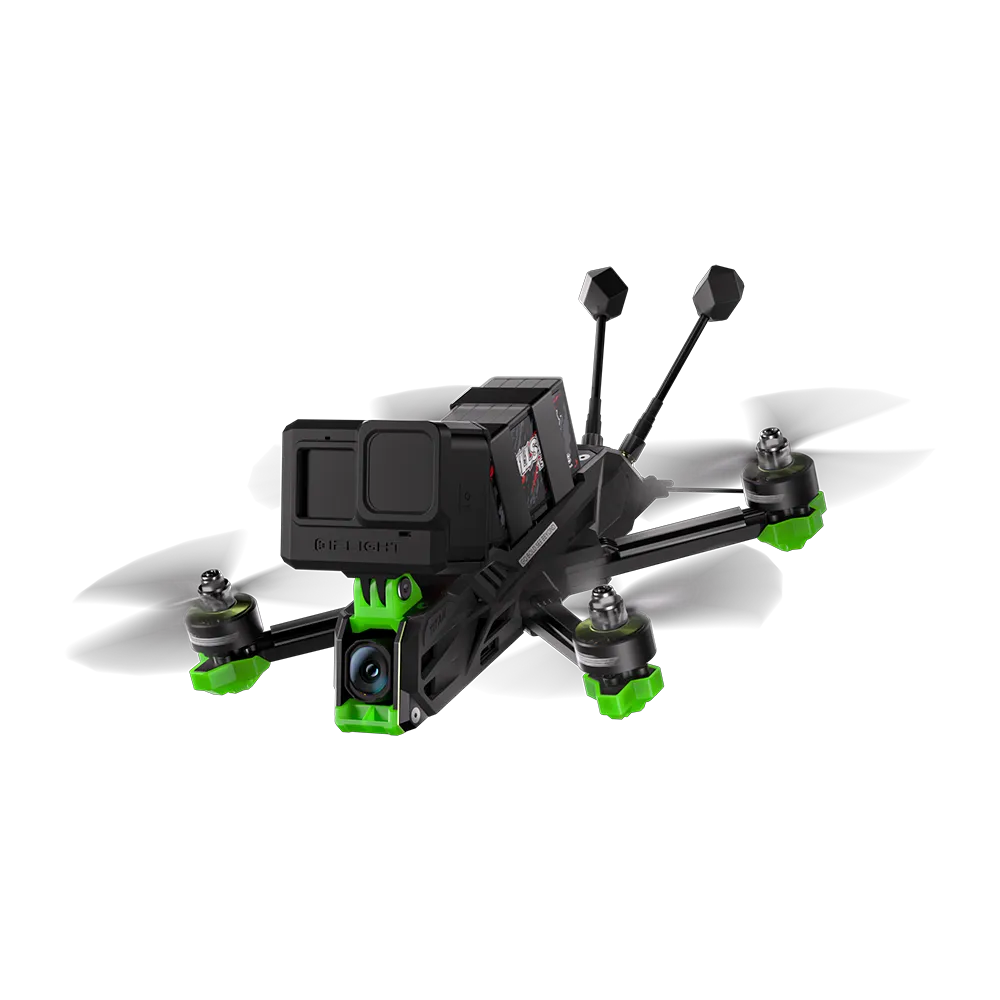
Second, the strap may be routed incorrectly. A loop that runs over a narrow part of the top plate can rock sideways, slip over a corner or interfere with a camera mount. Thread through the frame’s intended slots and keep the buckle away from propeller disks, motors and hot components. Protect the battery’s balance and main leads with proper strain relief; do not use an exposed connector as a mechanical stop.
Third, the pack may simply exceed the strap’s useful envelope. For heavier 5-inch 6S builds, a wider or longer second strap can be appropriate when the frame manufacturer supports that arrangement. One particular 15×200 strap should not be marketed as equally suitable for a small 3.5-inch cinewhoop and a heavy long-range 7-inch quad.
Five-minute retention test with the propellers removed
- Inspect carbon slots for sharp or chipped edges and replace any frayed strap.
- Place a healthy, undamaged battery on the grip pad with the lead routed away from motors.
- Thread the strap through the intended path, pull to normal firm contact without deforming the pack, and fully engage the hook-and-loop closure.
- With the aircraft powered off and propellers removed, tilt it in every direction over a padded surface. The pack must not creep, rotate or snag the balance lead.
- After landing, check whether the loop has loosened, the pack has shifted or the contact pad has peeled. A single crash can damage the strap even if the fabric still looks usable.
Do not perform a deliberately violent toss or a powered vibration test to prove retention. If the pack has already been ejected, inspect it for dents, punctures, swelling and cable damage. Set any damaged lithium battery aside for safe professional handling; it is not a candidate for another test flight.
When a 15×200 mm strap is the wrong purchase
A 15 mm width is attractive when the frame has narrow routing slots. But if there is insufficient buckle overlap, no flat pad contact, or a heavy battery that shifts even under a correctly installed loop, choose a manufacturer-supported longer or wider retention setup. BETAFPV lists its own 15×200 mm straps for certain 4S–5S applications, which demonstrates a typical use case but does not make the size universal. GEPRC frame-parts documentation likewise distinguishes compact M15×200 straps from larger airframe retention hardware.
For the broader question of why a pack exits the aircraft during crashes, see FalconFly’s FPV battery-ejection troubleshooting guide. This article covers the narrower buying and fitment decision for the 15×200 mm component, helping avoid two competing pages that repeat the same fix.
References and final fitment checklist
Consult GEPRC’s CL35 frame specification and included M15×200 straps/pads and BETAFPV’s published strap sizes. Before checkout, verify the actual loop length, frame slot width, battery geometry, protective pad and desired closure overlap. Those measurements answer the customer question more accurately than the nominal LiPo cell count.