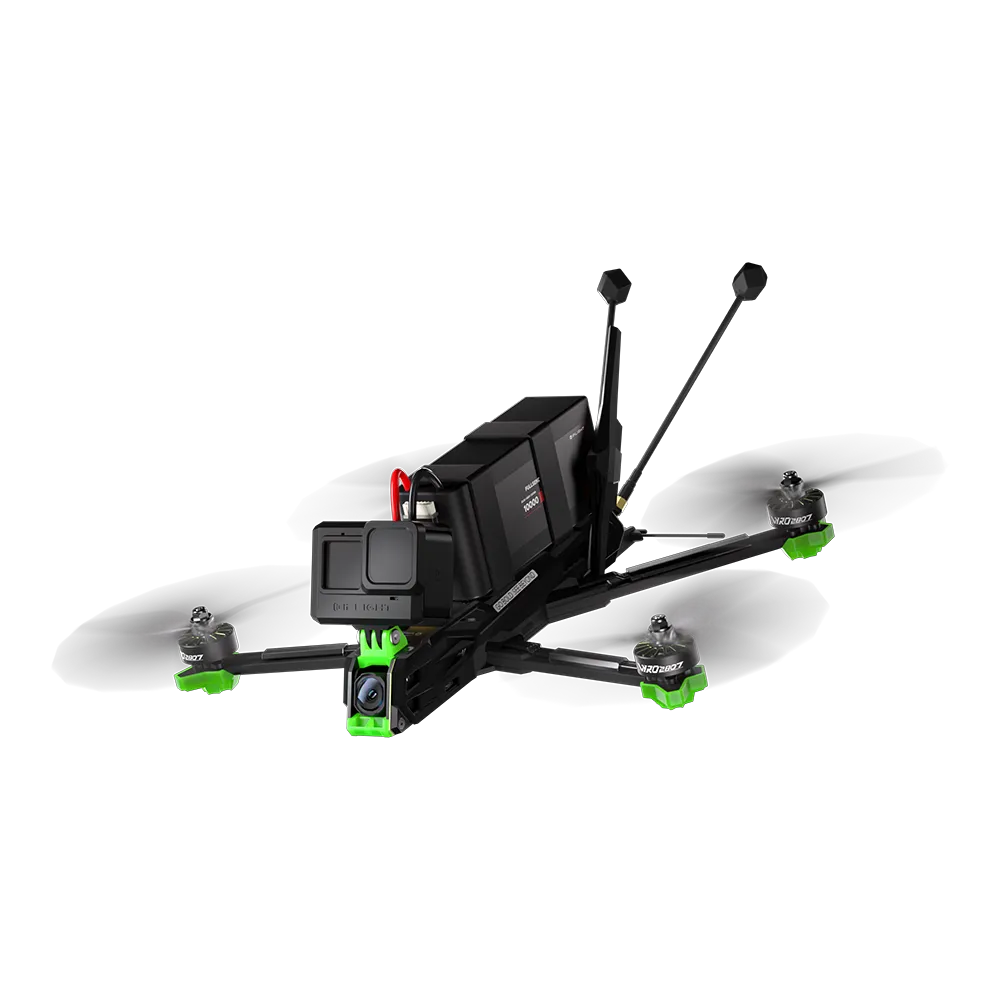
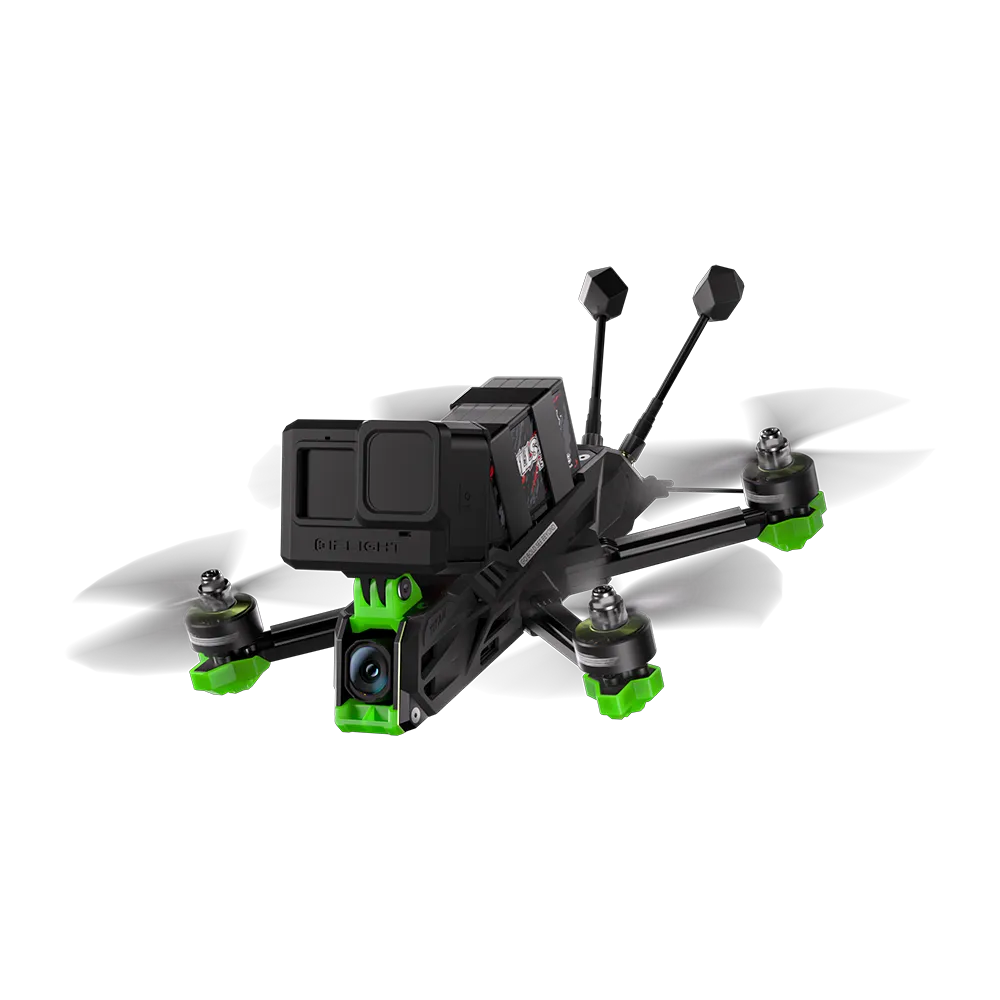
GEPRC Storm2.0 8S 1530mAh: Why an 8S Battery Should Not Enter a 6S Build

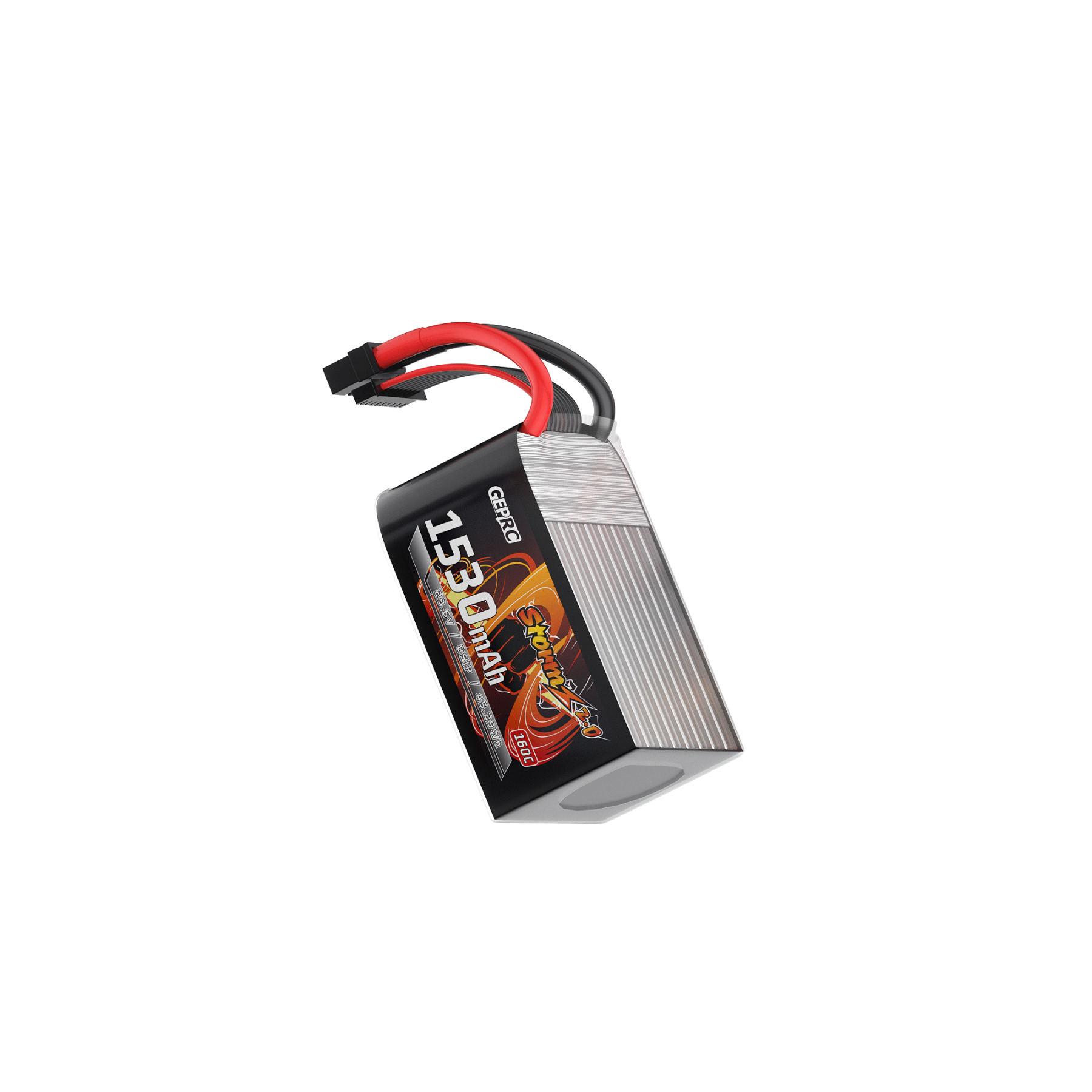
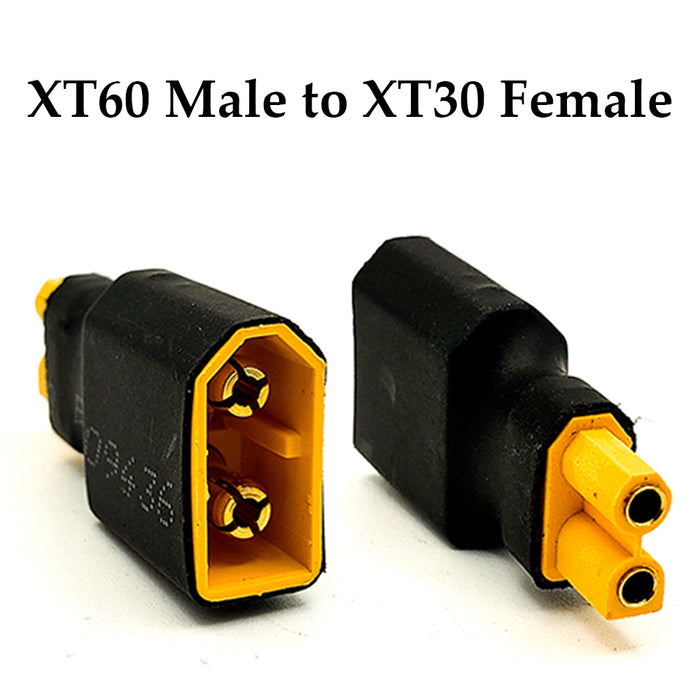
A freestyle pilot sees GEPRC’s Storm2.0 8S 1530mAh 160C pack and thinks the same XT60 connector used on a 6S quad makes it an easy upgrade. The pack fits the strap, and its 1530mAh capacity sounds familiar. But a LiPo pack’s connector and milliamp-hour rating do not identify its voltage: 8S is 29.6V nominal and 33.6V fully charged, versus 22.2V nominal and 25.2V fully charged for 6S. Connecting a normal 6S-only ESC, FC or video regulator directly to this 8S pack can cause immediate electrical damage even without spinning a motor.
What GEPRC Storm2.0 8S 1530 actually specifies
The GEPRC Storm2.0 8S 1530mAh 160C LiPo Battery is an 8S1P lithium-polymer battery with 29.6V nominal voltage and 45.29Wh nominal energy. GEPRC specifies a 280g pack measuring 72×37.5×58mm, an XT60 female discharge connector and XH2.54 nine-pin balance connector. Its listed 160C discharge figure is maximum, while recommended charging is 1C and maximum charging is 3C, subject to the manufacturer conditions.
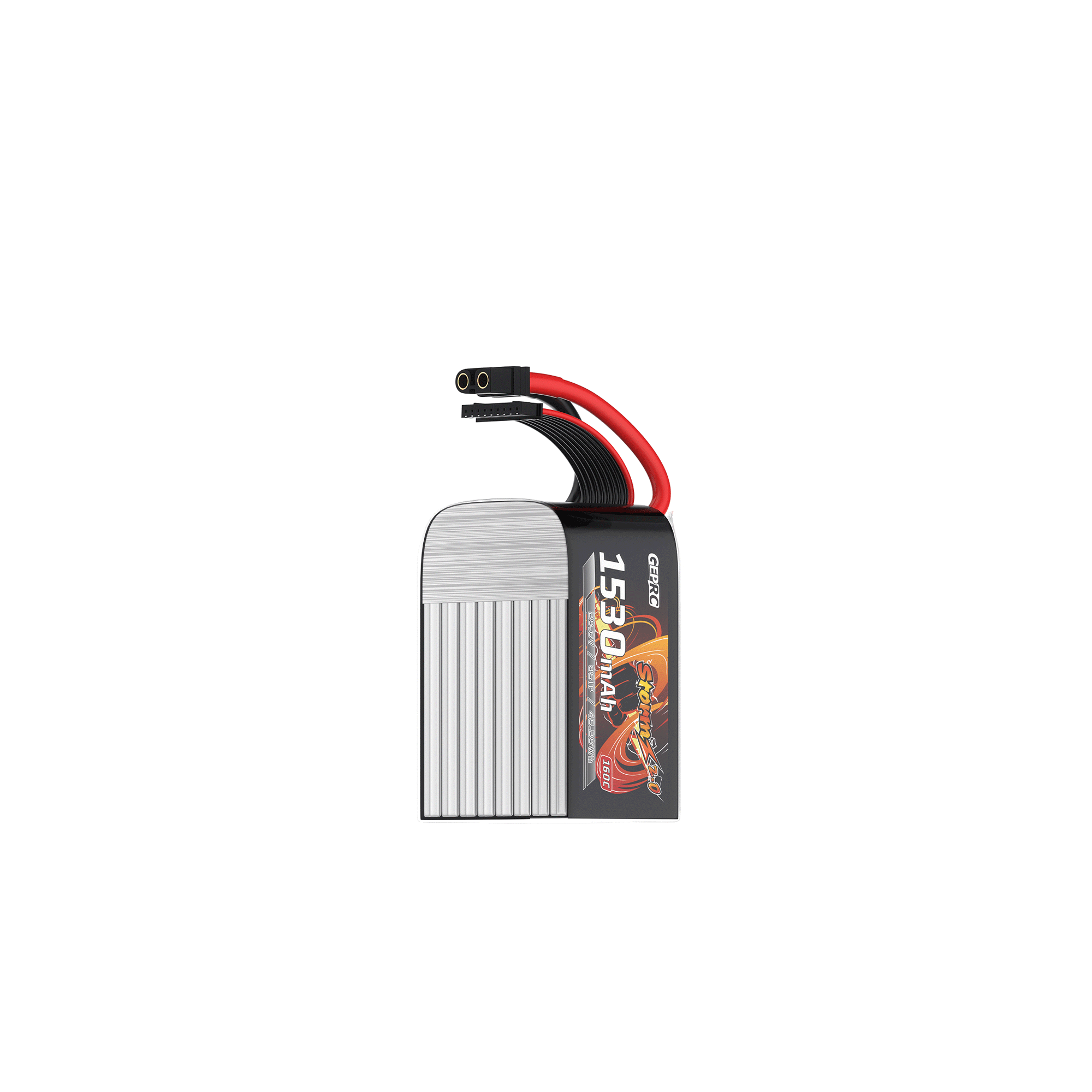
| Parameter | Storm2.0 8S 1530mAh | Relevance |
|---|---|---|
| Configuration | 8S1P | Eight series cells, not a 6S pack |
| Nominal / fully charged voltage | 29.6V / 33.6V | Input rating must tolerate the full 8S voltage |
| Capacity / energy | 1530mAh / 45.29Wh | Compare Wh, not mAh alone, across cell counts |
| Mass / dimensions | 280g / 72×37.5×58mm | Battery tray and flight mass |
| Discharge connector | XT60 female | Mechanical match is not voltage certification |
| Balance lead | XH2.54 nine-pin | Requires an approved 8S-capable charger/interface |
| Manufacturer charging | 1C recommended, 3C max | 1C = 1.53A for this capacity |
| Discharge label | 160C maximum | Not a validated continuous-current guarantee |
Why 160C is a poor shortcut for ESC sizing
The 160C maximum-discharge marking is a battery manufacturer’s reference, not proof that the pack can deliver 244.8A continuously in every real-life temperature or wiring arrangement. Some suppliers list that 160C label as maximum while not providing an independent continuous rating. Practical discharge ability is constrained by battery internal resistance, temperature, age, connector heating, wire quality and voltage sag. Do not use the C label alone to authorize a motor/ESC load.
Likewise, a high-capacity 6S pack and a smaller 8S pack may contain similar energy but very different voltage. Current at a particular system power can be lower at higher voltage, but only when all electronics, motors, ESC and wiring are designed and tested for that operating range. Raising the cell count of an established 6S build without redesign does not automatically increase efficiency or safety.
8S cannot safely power every DJI O4 system directly
DJI’s O4 Air Unit Pro specifies an input range of 7.4–26.4V, and the smaller standard O4 Air Unit specifies 3.7–13.2V. Both are below the 33.6V maximum of a fully charged 8S LiPo. Therefore, an 8S aircraft equipped with O4 Pro must provide a suitable manufacturer-approved regulated power output to the video unit rather than connecting it directly to the battery terminals. The 8S ESC and O4 video system may have completely different voltage requirements inside the same drone.
The same warning applies to other 6S-only flight controllers, BECs, VTXs, GPS peripherals and capacitors. Read the full wiring diagram and the actual power rail, not merely the product’s marketing cell-count label.
What changes on the charger?
The Storm2.0 battery uses an eight-cell XH2.54 nine-pin balance connection. A charger designed for a maximum of six series cells cannot be made 8S-capable by using an XT60 adapter. Use a charger and balance interface explicitly supporting 8S LiPo and the correct connector. A nominal 8S LiPo charge completes at about 4.20V per cell × 8 = 33.6V with the appropriate balance-charge procedure.
At the manufacturer-recommended 1C charge rate, the charge current for a 1530mAh pack is approximately 1.53A. The manufacturer’s maximum of 3C does not mean higher currents are advisable for ordinary routine charging; battery life, thermal management and charger capabilities still matter. Charge packs on a suitable fire-resistant surface under supervision, and stop on cell imbalance, swelling, puncture, damage or unusual heat.
Common fit traps
| “It fits” observation | Hidden incompatibility to inspect |
|---|---|
| XT60 plugs mate | FC/ESC/BEC rated only to 6S |
| Battery fits the frame strap | 280g mass changes centre of gravity, thrust reserve and endurance |
| Video turns on for a moment | O4 power rail may be exposed to overvoltage or unsafe transients |
| Charger has an XT60 output | Balance port or firmware only supports up to 6S |
| Motors share the same stator size | 6S motor KV/winding not approved for 8S |
| LiPo label says “160C” | Continuous-current and connector/thermal margins not specified by that single number |
Eight checks before choosing this battery
- Identify the aircraft: confirm the actual factory 8S variant or an engineered build that has documented 8S capability throughout.
- Verify full voltage: the ESC, FC, capacitors, regulator and every direct-input accessory must tolerate a fully charged 33.6V LiPo and appropriate transients.
- Check motor KV and propeller: choose an approved 8S winding/propeller set and confirm the ESC continuous and burst current ratings.
- Identify the VTX power feed: do not wire DJI O4 Pro directly to 8S; verify its regulated rail and compatible supply capacity.
- Weigh the complete aircraft: account for the actual 280g battery dimensions and strap clearance, not just the similar 1530mAh label.
- Verify the charger: use an approved 8S LiPo balance charger and nine-pin lead, with appropriate mode and temperature safeguards.
- Inspect battery condition: reject a swollen, punctured, hot or imbalanced pack and do not bypass balance lead faults.
- Test safely: remove props for first power-on, review polarity and protective-equipment ratings, then conduct a compliant short flight with documented landing reserve.
Who should choose the 8S Storm2.0?
It makes sense for an aircraft explicitly designed and documented for 8S that needs the pack’s voltage and physical form. It is not a drop-in performance upgrade for a 6S quad. A pilot who only wants less voltage sag should first inspect old battery internal resistance, high-current connectors, ESC supply and flight logs before changing cell count. Often a healthy correctly sized 6S pack is safer than a nominally more powerful incompatible 8S pack.
Original GEPRC and DJI references
GEPRC’s Storm2.0 8S specification confirms 8S1P/29.6V, 45.29Wh, 280g, connectors and 1C/3C charging. DJI’s O4 Air Unit series specification documents the separate video-unit input limits. Order the correct Storm2.0 8S pack from FalconFly only after complete aircraft verification. Our LiPo voltage sag and C-rating guide explains why higher labels do not replace measurement.