GNB 550mAh vs 660mAh 2S LiHV: Why the Smaller Battery Can Be Longer

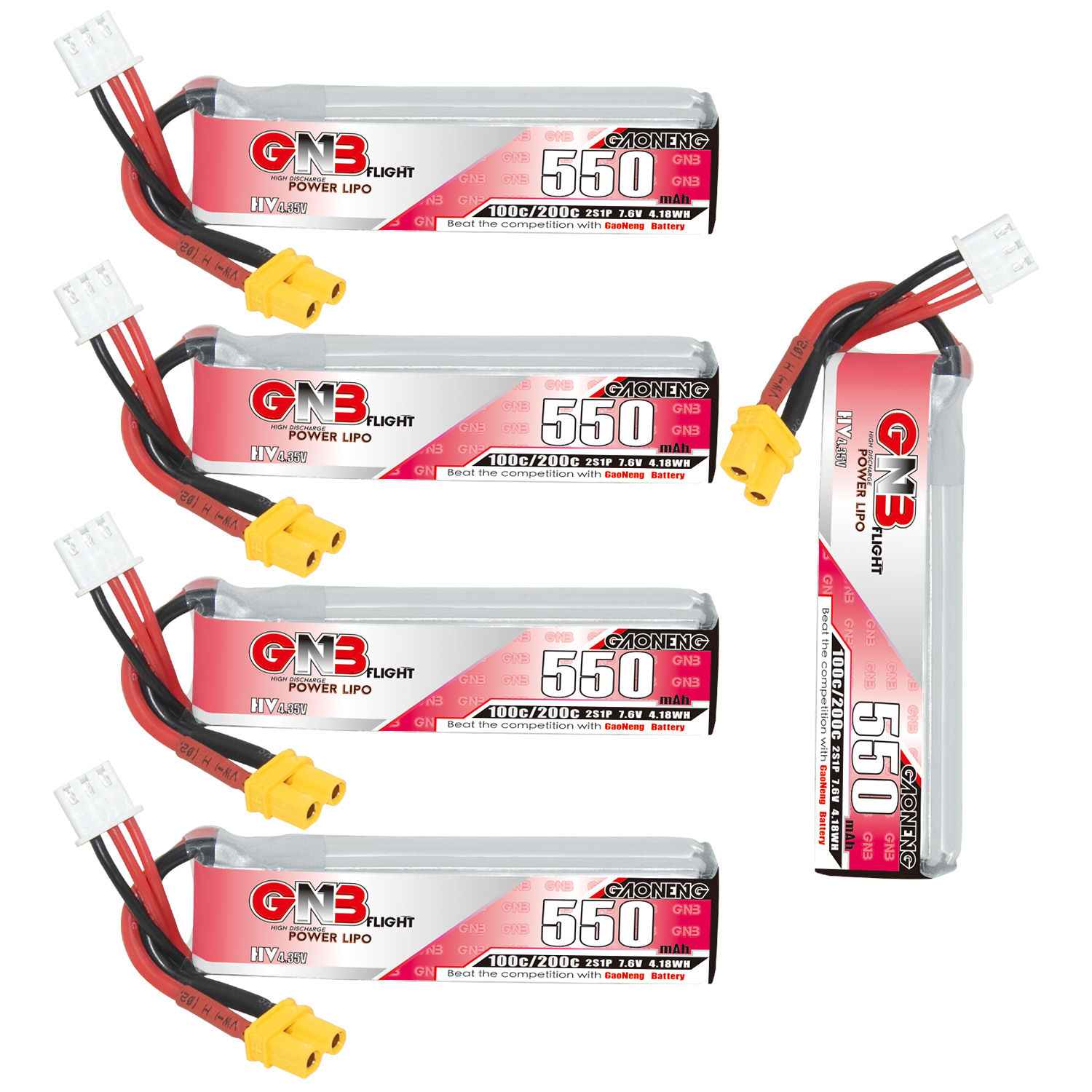
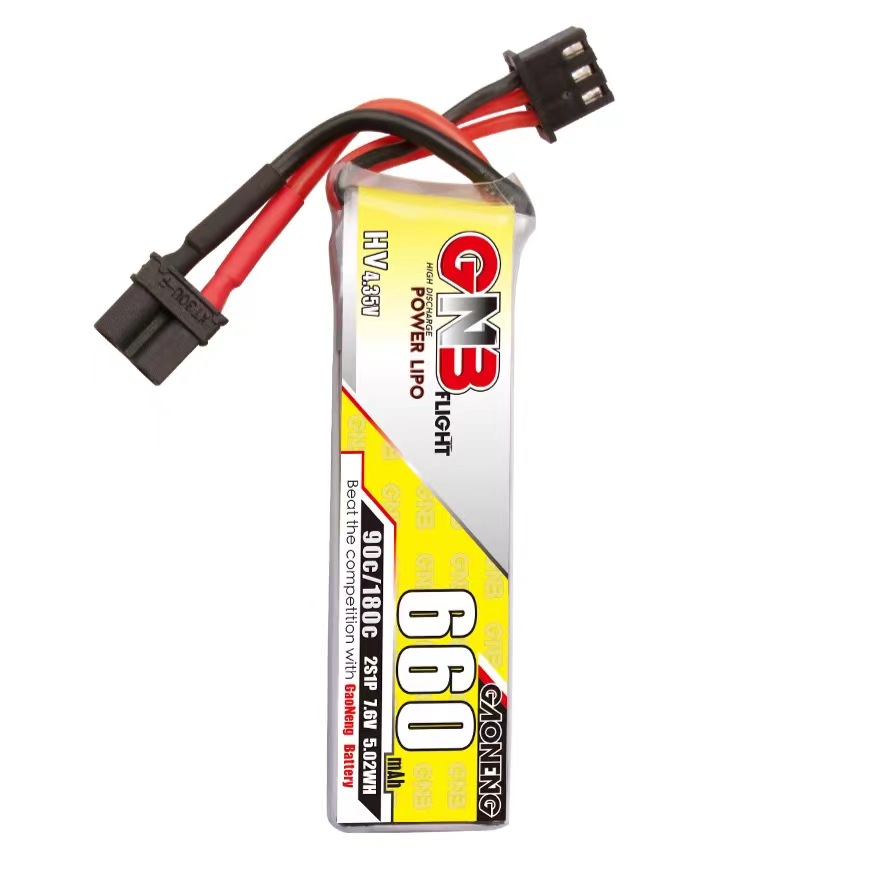
Buying an FPV battery by milliamp-hours alone can create an unexpected fit problem. The GAONENG GNB 550mAh 2S is lower capacity but, according to GAONENG’s own dimensions, it is longer than the GNB 660mAh 2S. The 660mAh model is shorter and thicker. If you use a narrow battery cradle or a specific strap position, those millimetres can determine whether you can fly safely.
Manufacturer dimensions tell the story
| Specification | 550mAh / 100C | 660mAh / 90C |
|---|---|---|
| GAONENG model | GNB5502S100AHV | GNB6602S90AHV |
| Nominal voltage | 2S LiHV / 7.6V | 2S LiHV / 7.6V |
| Dimensions, H×W×L | 12×18×69mm | 15.5×18×63mm |
| Weight | 29g ±2g | 34g ±2g |
| XT30 output | Yes | Yes |
| Quoted discharge | 100C | 90C |
Choose by fit and electrical compatibility, in that order
- Read the flight controller/ESC voltage rating and confirm the aircraft accepts 2S LiHV.
- Measure the frame’s usable battery length, available strap clearance and wire-routing exit.
- Check battery mass and centre of gravity. A 5g difference is noticeable on some micro aircraft.
- Verify XT30 polarity as well as connector type. Never assume matching plugs establish a safe connection.
- Check the battery chemistry on your charger: LiHV is not the same charge-voltage setting as ordinary LiPo.
- Use capacity as a flight-time estimate only after confirming fit. More stored energy can be offset by mass, throttle behaviour and efficiency.
What does “100C” versus “90C” really settle?
C ratings are manufacturer test labels, not independent guarantees of continuous real-world flight current. For context, simple nameplate arithmetic gives 0.55Ah × 100 = 55A and 0.66Ah × 90 = 59.4A, but do not use those figures as safe wiring, connector or ESC specifications. Actual voltage sag and heating depend on pack condition, internal resistance, cooling and duration.
Battery and charger choice in a compact FPV build
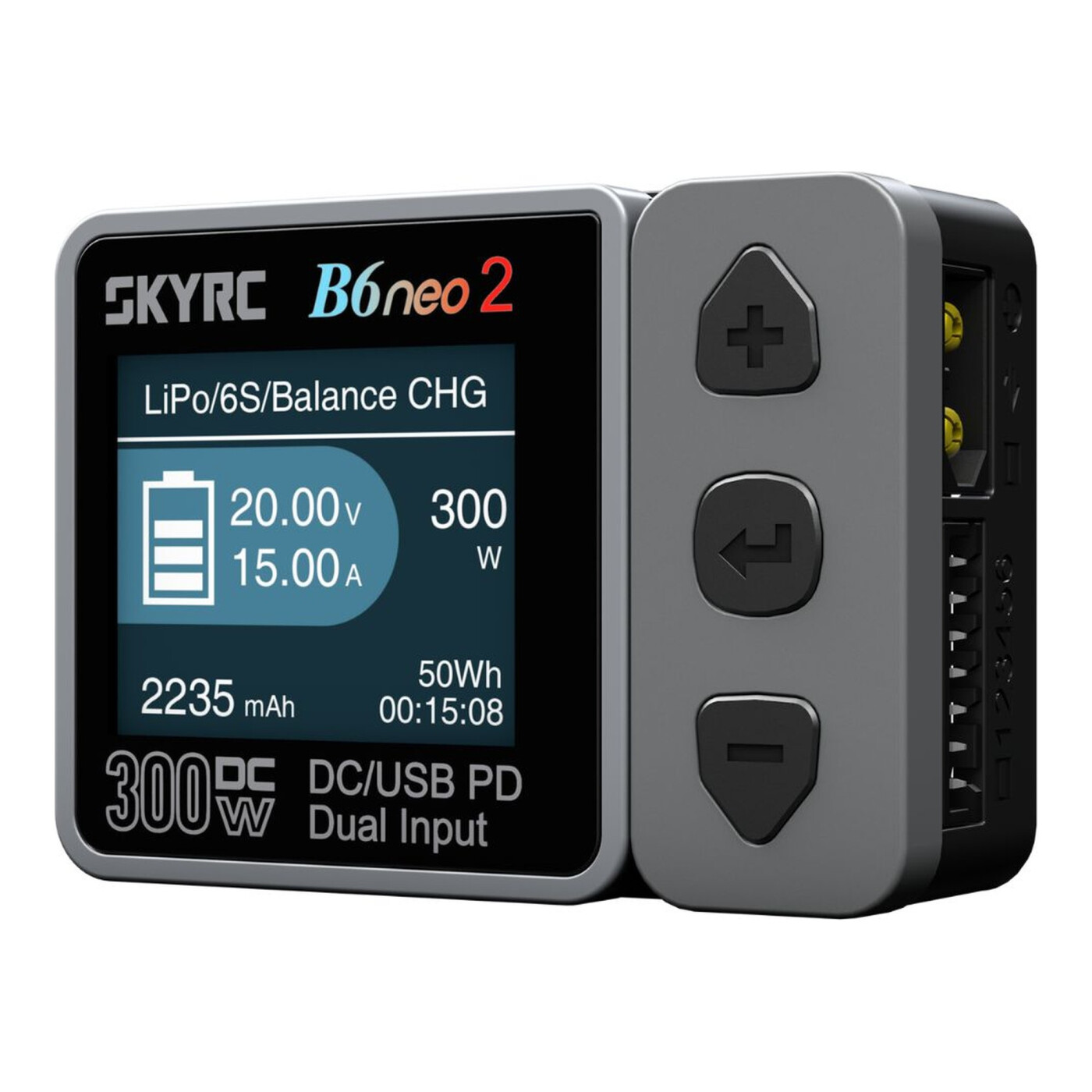
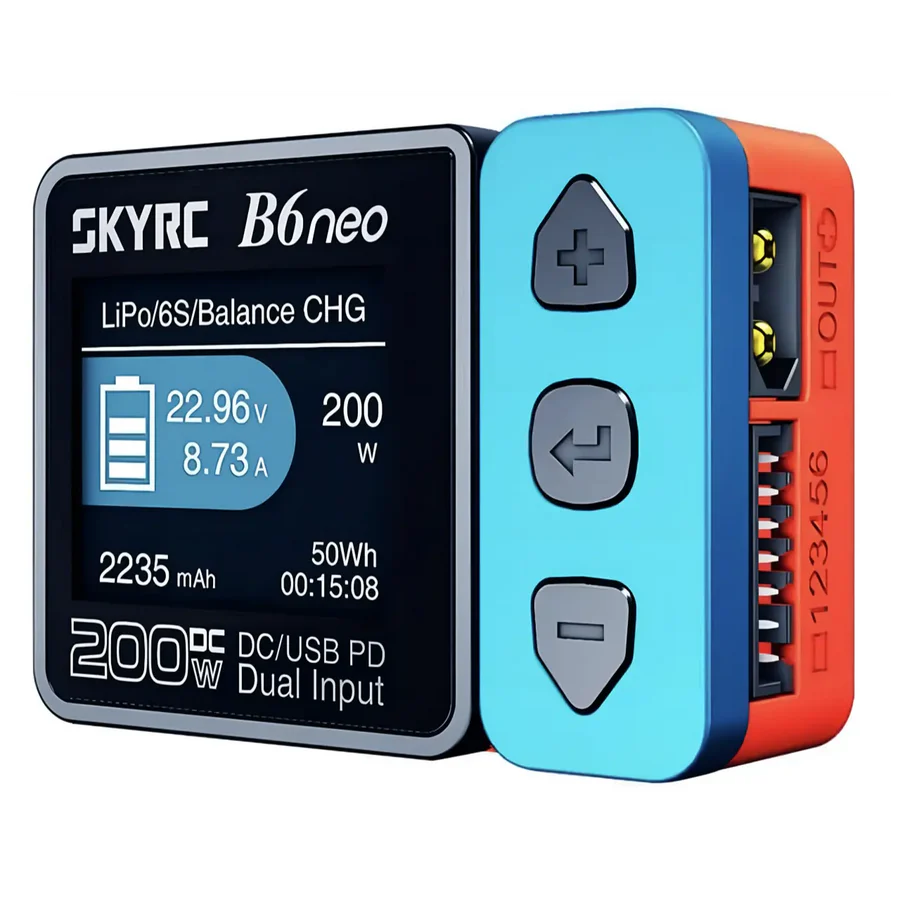
Both batteries require a charger configured for 2S LiHV, including the balance lead. For a gentle baseline charge, 1C corresponds to 0.55A for the 550mAh pack and 0.66A for 660mAh. The manufacturer lists a 1C–5C charging range, but use more conservative rates for heat management and lifespan when practical. Never charge damaged or swollen cells.
Which should you buy?
Choose 550mAh for a build that benefits from lower mass and has 69mm of clear length. Choose 660mAh if its shorter but thicker 63mm housing fits better and the extra mass is acceptable. Do not assume one pack will give a longer flight without testing on your airframe.
Related FalconFly guide
For broader practical context, read our safe FPV LiPo and LiHV battery care guide. It complements this product-specific troubleshooting workflow.
Why nominal milliamp-hours do not decide whether the pack fits
Two 2S LiHV packs can have the same XT30 connector and the same nominal voltage yet be unsuitable for the same battery tray. The manufacturer’s physical dimensions show the GNB 550mAh long type is about 69mm long, whereas the compared GNB 660mAh option is around 63mm. A smaller numerical capacity can therefore correspond to a longer package due to cell construction and layout. Measure the frame’s usable battery space, where the strap crosses the pack, cable routing and centre of gravity; do not rely on the capacity label as a proxy for length.
Energy and charge-rate calculation
For the same nominal 2S LiHV pack voltage, 550mAh represents approximately 4.18Wh at 7.6V, while 660mAh represents about 5.02Wh. Those are nominal stored-energy estimates, not guaranteed flight-time ratios. If the larger pack is heavier or alters drag and balance, some additional energy can be spent carrying it. A lighter or better-fitting 550mAh pack can sometimes feel more agile despite its lower nominal Wh.
For charging, 1C is 0.55A for 550mAh and 0.66A for 660mAh. These are calculation examples, not necessarily the manufacturer’s recommended or maximum charge currents for the individual packs. Confirm each label’s permitted charge rate and the proper LiHV chemistry before using a higher-voltage charge mode. Mixing old damaged and new healthy packs in an unsupported multi-battery charging arrangement is not justified by their shared 2S rating.
Quick field acceptance checklist
- Confirm the actual 550 or 660mAh model and physical battery dimensions before ordering replacement stock.
- Inspect XT30 polarity, lead length, strain relief and the aircraft’s permitted battery weight.
- Check 2S LiHV charge voltage and use a compatible balance charger; avoid a generic 2S LiPo setting unless the manufacturer specifies it.
- Measure the battery’s fit without bending cells, obstructing the camera or placing the lead in a propeller arc.
- Run a short safe normal flight and compare battery sag, cell temperature and real usable reserve instead of assuming mAh is proportional to endurance.
Official sources
GAONENG 550mAh specification and GAONENG 660mAh specification.