FPV LiPo Battery Care: Charging, Storage and Common Mistakes

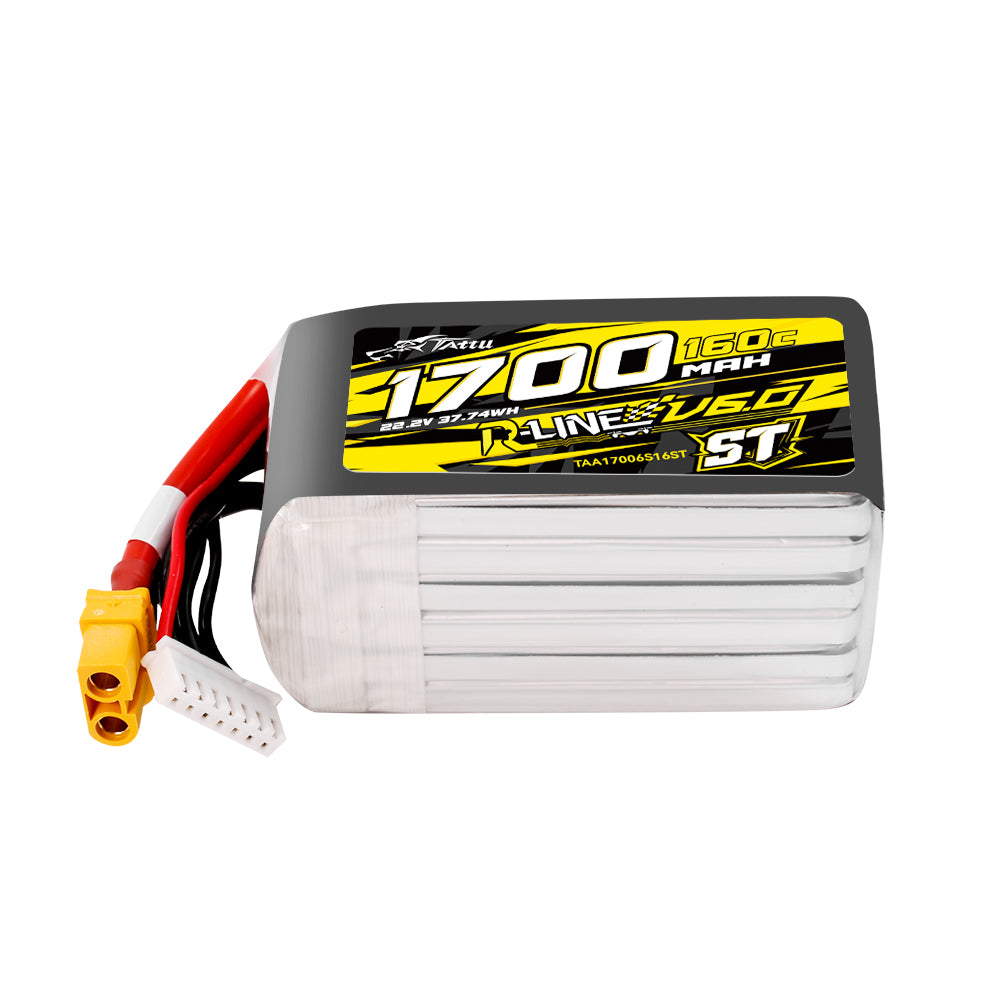
Most FPV battery trouble begins long before a pack looks damaged. The wrong chemistry setting, an overlooked balance lead, a hot pack rushed back onto a charger, or weeks spent at full charge all affect reliability. Good battery care is less about elaborate rituals than about a few consistent checks.
Cell count, chemistry and the charger setting
A conventional LiPo cell has a nominal voltage of about 3.7 V and a common full-charge voltage of 4.20 V per cell. A 6S LiPo pack is therefore roughly 22.2 V nominal and 25.2 V fully charged. LiHV chemistry can have a higher permitted charge voltage, commonly up to 4.35 V per cell when specifically labelled for that limit. Never select a LiHV charge profile for a standard LiPo merely to gain extra flight time.
Before a charge, read the printed pack label. Match chemistry, cell count, target voltage and connector. For multi-cell packs, check individual cell voltages using a suitable balance charger. If one cell is materially different, the pack is physically damaged, or the label cannot be read, stop and investigate rather than guessing.
Storage voltage and when to use it
Lithium-polymer packs are generally best left around storage charge for periods of non-use, often near 3.8–3.85 V per cell depending on chemistry and manufacturer guidance. Storage mode is not an emergency discharge procedure; it is a maintenance setting for healthy packs. Many experienced pilots charge shortly before a session and return unused packs to storage charge afterward.
There is no universal rule that a pack must be taken to storage voltage within an exact number of hours. Temperature, remaining voltage, chemistry and manufacturer guidance matter. For longer storage, choose a cool, dry place away from combustible material, protect connectors against shorts and inspect packs periodically.
Charging without shortcuts
Balance charging helps bring cells within an appropriate range. It does not repair a swollen, punctured or overheated battery. Never leave charging batteries unattended, charge on a combustible surface, or use connectors/adapters of unknown current capability. Let a pack return to a suitable temperature after flight before charging it again.
Dual-channel chargers are convenient when running multiple packs, but each output has finite power. Check whether the advertised maximum is for AC operation, DC operation or both; a large DC wattage specification does not imply that the same output is available from a wall socket. Confirm the power supply, cable and connector ratings.
What C-rating can—and cannot—tell you
Discharge C-rating is useful as a claimed capability but is not a universal measure of real-world performance. Labels from different manufacturers may not use comparable test methods. Voltage sag under load, pack temperature, cell quality, weight and ageing all matter. A lighter, high-quality pack may outperform a heavier pack with a larger printed C number in a particular build.
Start with the current requirement of your aircraft, not the largest C-rating available. In warm UAE conditions, heat deserves especially careful monitoring. After a flight, check for unusual warmth, puffing, damaged insulation, loosened balance wires and connector discoloration.
Choosing a charger and a pack at FalconFly
A dual-channel unit such as the Gens Ace iMars D300 Plus or HOTA D6 Pro can suit mixed FPV charging needs when correctly configured. For batteries, start from the aircraft’s specified voltage and physical dimensions; compare the Tattu R-Line 6S 1700mAh as an example rather than assuming it fits every drone.
Questions buyers ask
Why does my 6S pack show different voltages for different cells?
Small differences occur during use. An unusually large difference, repeated imbalance or a cell outside the charger’s safe range needs investigation; do not force charging.
Should I keep batteries fully charged all week?
For extended non-use, manufacturers generally recommend storage charge rather than leaving LiPo packs at full voltage.
Can I charge LiHV batteries in LiPo mode?
Follow the battery manufacturer’s instructions. Standard LiPo full-charge voltage is lower than the higher limit of some LiHV packs; using the wrong setting may affect usable capacity or safety.
Can a balance charger fix a swollen battery?
No. Swelling or physical damage is a reason to isolate the pack and follow safe local disposal procedures.
How much charger wattage do I need?
Calculate from the pack voltage and intended current, allowing power headroom. For multiple channels, consider the combined output and whether the charger is operating on AC or DC.
Are XT60 and XT90 interchangeable?
They are different connectors. Use the manufacturer’s recommended wiring and current rating rather than forcing an incompatible plug.
Explore more in the FalconFly FPV Knowledge Hub. Product fit must always be confirmed against the exact aircraft model and its documentation.
Technical and community references: LiPo storage discussion · GCAA drone regulatory information