GNB 660mAh 2S LiHV Charging: Is 8.4V Full or Should It Reach 8.7V?

Two pilots each charge a nominal 7.6V two-cell battery, but one charger reports “Full” at 8.4V and the other may be configured for 8.7V. Is one charger broken? Not necessarily. The GAONENG GNB 660mAh 2S is a LiHV battery, and LiHV has a different supported upper cell voltage from a standard lithium-polymer pack.
2S LiPo and 2S LiHV: the key numbers
| Chemistry / setting | Upper voltage per cell | Two-cell pack upper voltage |
|---|---|---|
| Ordinary LiPo full charge | 4.20V | 8.40V |
| LiHV full charge (when specified) | 4.35V | 8.70V |
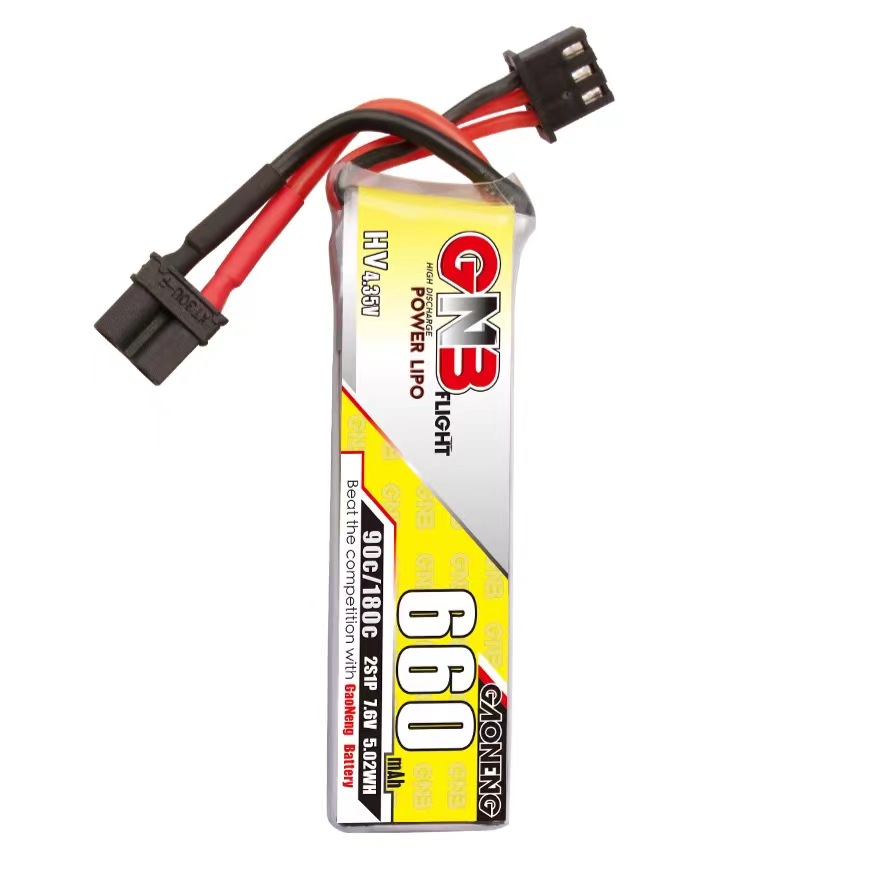
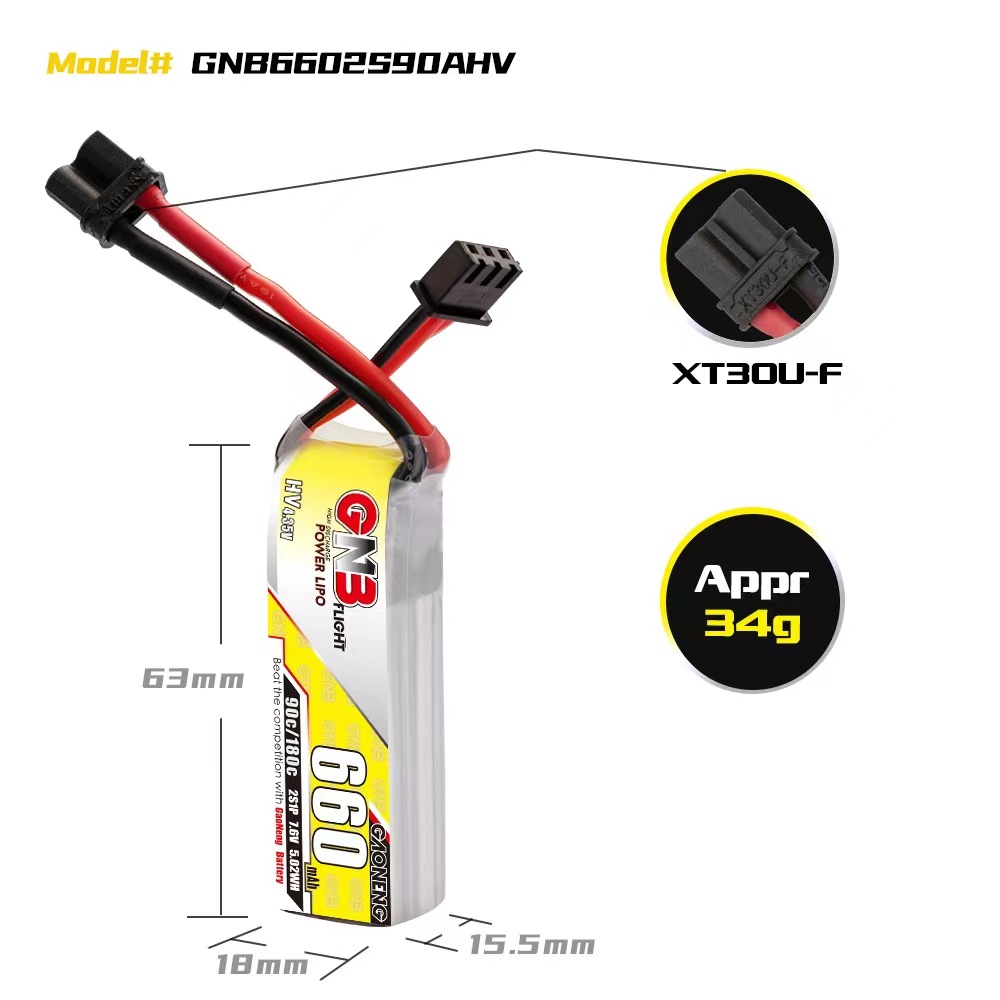
The listed GNB6602S90AHV pack is 7.6V nominal, 660mAh (5.02Wh), 2S1P and comes with XT30 discharge connector and a separate balance lead. A normal LiPo charge setting can stop short of LiHV’s full rated voltage. That does not justify switching all your batteries to LiHV mode. A standard LiPo cell charged to 4.35V may be dangerously overcharged.
The safe setup sequence on a balance charger
- Read the cell label. Confirm the manufacturer model and chemistry: GNB6602S90AHV, 2S LiHV.
- Inspect the pack. Do not charge damaged wrapping, swollen cells, crushed leads or a hot battery.
- Connect both outputs correctly. The XT30 handles the discharge/charge current and the separate 3-pin plug enables per-cell balancing on a compatible charger.
- Choose 2S LiHV if explicitly supported. Verify the charger’s displayed chemistry and number of cells before starting.
- Start conservatively. The manufacturer rates 1C–5C charging; 1C is 0.66A on this model and is a sensible lifespan-oriented baseline.
- Monitor the final state. Compare individual cell readings, temperature, and charger status. Stop immediately for abnormal swelling or heating.
Why a 2S pack can still be unsafe on an XT30 drone
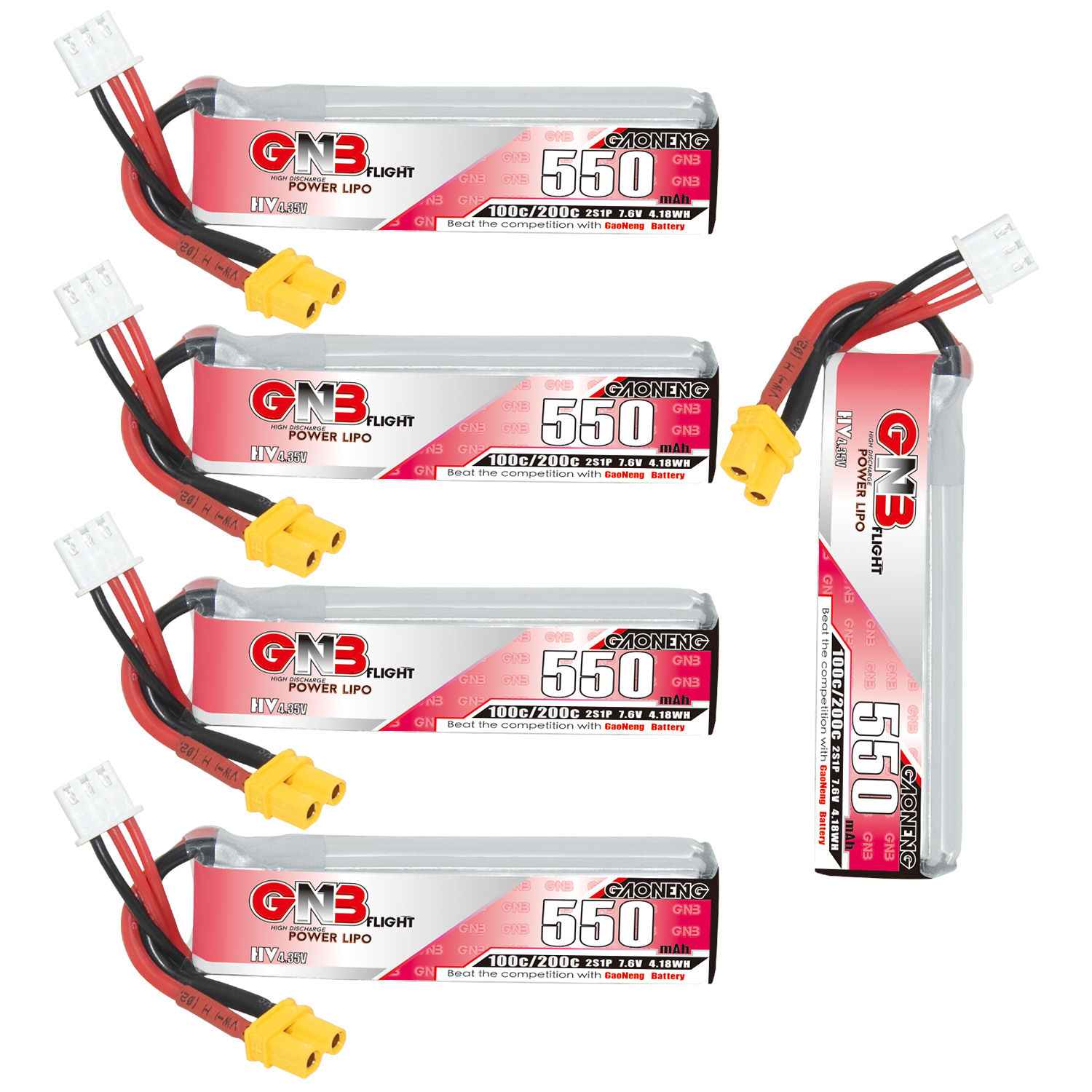
Voltage rating, physical fit, polarity, centre of gravity and wire routing all matter. This 660mAh model measures 15.5 × 18 × 63mm and weighs about 34g. It is shorter but thicker than the GNB 550mAh 2S 100C long-type. A matching XT30 socket cannot turn a 1S airframe into a 2S one.
What if my charger only offers standard LiPo?
If your charger cannot provide a manufacturer-supported 2S LiHV balance program, do not improvise a custom high-voltage preset or bypass balance monitoring. A correctly configured standard LiPo mode may charge below the LiHV-rated maximum, but the proper long-term solution is a certified balance charger with the correct chemistry settings. Check the battery and charger’s documentation together.
Myth: charging harder always improves flight time
Higher charge rate can increase heat and stress even when a supplier lists a permissible range. Capacity, cell condition and airframe efficiency are more meaningful than repeatedly chasing maximum charge voltage or discharge C numbers.
Worked example: why a 7.6V pack reaches 8.7V
GAONENG’s model GNB6602S90AHV is a two-cell, 660mAh LiHV battery with 7.6V nominal voltage, an XT30 main connector and a separate balance lead. Nominal voltage is not the maximum charge voltage. A 2S LiHV setting at 4.35V per cell reaches 8.70V for the pack; conventional LiPo mode at 4.20V per cell reaches 8.40V. A charger stopped at 8.40V is not necessarily defective—it may simply have the wrong chemistry selected for obtaining full LiHV capacity.
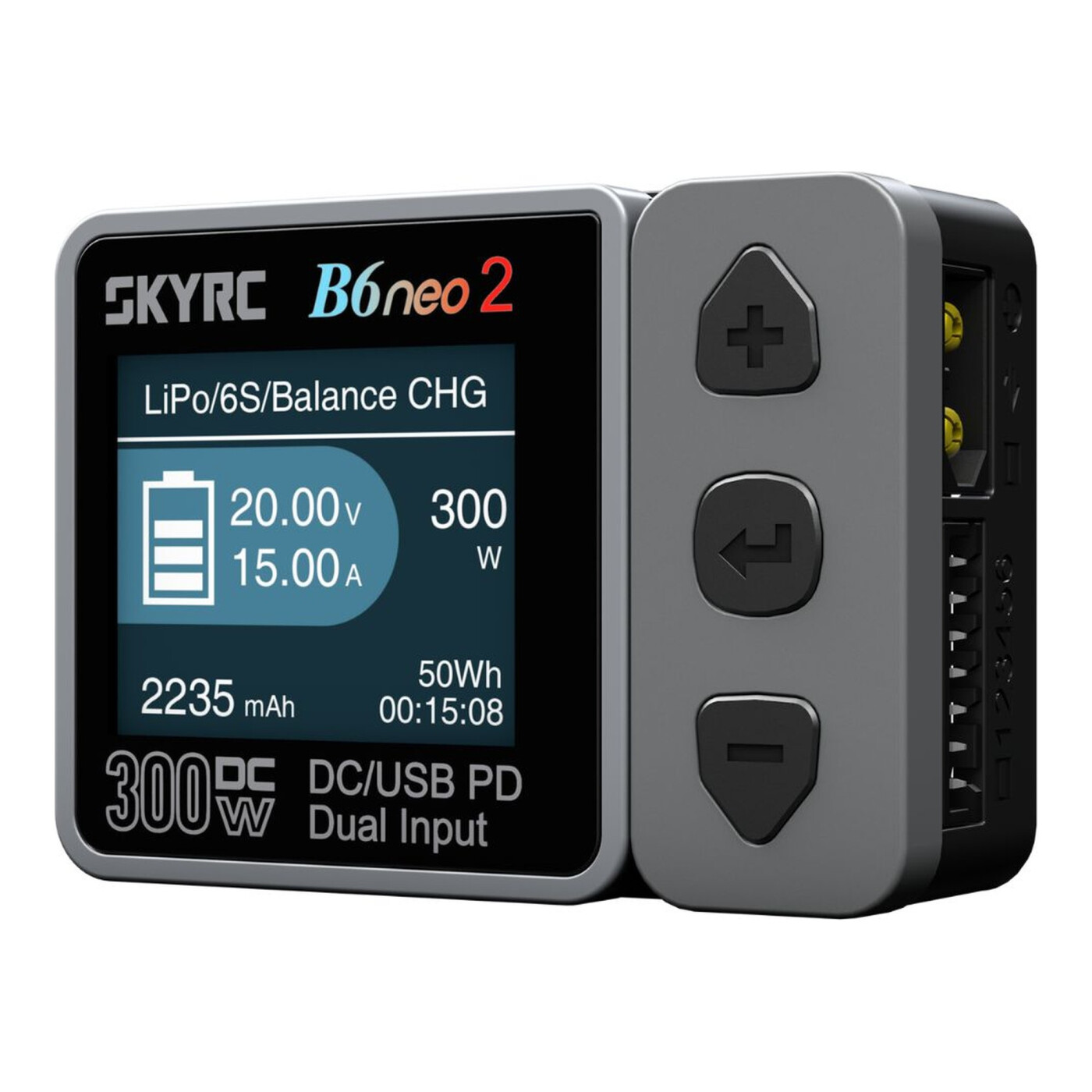
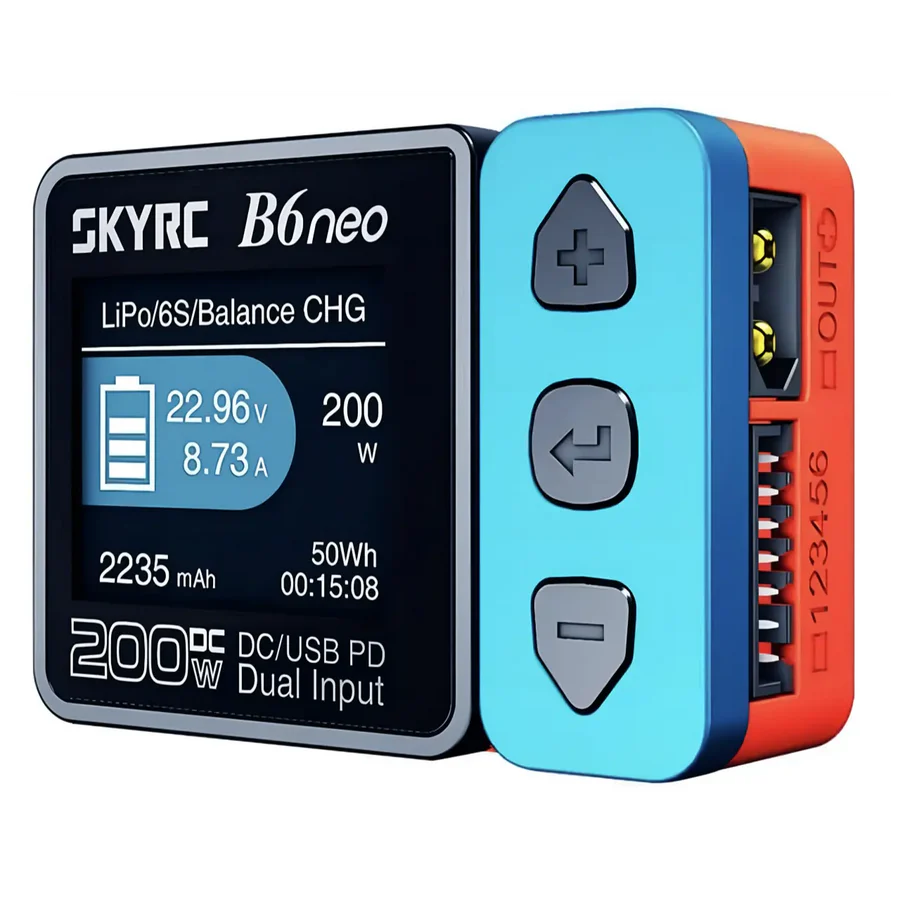
This does not justify setting an ordinary 7.4V LiPo pack to 8.70V. Use the actual markings and manufacturer’s cell specification. SKYRC’s official balance-charger documentation separately identifies termination voltages of 4.20V for LiPo and 4.35V for LiHV and requires selecting both chemistry and cell count. See the SKYRC e450 chemistry specifications as an example of charger-side terminology; use the manual for your actual charger when operating it.
Voltage and current: two independent charger settings
| Setting | 660mAh 2S LiHV example | Failure to avoid |
|---|---|---|
| Battery chemistry | LiHV, only if the pack marking confirms it | Overcharging an ordinary LiPo with LiHV termination |
| Series cell count | 2S | Incorrect cell count or ignoring a damaged balance lead |
| Maximum cell voltage | 4.35V per cell for this LiHV specification | Using nominal 7.6V as a full-charge cutoff |
| Gentle 1C charge current | 0.66A (660mA) | Assuming the C discharge rating means a high charge rate is necessary |
| Connector and balance | XT30 discharge lead plus compatible balance plug | Relying solely on total pack voltage when one cell is out of balance |
The manufacturer’s published permissible charge-current range is not a recommendation to always use its maximum. Unless your actual equipment documentation calls for something else, a conservative approved lower charge current helps control heat and makes abnormal cell behaviour easier to notice.
Stop conditions when testing a suspect pack
Disconnect and isolate the battery if it swells, becomes unusually hot, smells abnormal, has damaged wrapping or a compromised lead, or shows an unexpected persistent difference between cell voltages. Use a suitable fire-resistant charging location under supervision and follow the manufacturer’s storage/disposal instructions. Never modify a charger firmware limit, force current into a damaged pack or charge directly through improvised bare wires.
Sources
GAONENG GNB6602S90AHV manufacturer’s technical data and our FPV LiPo charging and storage guide.