


GNB 6S 5200mAh LiHV vs 7000mAh LiPo: Heavy-Drone Battery Buying


For a heavy lift, endurance or cinelifter build, the choice between two large 6S batteries is not just 5200 versus 7000mAh. The chemistry label changes charging voltage; the connector may have an anti-spark variation; and the heavier pack can reduce the very flight time you hoped to gain. Customers building an expensive aerial platform need a way to compare usable energy and electrical compatibility without gambling on a high printed C rating.
The two pack labels represent different charge profiles
A conventional 6S LiPo with 3.7V nominal cells is usually labeled 22.2V. A 6S LiHV with 3.8V nominal cells is labeled 22.8V. Ordinary LiPo full-charge voltage is typically 4.20V per cell, while LiHV packs explicitly designed for it may permit 4.35V per cell. The complete pack terminal voltage near full charge therefore differs: about 25.2V versus 26.1V. Never use LiHV charge voltage on a pack not rated for it.
That voltage difference can also matter to electronics fed directly from the battery. Check the entire aircraft’s maximum input limits, including the ESC, power distribution and any video electronics.
Compare energy, not just mAh
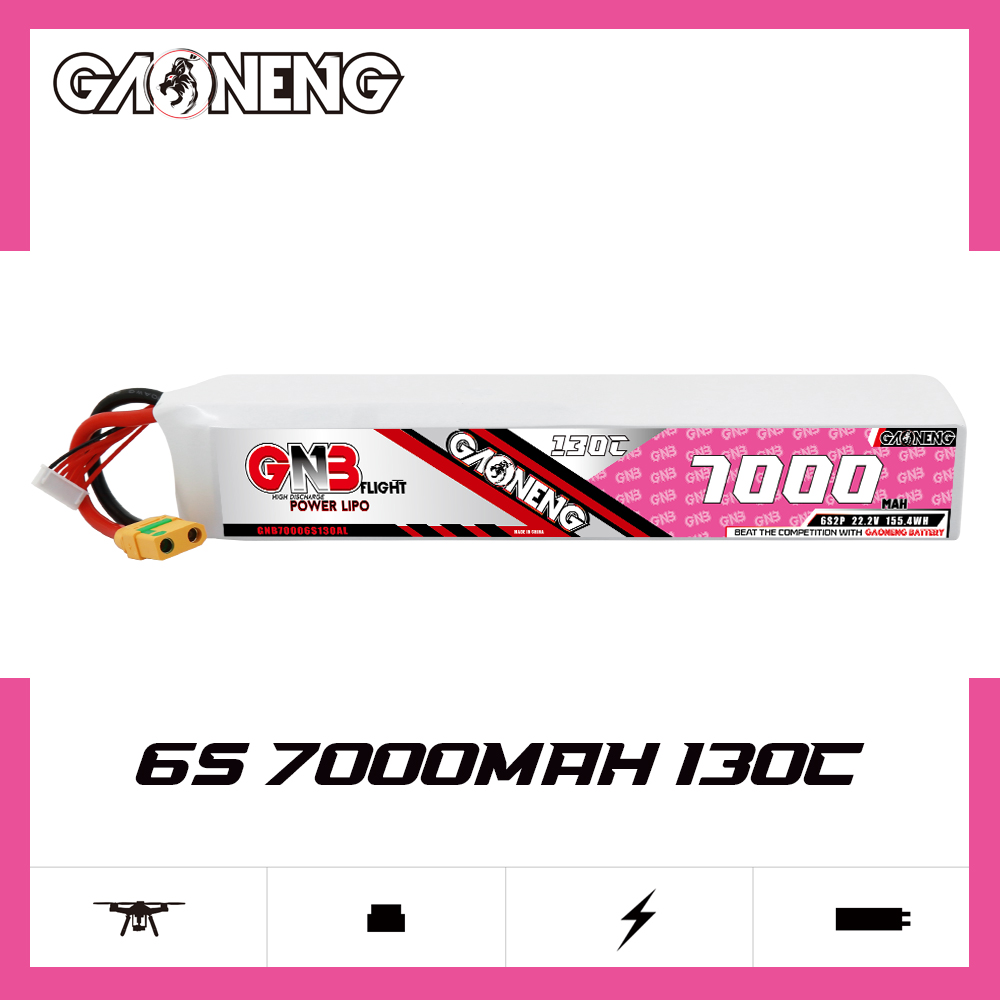
At nominal ratings, 5200mAh × 22.8V is about 118.6Wh; 7000mAh × 22.2V is about 155.4Wh. The larger conventional pack therefore holds roughly 31% more nominal energy, before considering usable capacity, discharge behavior and added mass. These calculations are a starting point, not an endurance prediction. Two heavy drones with different motor sizes and propellers can draw vastly different power even with the same battery.
A heavy battery that shifts the center of gravity can force some motors to work harder and may change handling under a camera payload.
Connector and current delivery
FalconFly lists the 5200mAh pack with XT90 and the 7000mAh pack with XT90S. The latter is an anti-spark connector family intended to limit an initial connection spark in supported arrangements; do not treat it as an automatic current-rating upgrade. Confirm the mating connector, wire gauge, discharge-current design and charging lead. A high-current power setup should never be forced into a smaller or heat-damaged plug.
What ‘120C’ and ‘130C’ don’t tell you
Pack C ratings are manufacturer labels and are not necessarily measured by identical test methods. Under real loads, voltage sag, pack heating, cell aging and connector resistance may dominate. Choose based on tested current requirements, suitable safety margin and reputable cell data, not by multiplying a marketing C number and assuming the result is guaranteed.
If your drone is close to its safe weight or current limit, a capacity increase may be the wrong solution. Measure actual all-up weight and power consumption rather than relying on unloaded motor-thrust claims.
Who should buy which?
| Priority | What to assess |
|---|---|
| Weight-sensitive aircraft | Measured mass and dimensions of the 5200mAh LiHV option |
| Higher nominal energy budget | 7000mAh pack with the complete aircraft weight penalty |
| Charging equipment | LiPo vs LiHV charge-voltage support |
| Workshop connection | Correct XT90 or XT90S mating plug and cable |
Neither battery is automatically suitable for a specific aircraft. Verify dimensions, maximum voltage, rated current and mounting first.
Before checkout
Confirm exact model revision, electrical limits, connections, any included accessories and the manufacturer’s installation notes. Good fitment is a system property: matching one specification does not confirm the rest.
Example: the apparent 37Wh advantage
Nominal energy is about 155.4Wh for the 7000mAh conventional 6S pack and about 118.6Wh for the 5200mAh LiHV pack. The nominal difference is roughly 36.8Wh. If a drone draws an average 500W in a particular operating condition, 36.8Wh corresponds to about 4.4 minutes of ideal energy arithmetic before losses, reserves and changes caused by battery mass. That is not a safe flight-time prediction. A heavy-lift aircraft may draw far more or less depending on propellers, payload, temperature and maneuvers.
Use this calculation as a check against claims that the larger pack ‘doubles endurance’. It does not.
Storage, charging and procurement details
Keep LiHV and conventional LiPo charging profiles distinct and visible to anyone operating the charger. Mark each pack with its chemistry and cell count, not just capacity. Confirm that your heavy-drone frame can physically retain the longer pack without stressing cables or altering center of gravity beyond its documented limits. For business users buying several packs, standardizing a correctly rated connector and charger procedure can reduce operator error, provided every aircraft shares compatible electrical requirements. A battery inventory is safer when no one has to guess what a similar-looking pack is rated for.
One more number matters: mass per usable watt-hour
Nominal watt-hours alone leave out the battery’s own weight. Compare the actual gram weight of both packs and calculate energy per kilogram if endurance is your main goal. A larger pack may win on total stored energy while losing on how much mass the aircraft must lift to obtain it. On a heavy-lift rig, the right answer also depends on how the battery mass interacts with the camera payload and motor efficiency. A pack that shifts balance rearward may create higher current on certain motors during hover.
When planning several batteries for a job, measure every pack’s physical dimensions and fit inside the mounting hardware. An unsecured high-capacity battery is a safety risk regardless of how attractive its Wh rating looks on paper.
Customer questions
Can a standard LiPo charger charge LiHV?
Only if it explicitly offers the correct manufacturer-approved LiHV chemistry and termination voltage mode.
Will 7000mAh always give longer flights?
Not necessarily. Extra mass changes propulsion power, and usable capacity under load can differ.
Can I replace XT90 with XT90S without further checks?
Verify connector compatibility, proper anti-spark orientation, wiring and current rating. Do not modify live batteries.

















