LiPo or Li-ion for Long-Range FPV? Why Capacity Alone Is Misleading

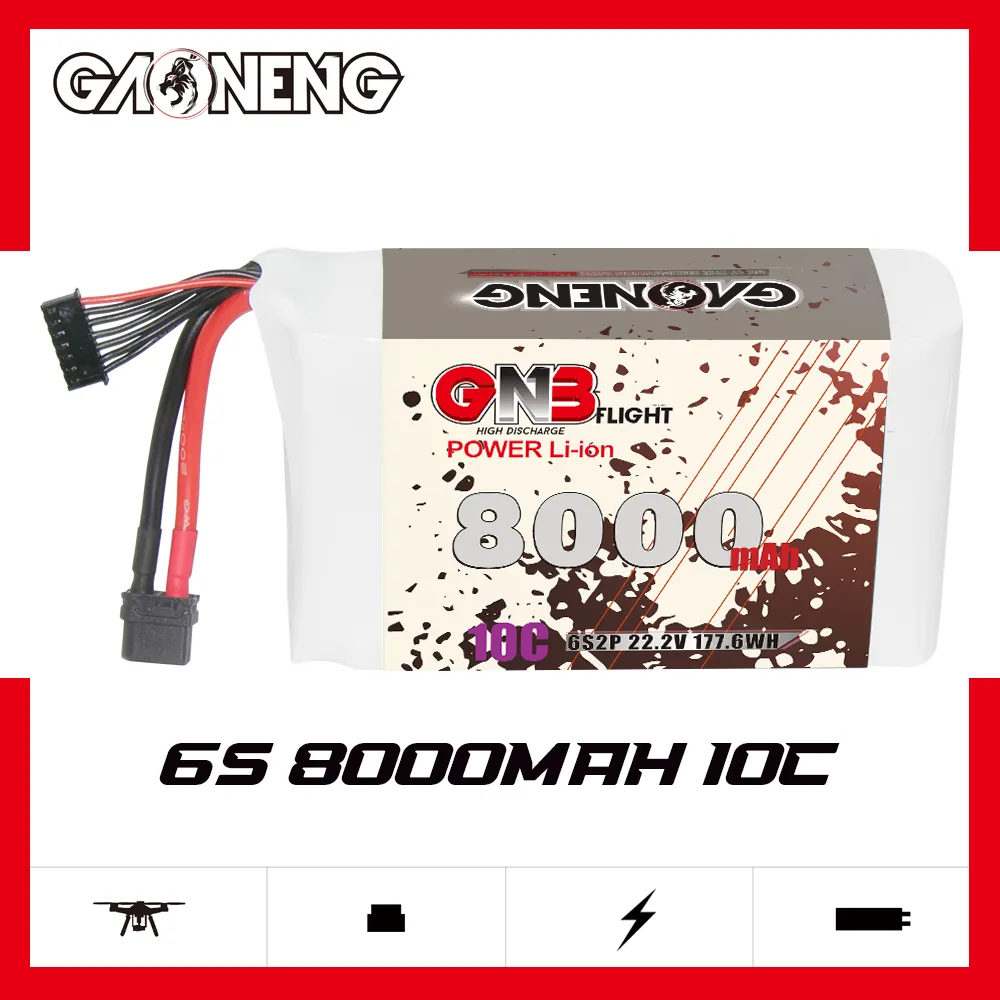
A 6S pack can be built for hard acceleration or for efficient cruising, and those are not the same job. The choice between high-discharge LiPo and cylindrical-cell Li-ion matters most when a pilot begins comparing battery capacity figures without considering the current drawn by the aircraft.
Start with the mission, not the milliamp-hours
A freestyle build demands frequent bursts of throttle, fast changes of direction and reserve power to recover from a manoeuvre. Many long-range aircraft are optimised for sustained, more moderate current while carrying their own batteries over distance. A high-energy Li-ion pack may serve that second mission well, but it is not a universal replacement for a high-discharge LiPo.
When comparing batteries, write down the aircraft’s weight including camera and payload, motor/propeller combination, expected current at cruise, peak current during climb, and the manufacturer’s supported cell count. Those figures establish whether a lower-discharge pack is appropriate. If the aircraft regularly draws more current than a pack can safely deliver, theoretical energy density becomes irrelevant.
Capacity and energy are related, but not interchangeable
Capacity is measured in amp-hours; stored energy is approximately nominal voltage multiplied by amp-hours. For example, an 8000mAh 6S pack labelled 22.2V has a nominal energy of about 177.6Wh. That calculation does not guarantee you will receive the full figure at the aircraft: load, voltage sag, discharge limits, usable depth, temperature and battery health all influence it.
For the same chemistry and cell count, a higher mAh number generally stores more charge, but the pack may also be heavier. A larger pack can require more thrust to carry itself. The best practical comparison is not time on the bench but measured flight current and safe usable capacity at the aircraft’s actual all-up weight.
Why a Li-ion pack may be inappropriate for aggressive flying
A cylindrical 21700-cell pack may excel in energy density, while many LiPo packs are designed for higher peak discharge and reduced voltage sag under heavy load. Do not assume an advertised 10C Li-ion and 150C LiPo rating are tested or specified on the same basis. Cells, parallel groups, connectors, conductor size and temperature protection all limit sustained current.
At higher loads, voltage sag may cause low-voltage alerts, reduced throttle authority or voltage-related system behaviour even when the nominal mAh is impressive. Excess heat or repeated extreme discharge damages batteries. A pack marketed for long-range use should not be evaluated by whether it can survive one full-throttle punch-out.
The importance of XT60, XT90 and pack dimensions
Connectors are part of the current path, not merely accessories. Match pack plug, aircraft harness, insulation and physical clearance to the intended load. A long 21700 pack can move the centre of gravity or collide with an antenna mounting arrangement even if its connector fits. Secure the battery so a hard landing cannot force it into a propeller or cut into the cells.
Remember that 6S describes series cell count, not pack shape or peak discharge. A 6S LiPo and 6S Li-ion may need different charger chemistry settings and can have different operating limits. Follow the pack manufacturer rather than copying a neighbour’s charger preset.
Build a realistic endurance estimate
Work backwards from a target mission and measured draw. Suppose a 6S aircraft is averaging 8A during a controlled test: an 8Ah pack appears to offer one hour by simple arithmetic, but that assumes 100% discharge, constant current, no voltage losses and no reserve. A safe plan allows appropriate battery reserve, variance in wind, additional current while climbing, and a return margin.
Repeated tests under similar conditions are more useful than isolated anecdotes. Record watt-hours charged back into the pack, cruise current, temperature and safe landing voltage. In the UAE, high ambient temperatures can make thermal management particularly relevant. Always verify current flight permissions before a test.
Compare real battery categories at FalconFly
The GNB 6S 8000mAh 10C Li-ion is an example of a pack intended for a different duty cycle from the Tattu R-Line 6S 1700mAh 160C LiPo. These packs differ in capacity, construction and claimed discharge capability; they are not substitutes simply because both are 6S. Our charging and storage guide explains the next step once the right chemistry is selected.
Questions people ask before buying
Is Li-ion always lighter than LiPo?
Not for every pack. Compare stored energy, usable power, weight, dimensions and the actual mission rather than making an assumption from chemistry alone.
Can I do full-throttle freestyle with a 10C long-range Li-ion pack?
Only if the manufacturer’s supported current limits cover the aircraft’s real peaks. Many high-throttle builds are better suited to high-discharge packs.
Does a 6S Li-ion pack charge in the same mode as a 6S LiPo?
Do not assume it. Select the battery’s specified chemistry and charge profile on a suitable charger.
Can a larger capacity reduce flight time?
Yes, in some setups added battery weight can offset some of the energy advantage or push the propulsion system into a less efficient operating range.
Why does battery voltage drop during hard acceleration?
Cells have internal resistance and a limited delivery capability. Voltage under load depends on current, pack temperature and condition.
What does 6S2P mean?
It denotes six series groups with two cells or cell groups in parallel per series position; the exact pack design and ratings still depend on its components.
Which connector suits my drone?
Use the connector and wiring rated for the current and specified by the aircraft/pack manufacturer; XT60 and XT90 are not automatically interchangeable.
Is mAh alone a useful endurance prediction?
No. Add nominal voltage, safe usable discharge, expected current, mass, wind and operational reserve to the estimate.
Browse additional FalconFly buying and troubleshooting guides. Always check exact hardware revisions and manufacturer recommendations.
Technical references: FalconFly battery care · GNB pack listing