Osmo Pocket 3 or Osmo Mobile 7P? Choosing the Right Tool for Filming

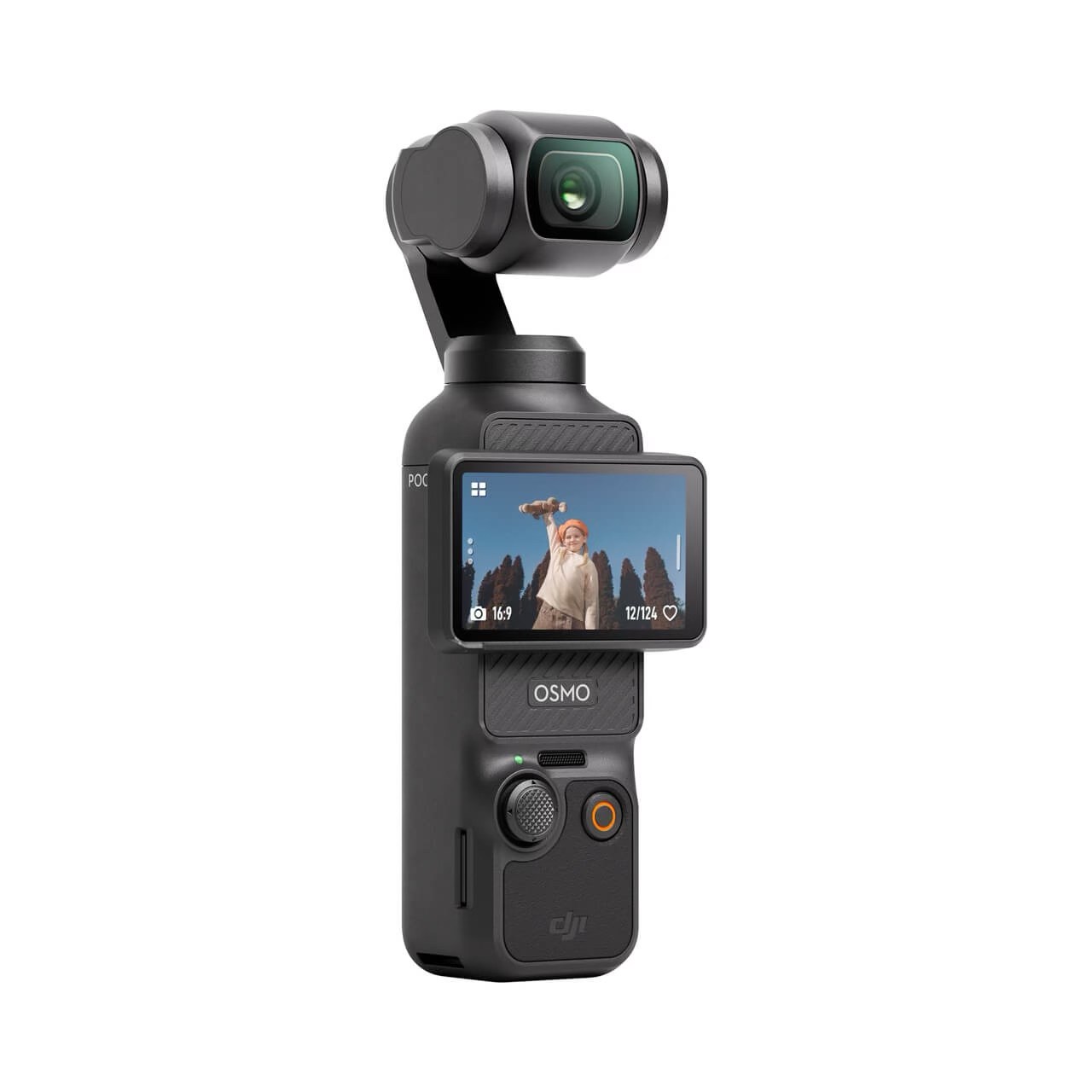
A pocket camera and a smartphone gimbal are often placed on the same shopping shortlist because both promise smoother footage. They solve different production problems. The Osmo Mobile 7P stabilises the phone you already own; Osmo Pocket 3 brings its own camera sensor, lens, recording pipeline and motorised gimbal. The best purchase depends on what your current phone does poorly and how you intend to work.
The camera you are stabilising matters more than the word ‘gimbal’
The DJI Osmo Pocket 3 Creator Combo is built around a dedicated 1-inch CMOS camera with a roughly 20mm-equivalent f/2.0 lens. It offers a three-axis mechanical gimbal, 10-bit D-Log M recording and up to 4K/120fps in its supported slow-motion modes. Its imaging character and low-light performance come from that optical and sensor design; they are not created by stabilisation software alone.
The DJI Osmo Mobile 7P is a stabilisation and handling system for compatible smartphones. It does not add a larger camera sensor to your phone. If your phone already records the quality you want, the gimbal can improve deliberate pans, walking shots and framing while keeping your editing and sharing workflow on the same device.
Why body size is a workflow decision
A dedicated pocket camera is convenient when your phone needs to remain available for calls, navigation or a production monitor. Pocket 3 is also easy to move between a desk, interview setting and quick walking shot. It brings another battery to manage, though, plus storage, file transfers and accessories that are separate from the phone.
The Mobile 7P relies on your handset but also gives you a familiar interface. Phone notifications, heat, available storage and camera-app limitations can affect a longer recording session. Before buying, verify the phone’s weight, width and thickness against DJI’s supported clamp range; the official Mobile 7P series specifications list a compatible phone weight of 170–300g, width of 67–84mm and thickness of 6.9–10mm.
Following people: tracking is not the same as holding focus
Pocket 3’s ActiveTrack 6.0 supports subject framing on a camera with its own focus system. That is useful for solo presenters moving around a room, provided the subject remains within workable lighting and tracking conditions. With a smartphone gimbal, tracking functionality depends on the supported module, phone and app; check exactly which camera app or tracking mode is available before you assume it will follow you in every recording environment.
Consider the delivery format. Interviews, property walkthroughs and product demonstrations benefit from consistent framing and audio. For vertical social posts, switching orientation quickly is valuable, but a workflow should be judged by the footage it saves to disk rather than the speed of a marketing demonstration.
Audio usually decides whether the finished video feels professional
The Osmo Pocket 3 Creator Combo sold by DJI includes a DJI Mic 2 transmitter, battery handle and other accessories. That makes it attractive to creators who want a ready-to-use voice-recording workflow without adding a separate phone-compatible receiver for every shoot. Still, verify what is actually included in the FalconFly listing and whether you need a second transmitter for an interview.
A smartphone gimbal can work exceptionally well with a separate wireless microphone, but the phone’s USB-C or Lightning connection, camera application and audio-routing options must be checked. When your audio source is farther away than your camera, wind management, mic placement and monitoring are more consequential than a small change in stabilisation quality.
What about handheld low-light footage?
The dedicated 1-inch camera in Pocket 3 can offer a compelling advantage over phones with smaller main sensors, but not every phone camera is inferior and not every scene benefits equally. A flagship phone may deliver very strong night footage using its own processing. If low light is your deciding factor, compare real video clips under the same conditions instead of comparing sensor descriptions alone.
Mechanical gimbals compensate for movement but cannot freeze a moving subject in a long exposure. Use lighting, a suitable shutter, sensible ISO and a realistic walking pace. Stabilisation does not replace a tripod when a shot requires locked composition.
The choice for a small production team
Choose the Pocket 3 when a separate camera, predictable manual controls, dedicated capture format and bundled audio are central to the job. Choose Mobile 7P when your supported phone already gives you the desired picture and you mainly need repeatable moves, self-framing and a lighter edit-and-publish chain. For mixed commercial jobs, the two tools can complement one another rather than compete.
Explore Osmo Pocket 3 Creator Combo and Osmo Mobile 7P on FalconFly. For aerial components in the same production, our cinewhoop versus freestyle guide discusses what changes when the camera leaves the ground.
Frequently asked questions
Does Osmo Mobile 7P improve my phone’s sensor?
No. It stabilises and repositions a compatible smartphone; the phone’s own lenses and imaging pipeline determine the raw image.
Is the Pocket 3 Creator Combo the same as the standard package?
No. The Creator Combo typically includes additional accessories such as a DJI Mic 2 transmitter and battery handle; check the exact listing contents.
Can Mobile 7P hold a phone with a thick case?
Only if the combined dimensions and weight remain within DJI’s supported clamp requirements and the phone is securely held.
Is a 1-inch camera always better in low light?
Sensor size helps, but lens, processing and exposure technique also matter. Compare footage under your specific lighting.
Can either replace a tripod?
A gimbal is designed for moving-camera stabilisation. A tripod is still better for many locked-off shots, long interviews or precise repeatability.
Does ActiveTrack guarantee a face stays framed?
No tracking system is infallible; subject occlusion, lighting, rapid movement and software mode affect tracking.
Should I buy a separate wireless microphone?
It depends on package contents, number of speakers and recording workflow. Mic placement and monitoring are essential regardless of brand.
Read more in the FalconFly Guides hub.
Sources: DJI Pocket 3 specifications · DJI Mobile 7P specifications · DJI Creator Combo package