DJI Mini 5 Pro vs Air 3S vs Mavic 4 Pro: A Practical Camera-Drone Buying Guide

A drone can be excellent on paper and still be the wrong camera for your work. DJI Mini 5 Pro, Air 3S and Mavic 4 Pro are aimed at overlapping buyers, but they answer different questions: how much gear are you prepared to carry, which focal lengths do your shots require, and how much adjustment will the footage need in post?
Start with the focal lengths your projects actually use
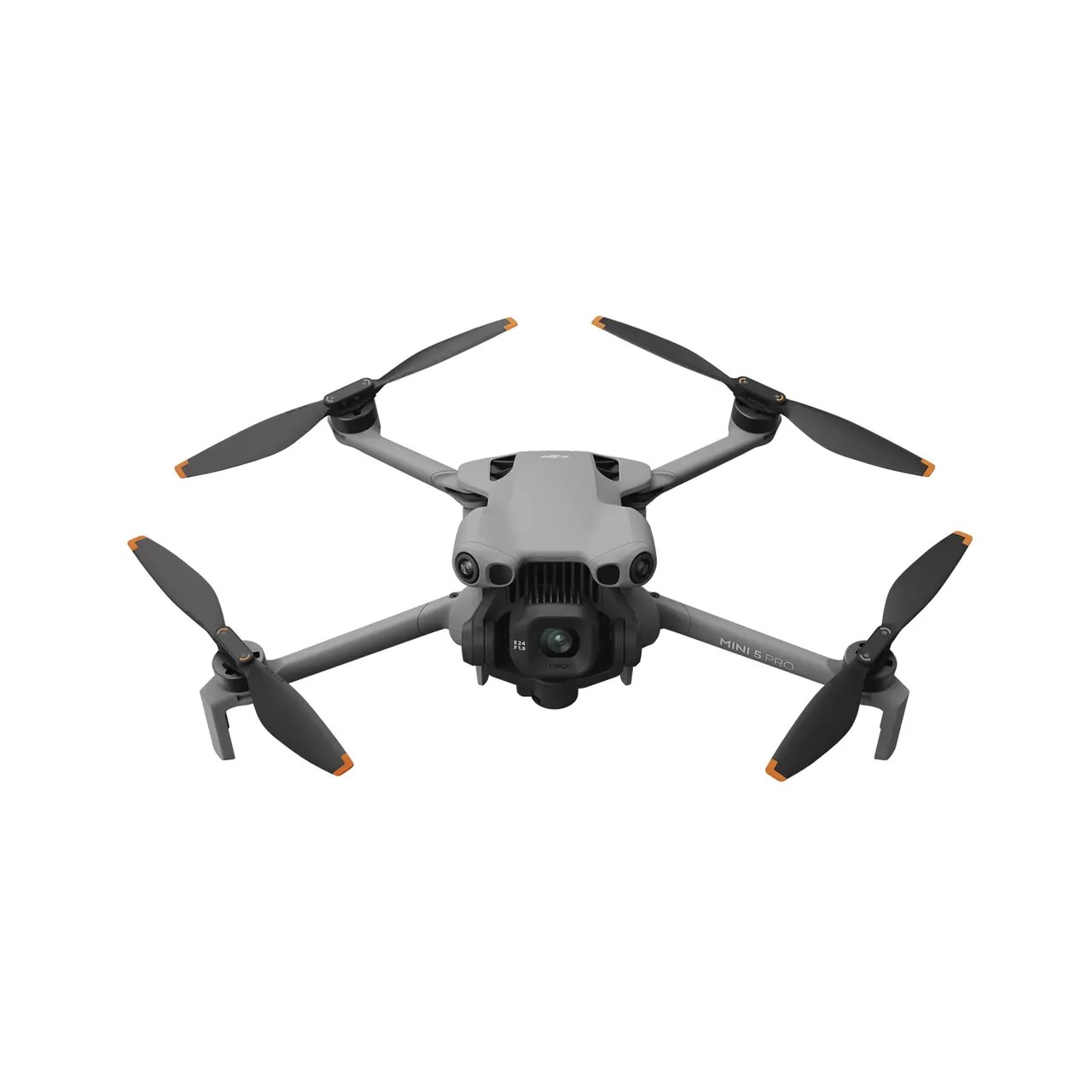
The Mini 5 Pro is designed around portability and a single 1-inch CMOS main camera. It is a sensible choice for travel footage, compact setups and creators who primarily want a wide perspective without carrying a larger aircraft. Its rotating gimbal is especially interesting to people who deliver both horizontal and vertical content. Before assuming it falls under a particular local weight exemption, check the actual regional model, battery and flight rules; camera specifications and legal permissions are different matters.
The Air 3S adds a 70 mm-equivalent medium-telephoto camera alongside its 1-inch main camera. That second viewpoint is more than a zoom button. It allows stronger visual separation of buildings and terrain, alternative compositions of architecture and people, and shots where moving the aircraft closer would be less desirable or permissible. The choice between wide and tele should be made before a shoot, not improvised around a fixed location.
Why Mavic 4 Pro is in a different production class
Mavic 4 Pro is built around a 4/3-inch main camera and two additional telephoto cameras. Its advantage is not that the aircraft is simply larger or more expensive; it gives a production team more ways to frame a subject without changing air position, plus high-resolution capture and specialised gimbal movement. Those benefits are meaningful for commercial productions, landscapes requiring careful compression, and projects where grading flexibility matters.
There is a cost beyond the purchase price. Larger aircraft, spares, batteries and charging hardware occupy more travel space. They take more planning to transport and may require different operational approvals. For a single operator shooting quick social content, a smaller drone that is ready in minutes can be more useful than a flagship left at the office.
Sensor figures need context
A bigger sensor can provide greater latitude for light collection and dynamic range, but lens quality, ISO, shutter angle, codec, exposure and colour workflow also determine the final result. Do not decide from megapixel count alone. A 100MP still image is not the same thing as a more detailed video frame, and advertised maximum video formats may only apply in certain frame-rate or recording modes.
Look at footage captured in the lighting you actually face. Midday desert scenes, interiors viewed through windows, and sunset cityscapes create different exposure challenges. Check whether your normal client delivery is short-form 1080p, social 4K, or a grade-intensive production before paying for formats you rarely use.
Batteries, charging and controller compatibility
DJI battery and hub families are model-specific. The Mavic 4 Pro battery and Mavic 4 Pro charging hub are accessories to check within that aircraft family, not universal solutions for Air or Mini models. Remote compatibility can also change by generation, so confirm the exact controller included in a combo rather than treating ‘Fly More’ as a fixed specification.
Flight-time figures are measured under defined conditions and do not account for every wind, payload, manoeuvre or safety reserve. For location work, estimate actual usable endurance and battery turnaround time. A reliable two-battery rotation can sometimes be more valuable than a single aircraft’s maximum advertised flight duration.
What we would choose for three common jobs
For travel, property snapshots and short-form social content, start the comparison with DJI Mini 5 Pro. For varied real-estate perspectives and flexible two-focal-length storytelling, look closely at DJI Air 3S. For demanding professional productions where a triple-camera system and larger sensor justify the weight, examine DJI Mavic 4 Pro. None of those choices replaces checking current official flight permissions in the UAE.
If you already own a controller and charging accessories, our DJI battery and controller compatibility guide explains why an accessory from an older generation should not be assumed to fit.
Frequently asked questions
Is Mini 5 Pro always legally exempt because it is a Mini?
No. Weight, regional configurations, local registration requirements and temporary restrictions must be checked independently of marketing names.
Why choose Air 3S over Mini 5 Pro?
Its 70mm telephoto camera provides an additional physical perspective and more flexible composition for suitable projects.
Does Mavic 4 Pro produce better footage for every social-media job?
Not necessarily. Delivery format, lighting, operator technique, travel constraints and editing time may matter more than its maximum capture specifications.
Can I reuse my Mavic 3 battery with Mavic 4 Pro?
Only if DJI explicitly confirms compatibility; do not treat the Mavic family name as proof.
Is Fly More Combo content identical across regions?
Package components can vary by model and configuration. Inspect the exact seller listing.
Can I fly these drones anywhere in the UAE after purchase?
No. The flight itself requires compliance with current federal and local restrictions and applicable permits.
Explore other FalconFly buying guides or compare product specifications in our store.
Technical references: DJI camera-drone comparison · DJI model-specific specifications · UAE GCAA UAS guidance