Choosing an FPV Battery Charger: AC/DC Power, Balance Charging and Connectors

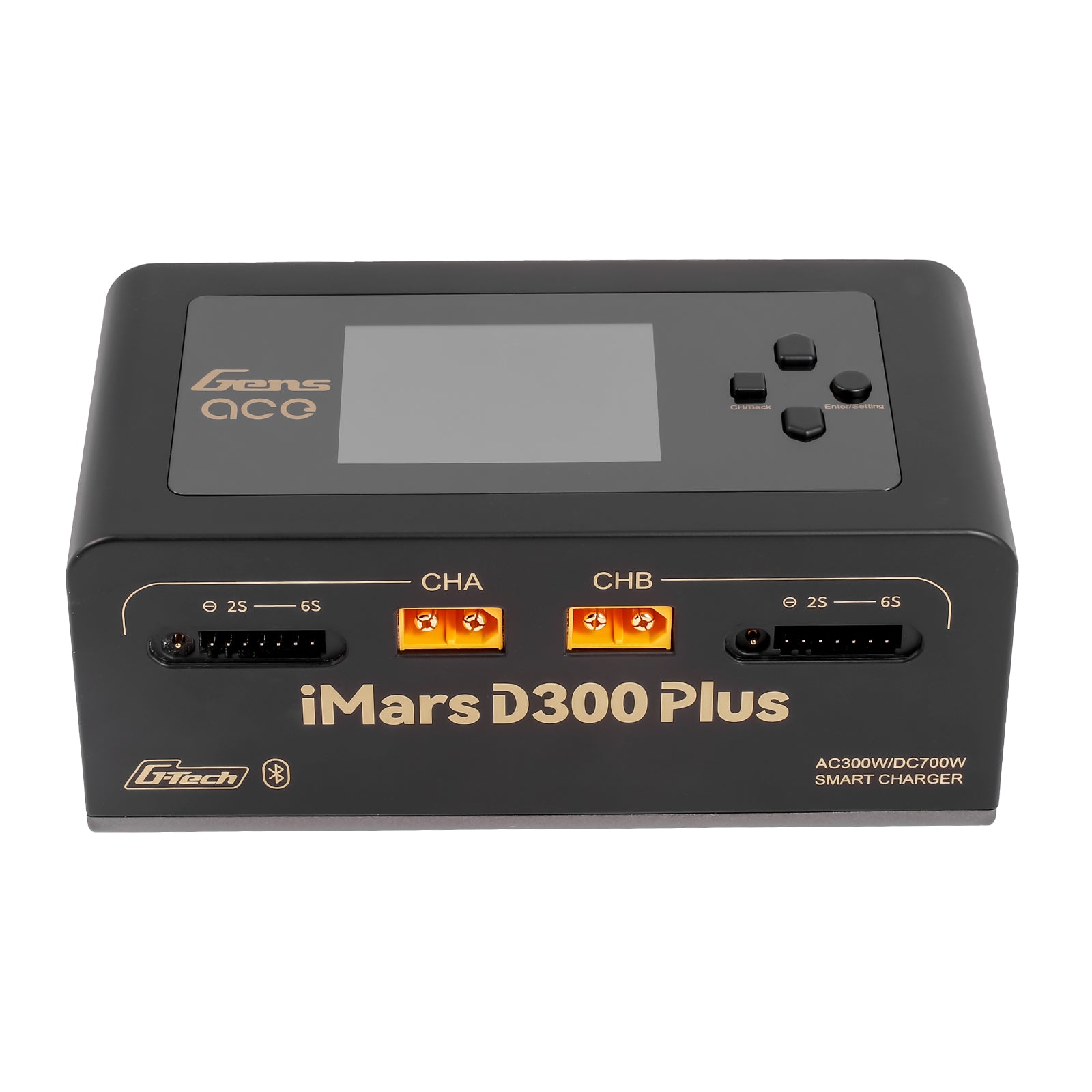
A charger’s headline wattage is only the beginning of its specification. The more useful questions are how that power is available, which packs can be connected safely, and how clearly the charger lets you see what is happening to individual cells.
AC and DC numbers answer different questions
A dual-input charger may advertise one maximum output with a mains cable and a much higher maximum with an external DC power supply. The power supply must be able to deliver sufficient input voltage and current, and the charger must support that input. Before spending extra for a high DC wattage rating, decide whether you will actually use a suitable bench power supply.
For a rough sense of power, a 6S pack charged at 5 A needs roughly 100–130 W at the battery depending on state of charge. Real input needs are higher because no charger is perfectly efficient. With two channels operating at once, look for the combined output rating rather than assuming both channels always reach their individual maximum.
Balance connection and charging leads
For multi-cell LiPo and LiHV packs, identify both the main power connector and the balance connector. A good charger displays individual cell voltages, charge current, chemistry and errors. Do not rely on a mismatched adapter or a connector with uncertain rating; power leads should match the charge current and be inspected for corrosion and heat.
Parallel boards require additional knowledge about matching pack voltage, chemistry and cell count. They are not a simple solution for charging a mixture of used packs. Beginners are usually better served by independent charging channels and careful verification.
Charging rate and battery life
A pack’s permissible charge rate comes from its label and manufacturer documentation. Common 1C examples are a starting point for understanding current, not a promise that every pack should be charged at 1C. Packs that have been deeply discharged, show swelling, have physical damage or fail a cell-voltage check should not be forced through a normal charge cycle.
Storage mode matters just as much as rapid charge. In a hot climate, allow a warm battery to cool to a suitable temperature before connecting it. Use a nonflammable charging area and never leave charging equipment unattended.
A practical comparison for FalconFly shoppers
The Gens Ace iMars D300 Plus is a dual-channel AC/DC option, while the HOTA D6 Pro is another dual-input dual-channel choice. Compare AC ratings, DC requirements and interface features against your actual workflow rather than buying by the largest number on a product banner. For battery care details, read our battery charging and storage article.
Frequently asked questions
What does 300W AC / 700W DC mean?
It means the rated output differs depending on how the charger is powered; confirm the product manual and whether it is combined or per-channel power.
Can I charge 4S and 6S packs at once?
On separate supported channels, yes, when each channel is configured for its connected battery’s chemistry, cell count and rating.
Is balance charging necessary?
It is the standard recommended approach for multi-cell hobby LiPo packs so individual cell voltage can be monitored and balanced.
Do I need a dedicated bench PSU?
Only if you intend to use the charger’s DC mode or performance that the built-in AC supply cannot provide.
Can a charger revive a physically damaged battery?
No. A swollen, punctured or overheated pack should not be used or force charged.
For more technical guidance, see the FalconFly FPV Knowledge Hub. Always match the exact product revision to your existing equipment.
References: Battery storage questions from pilots