1S Tiny Whoop Batteries: BT2.0, PH2.0, LiHV and Charging Explained

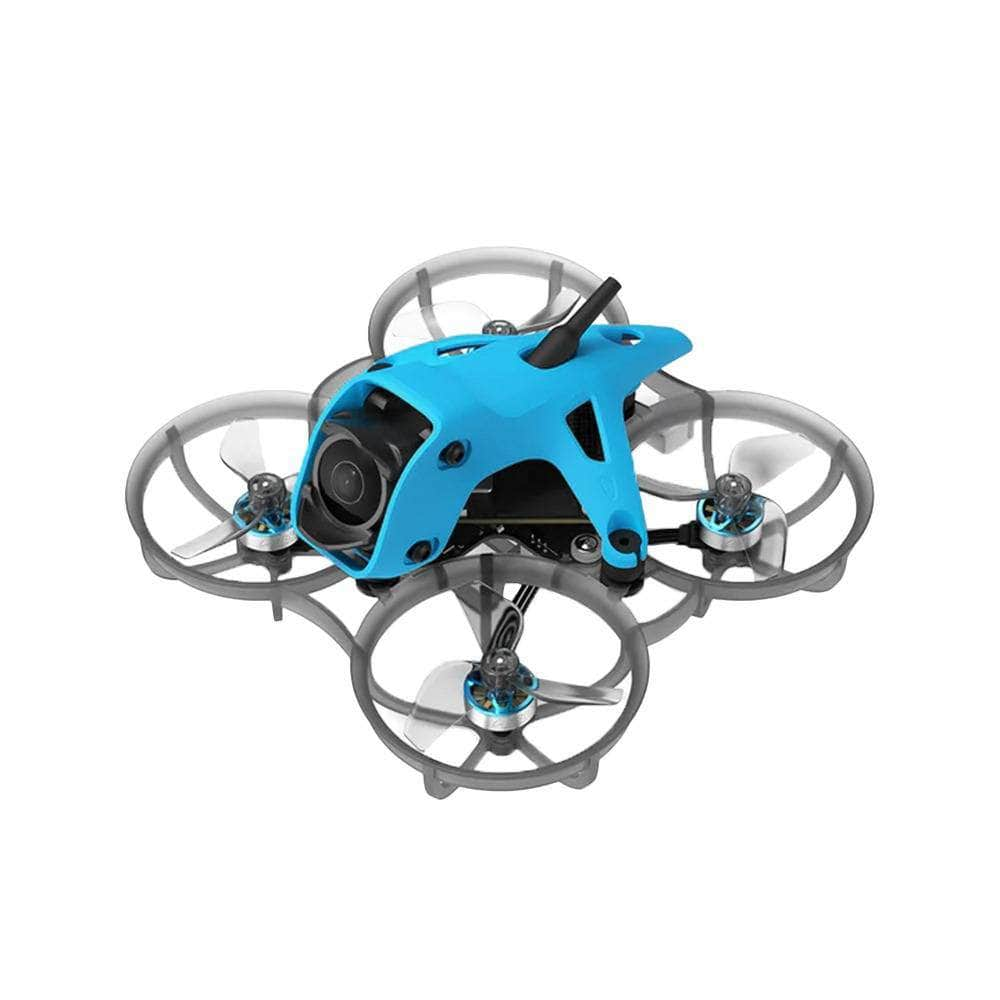
Tiny whoop batteries are inexpensive individually, which makes them easy to buy casually. That is also why beginners end up with a drawer full of packs that do not fit their connector, have the wrong charging profile, or weigh too much for the aircraft. The label on a 1S pack tells a much more useful story than its colour.
The ‘1S’ label does not answer every question
A one-cell pack contains one cell in series. Standard LiPo chemistry is commonly specified around 3.7V nominal and 4.20V at full charge; LiHV versions are often rated 3.8V nominal and may permit a 4.35V full-charge target when the manufacturer explicitly says so. Never choose the higher setting for a pack just because the charger offers it. Read the chemistry and maximum voltage printed on the battery label.
Tiny whoop batteries span capacities from around 300mAh on very light micro frames to 500–700mAh and above on larger platforms. A bigger pack is not necessarily more useful. A 65mm aircraft with modest motors may become less lively if an oversized pack adds mass; a 75mm build designed for a larger cell may balance differently. Compare weight and dimensions alongside mAh rather than making capacity the sole purchase criterion.
BT2.0 and PH2.0: similar job, different connectors
BT2.0 and PH2.0 are common small battery connectors. They are not plug-compatible, and a battery that has the right voltage may still be unusable with a given whoop. Connector resistance can contribute to voltage sag during high current bursts, which is one reason pilots care about connector type. But do not replace a connector without checking battery polarity, frame clearance and the skills needed to solder safely.
The official BETAFPV six-port 1S charger/adapter is designed to support both BT2.0 and PH2.0, demonstrating how a charger can serve more than one connection without forcing the same plug onto every battery. Some other manufacturers use A30-style connectors or different orientations. Inspect the exact plugs before buying packs or adapter boards.
Capacity, discharge label and the feel of the aircraft
Manufacturers quote discharge ratings such as 75C or 95C, but those are claims under test conditions that may not be directly comparable across brands. Real performance depends on cell internal resistance, age, warmth, connectors and how much current the motors draw. If a whoop begins to feel sluggish near the end of a flight, the cause may be voltage sag rather than a problem with your stick skills.
For a practical comparison, FalconFly lists BETAFPV LAVA II 1S 320mAh, LAVA II 480mAh and LAVA II 580mAh. Those are capacity options, not promises of universal interchangeability. Match the battery connector, dimensions and aircraft manufacturer’s intended range.
Charging six small packs still requires care
Multi-port charging is useful for getting more flight practice, but ‘six ports’ is not permission to connect six arbitrary packs. Confirm whether each port operates independently, what chemistry is supported, what charge voltage it targets and whether all packs connected must share the same chemistry. Inspect the condition of charging leads and keep batteries on a non-flammable surface in a supervised charging area.
An appropriate choice may be the BETAFPV HexaCharger Pro or GEPRC WooPower W63, after confirming the exact connector and chemistry support. The battery storage and safety guide covers the care routine once the right hardware is selected.
What to do with packs that are getting old
Keep a record of packs that show unusually short flight times, swelling, damaged insulation or hot connectors. A single intermittent pack can waste an entire troubleshooting session if it is used for testing a radio or flight controller. Do not attempt to repair a punctured or swollen cell, or leave a warm pack connected to a charger immediately after flight. Use manufacturer-approved disposal guidance.
undefined
Frequently asked questions
Can I charge standard 1S LiPo packs to 4.35V?
No, not unless that specific pack is rated by its manufacturer for that higher LiHV voltage.
Will a BT2.0 battery fit a PH2.0 drone?
Not directly; the connectors are different. Choose the correct pack or a manufacturer-approved compatible setup.
Is a 680mAh battery better than 320mAh for a 65mm whoop?
Not automatically. Extra weight, propeller loading and physical fit can outweigh additional capacity.
Why does voltage sag when I accelerate?
High motor current, cell age, internal resistance and connector losses can all contribute.
Are all six-port 1S chargers interchangeable?
No. Ports, supported chemistry, current and connector types vary across models.
Can I use LiHV and standard LiPo in one charging session?
Only when the charger independently and explicitly supports their correct voltage targets. Never assume a shared charging mode is suitable.
How should I store unused 1S packs?
Follow the manufacturer’s storage charge and temperature recommendations rather than leaving healthy packs at full charge for long periods.
See more FalconFly drone buying guides.
References: BETAFPV dual-connector charger · FalconFly LiPo storage guide