Betaflight Failsafe Checklist: What Happens When Your FPV Radio Link Drops?

An FPV quad does not become safe simply because the radio and receiver have completed a bind. The important question is what the flight controller will do when they stop communicating. Failsafe is the part of a build that deserves a deliberate test while the propellers are off, rather than a hopeful assumption before the first flight.
The receiver needs to tell the flight controller that the link is gone
Betaflight distinguishes receiver-based failsafe from flight-controller-based failsafe. In a receiver-based approach, the receiver may keep sending preset channel values after it loses the radio. That can make the flight controller believe the link is still healthy, preventing the configured FC failsafe logic from running. Betaflight’s documentation explicitly recommends using FC-based failsafe and configuring the receiver to send no normal control data on link loss.
For a serial ELRS installation, verify the receiver-to-FC UART path and CRSF protocol first. In the Receiver tab, stick channels should respond correctly with the transmitter powered on. With the propellers removed, use the documented procedure to simulate a loss of RF transmission and confirm that Betaflight detects the loss. A receiver with a flashing LED is not by itself proof that the FC has correctly detected failsafe.
Stage 1 and Stage 2 mean different things
The flight controller has a brief signal-validation and guard period before applying the selected Stage 2 procedure. Betaflight’s default Stage 2 procedure is generally Drop, disarming the quad rather than attempting an unconfigured landing. Other options may include Landing Mode or GPS Rescue if the relevant hardware, firmware and setup support them. The correct choice depends on the risk environment and configuration; there is no universal ‘best’ panic behaviour for every aircraft.
Don’t select GPS Rescue just because a GPS module is physically installed. Rescue requires a valid home position and suitable heading, tune, positioning and failsafe setup. It also needs controlled verification. Read our Betaflight GPS Rescue guide before treating it as a recovery option.
Test without turning the exercise into a crash
Remove propellers before opening the Motors or Failsafe tabs. Confirm model selection, arm switch and receiver channels, then use Betaflight’s recommended simulation method—often disabling the active transmitter module—rather than suddenly powering down equipment during flight. Watch whether the flight controller enters the expected signal-loss state. If you are uncertain about the response, stop and consult the current documentation for your firmware branch.
A full failsafe test also checks recovery logic. After a Stage 2 disarm, the aircraft should not unexpectedly rearm as soon as signal returns. The arm switch may need to be cycled off and on, and receiver recovery delays may apply. This is a feature rather than an inconvenience; an unexpectedly armed quad can injure someone long after the original link problem.
Separate video loss from radio loss
On a custom quad equipped with DJI O4 video and ELRS control, losing picture in the goggles does not necessarily mean the radio link is also lost. Equally, a clear video feed does not mean that control channels are being received. Set up OSD link warnings and practise a disciplined response to each failure mode in a simulator or other controlled training environment. Know which component handles failsafe; on Betaflight builds it is generally the flight controller, not the goggles.
Different radio systems offer telemetry warnings that can alert you to degrading link conditions, but indicators such as RSSI, LQ or receiver voltage have their own meanings. Use thresholds that reflect your equipment and firmware rather than copying an unrelated pilot’s screen.
The five-minute bench checklist before an authorised flight
Start with radio model and RF output, confirm a stable receiver bind and correct channel mapping, inspect failsafe settings, and ensure both recovery/disarm behaviour and any GPS prerequisites work as intended. Confirm motor order and propeller direction separately, and keep propellers off until all bench changes are complete. Record firmware versions so a future update can be regression-tested. Safe operation still depends on current permissions and a suitable environment; in the UAE, consult the GCAA and the applicable emirate authority before any test flight.
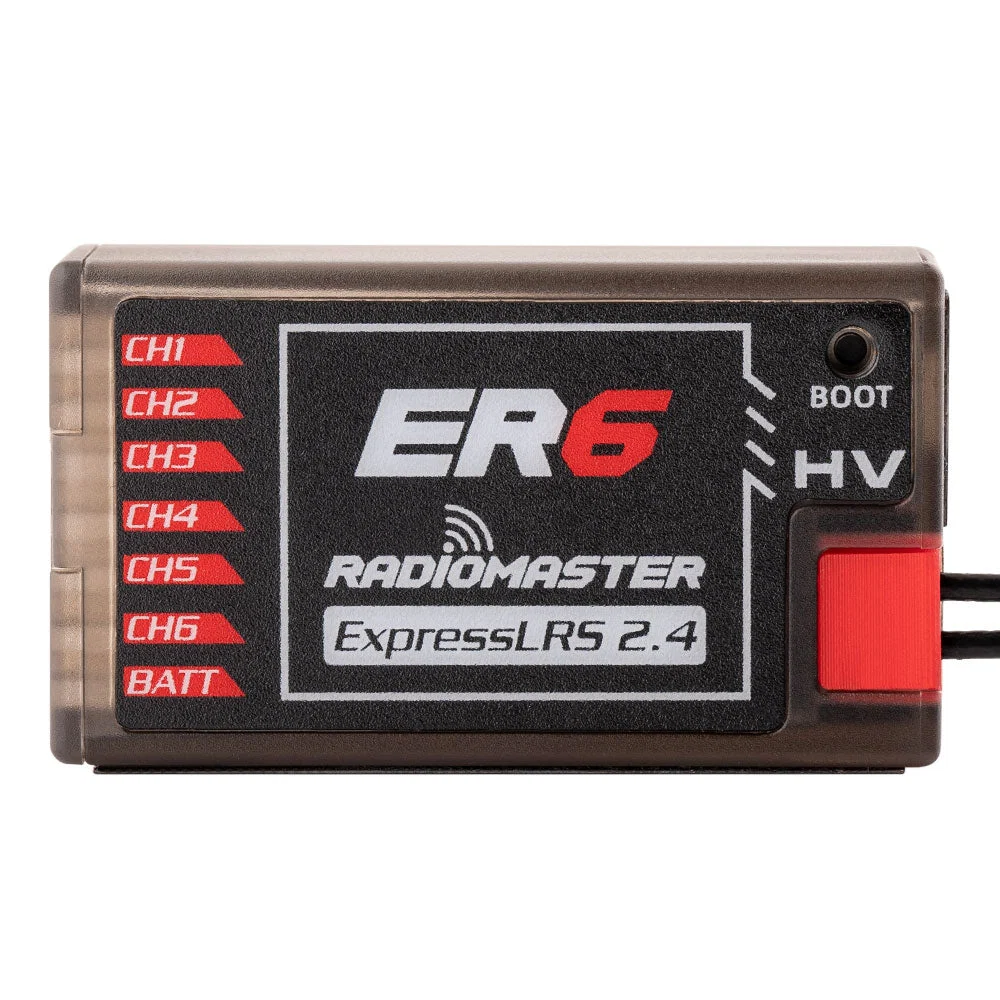
For compatible hardware examples, review the RadioMaster ER6 2.4GHz receiver for PWM applications and the RadioMaster TX16S MK3 ELRS as a controller example. The receiver-output architecture still needs to match the flight controller. Our ELRS binding troubleshooting guide covers issues before failsafe testing can begin.
Frequently asked questions
Is a bound ELRS link proof that failsafe works?
No. Binding and correct receiver-to-flight-controller failsafe signalling are separate checks.
Why does Betaflight recommend ‘no data’ on signal loss?
It allows the FC to recognise that the control link is no longer valid and apply its configured failsafe procedures.
Can I just set all channels to neutral on a receiver?
That may hide signal loss from the FC, so it is not the generally recommended Betaflight approach.
Does GPS Rescue always return my quad safely?
No. It requires proper hardware, position and configuration, and it may fail under unfavourable conditions.
Should I test failsafe with the propellers installed?
No. Conduct bench checks with props removed and follow the documented testing sequence.
Can the motors rearm themselves when the link comes back?
Proper failsafe and arming safeguards prevent unexpected rearming; verify the precise recovery behaviour for your Betaflight version.
Is loss of DJI O4 video the same as loss of ELRS radio control?
No. On systems with independent video and control links, either can fail separately.
See more FalconFly drone buying guides.
References: Betaflight official failsafe guide · Betaflight arming safety · Betaflight GPS Rescue