GEPRC Vapor-D5 8S O4 Pro: Why a 6S Motor and Battery Plan Must Be Rechecked

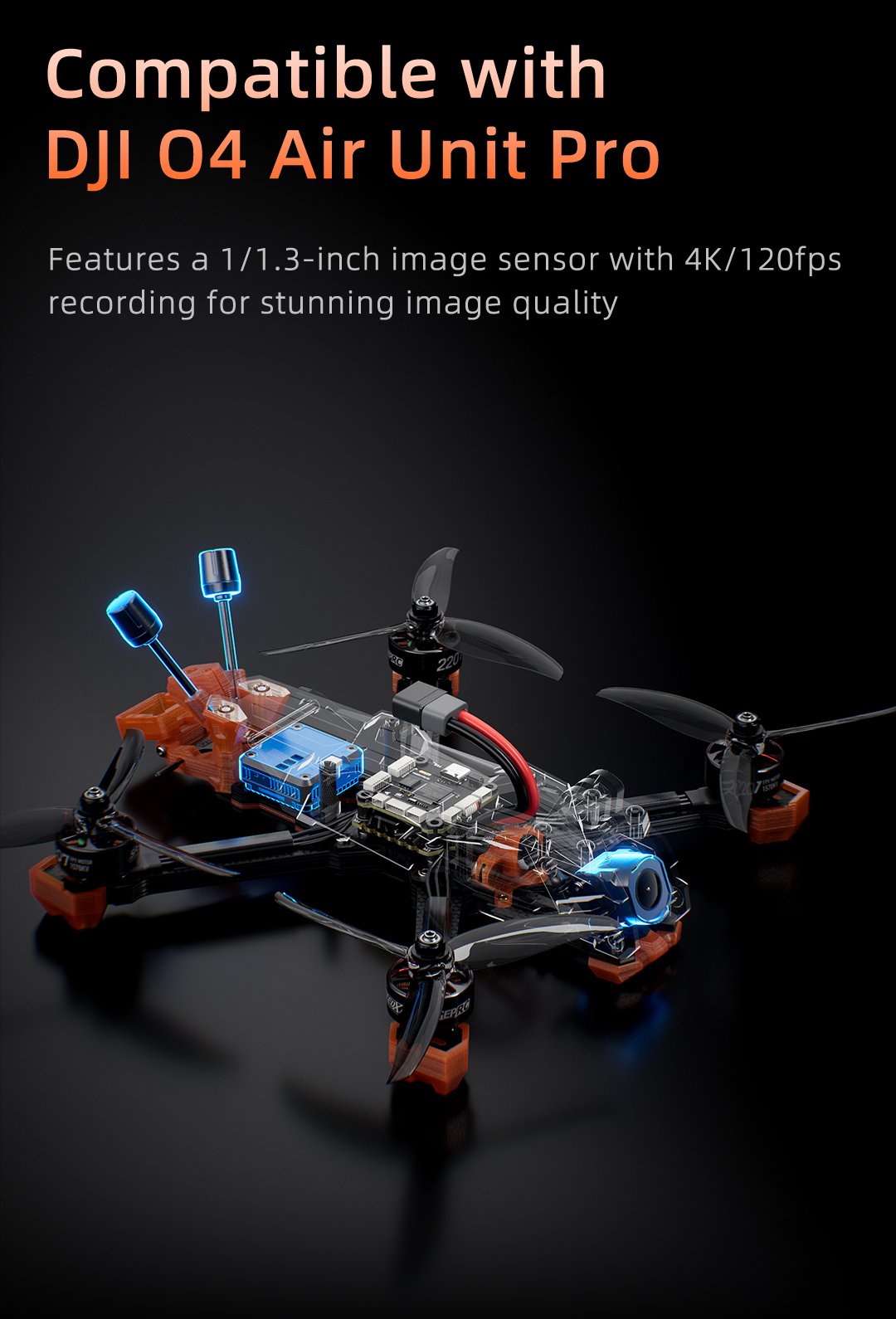
A pilot buys the GEPRC Vapor-D5 8S O4 Pro to get stronger five-inch freestyle performance, then plans to reuse motors, ESC settings and battery packs from an older 6S quad. The airframe uses familiar XT60 connectors and 5-inch Gemfan propellers, so the parts look interchangeable. That is an unsafe assumption. GEPRC’s 8S version uses an 8S-rated TAKER F722 flight-control system, 65A/8S ESC and SPEEDX2 2207 1570KV motors, not the electrical setup of a standard 6S Vapor-D5. The O4 Pro camera/video unit also requires its own power within DJI’s lower voltage range.
What makes the Vapor-D5 8S a different build?
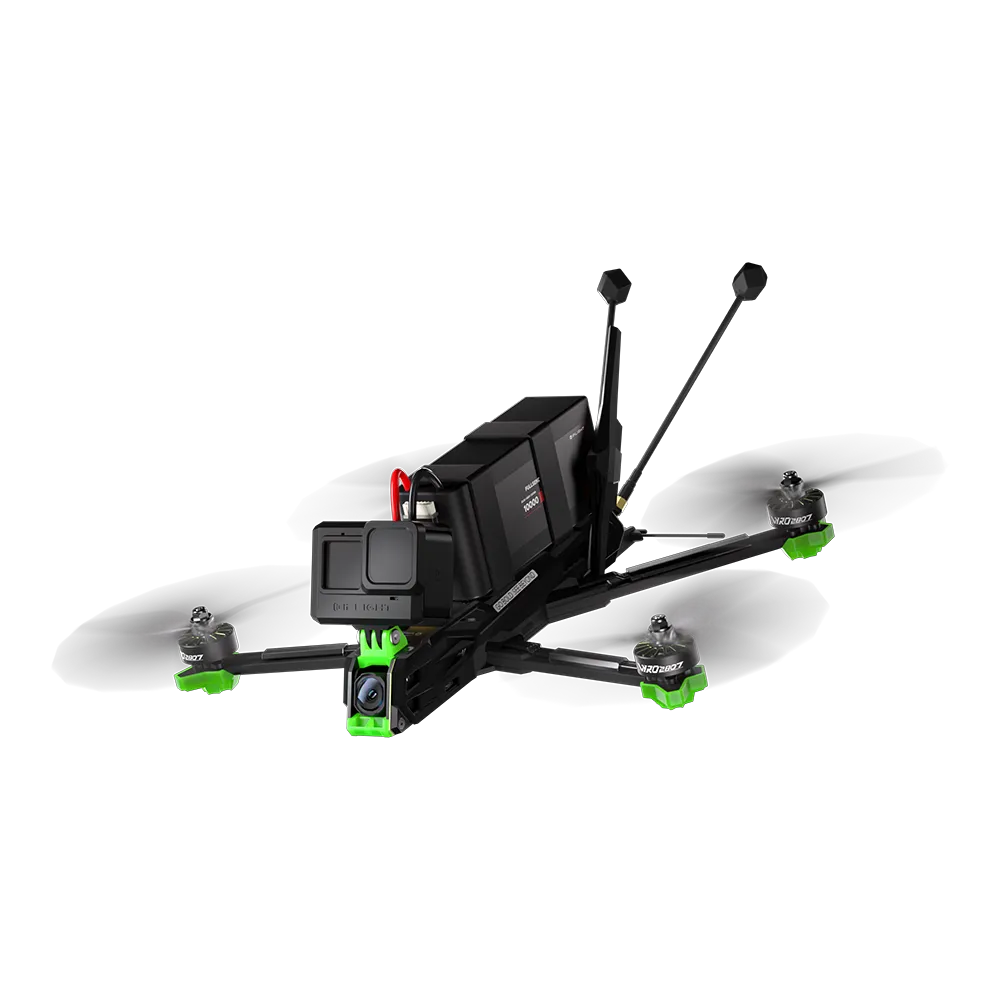
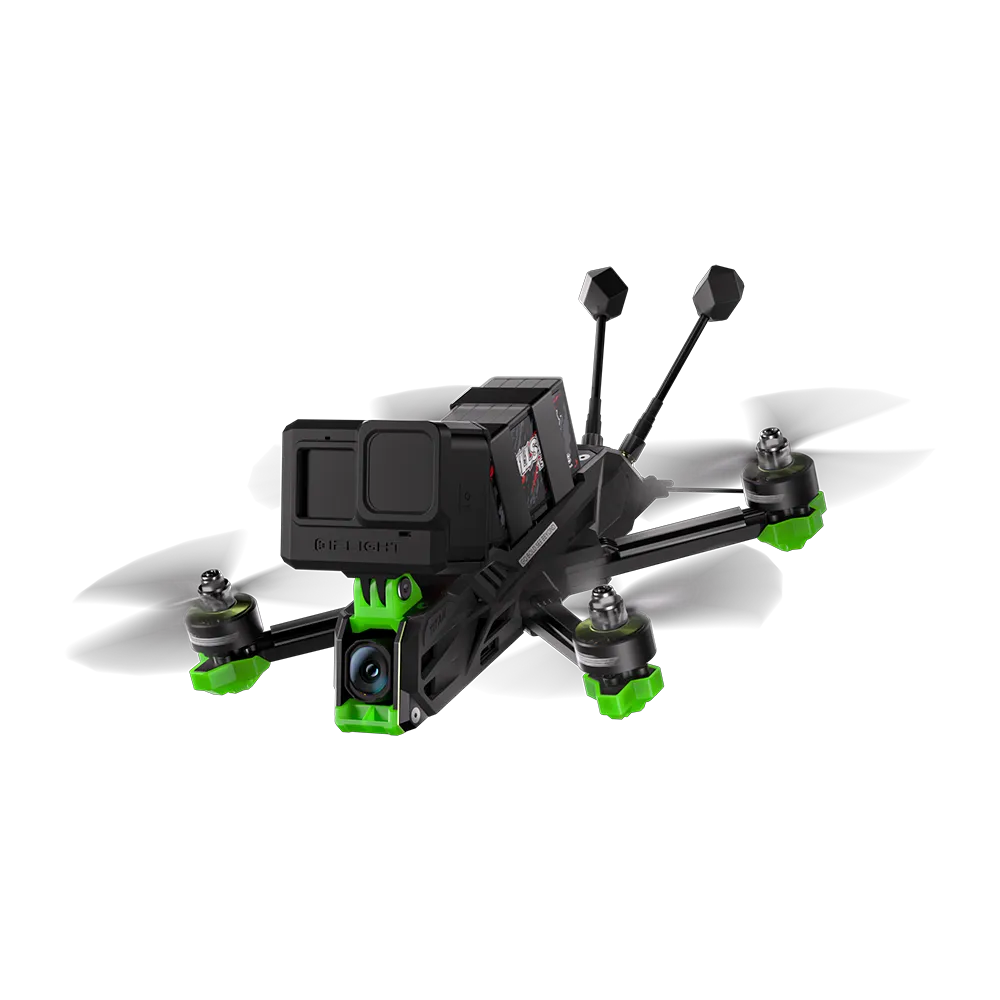
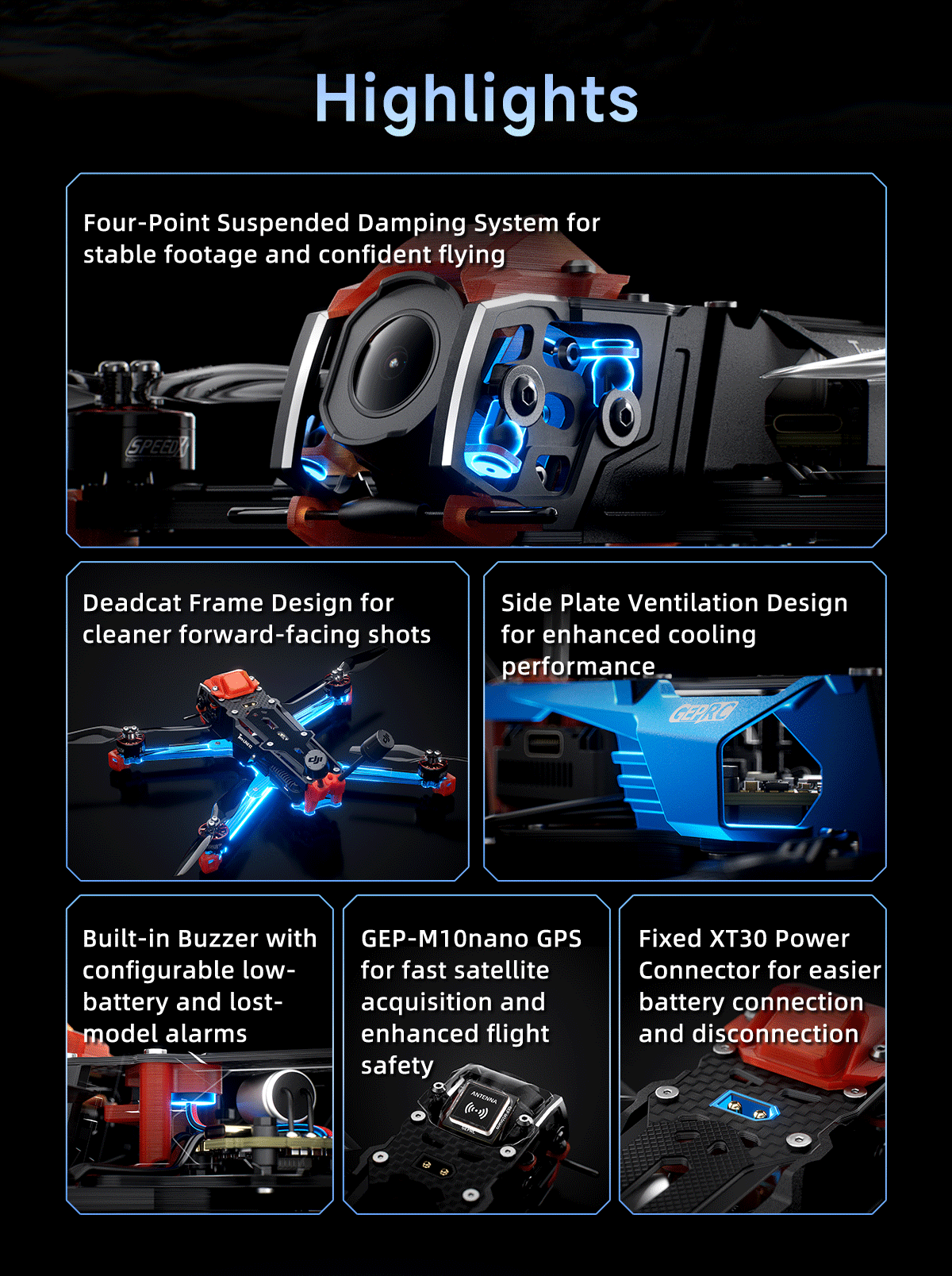
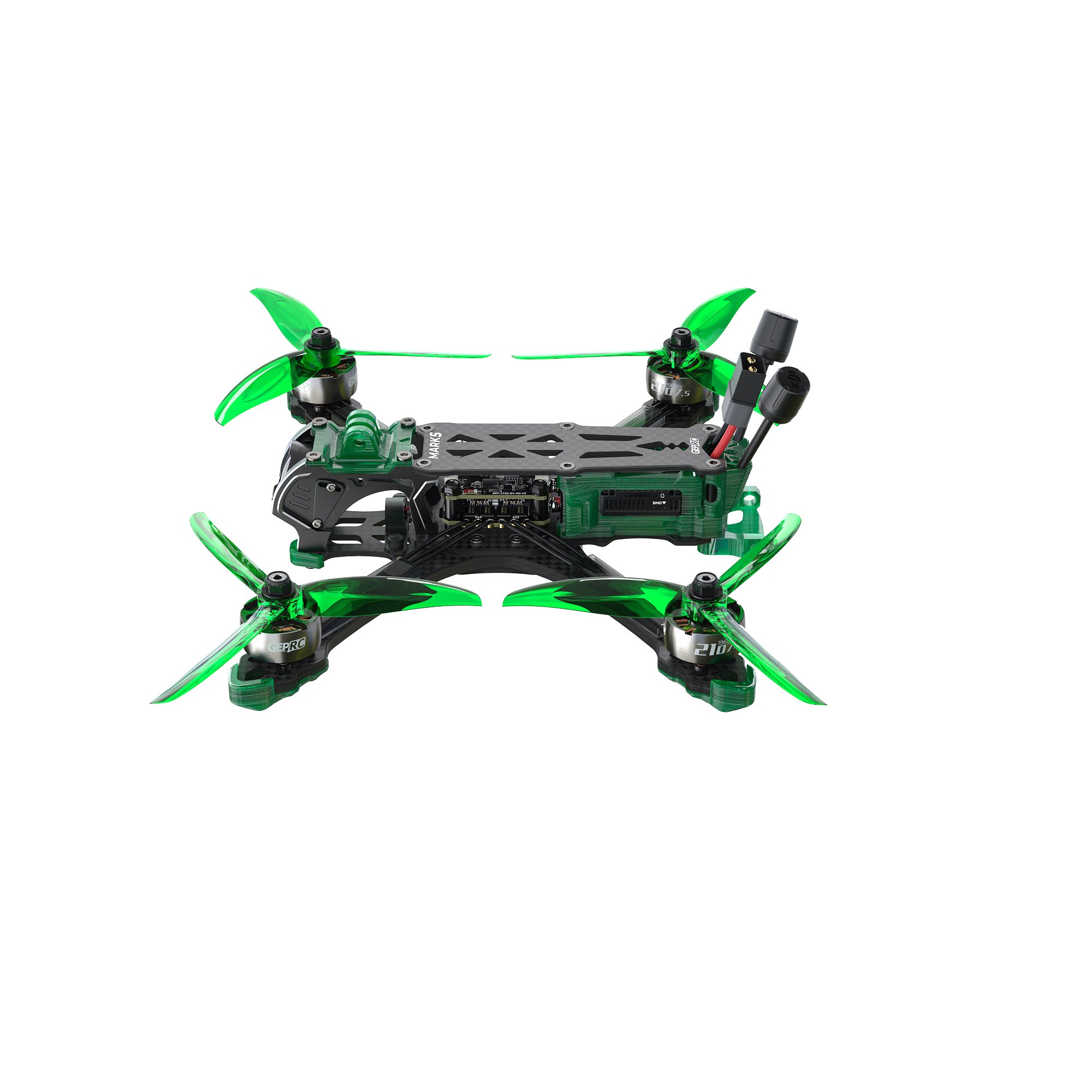
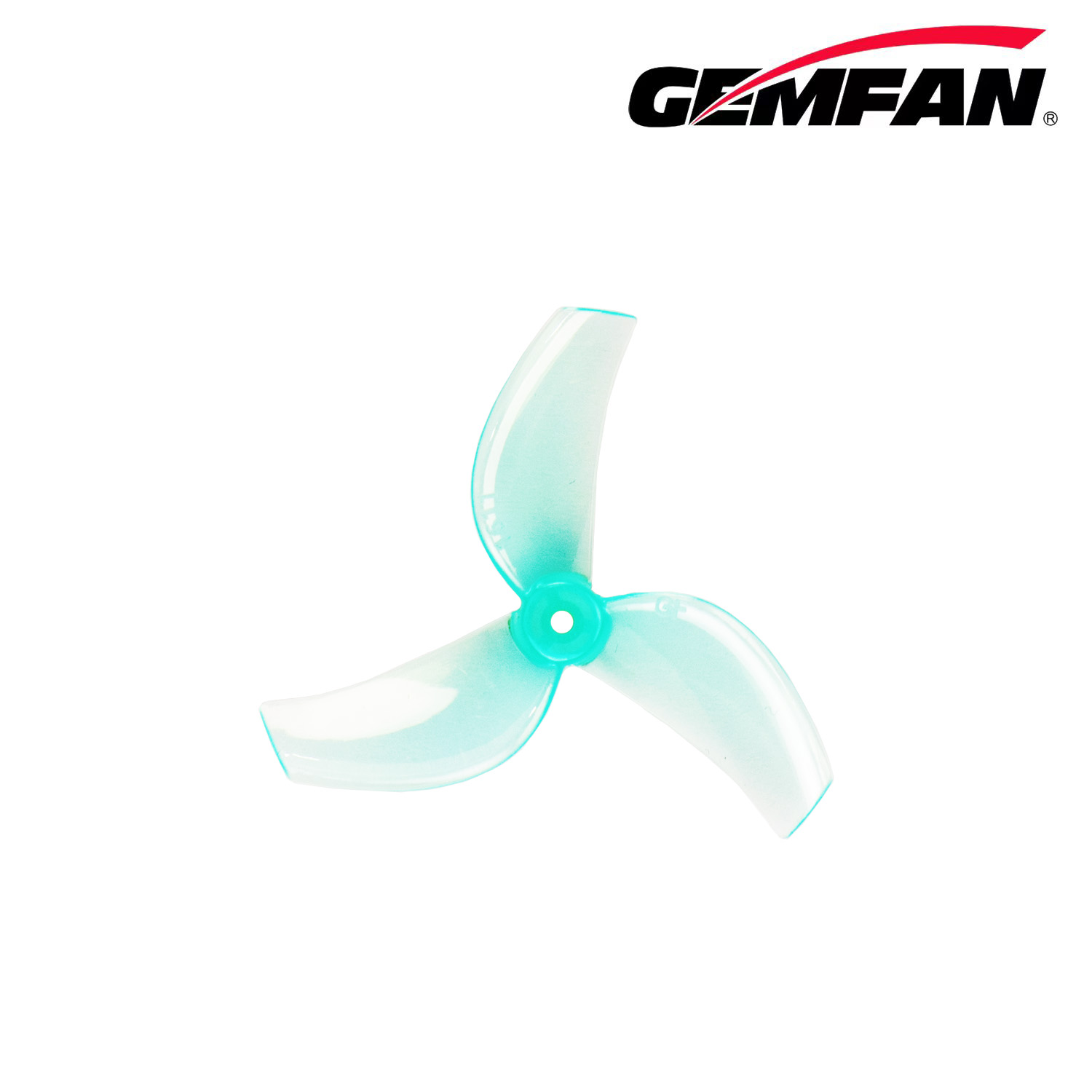
FalconFly’s GEPRC Vapor-D5 8S O4 Pro is a true 8S freestyle configuration. GEPRC specifies a 238mm wheelbase, 7mm carbon arms, TAKER F722 8S FC and TAKER H65 8S 32-bit 65A 4-in-1 ESC. Its SPEEDX2 2207 1570KV motors drive Gemfan 51477 five-inch propellers. The manufacturer recommends 8S LiPo 1300–1800mAh and lists about 511g ±5g for the PNP version of the O4 Pro-equipped drone, before its separate flight pack. Its published 12-minute flight time is a reference figure, not a full-throttle freestyle guarantee.
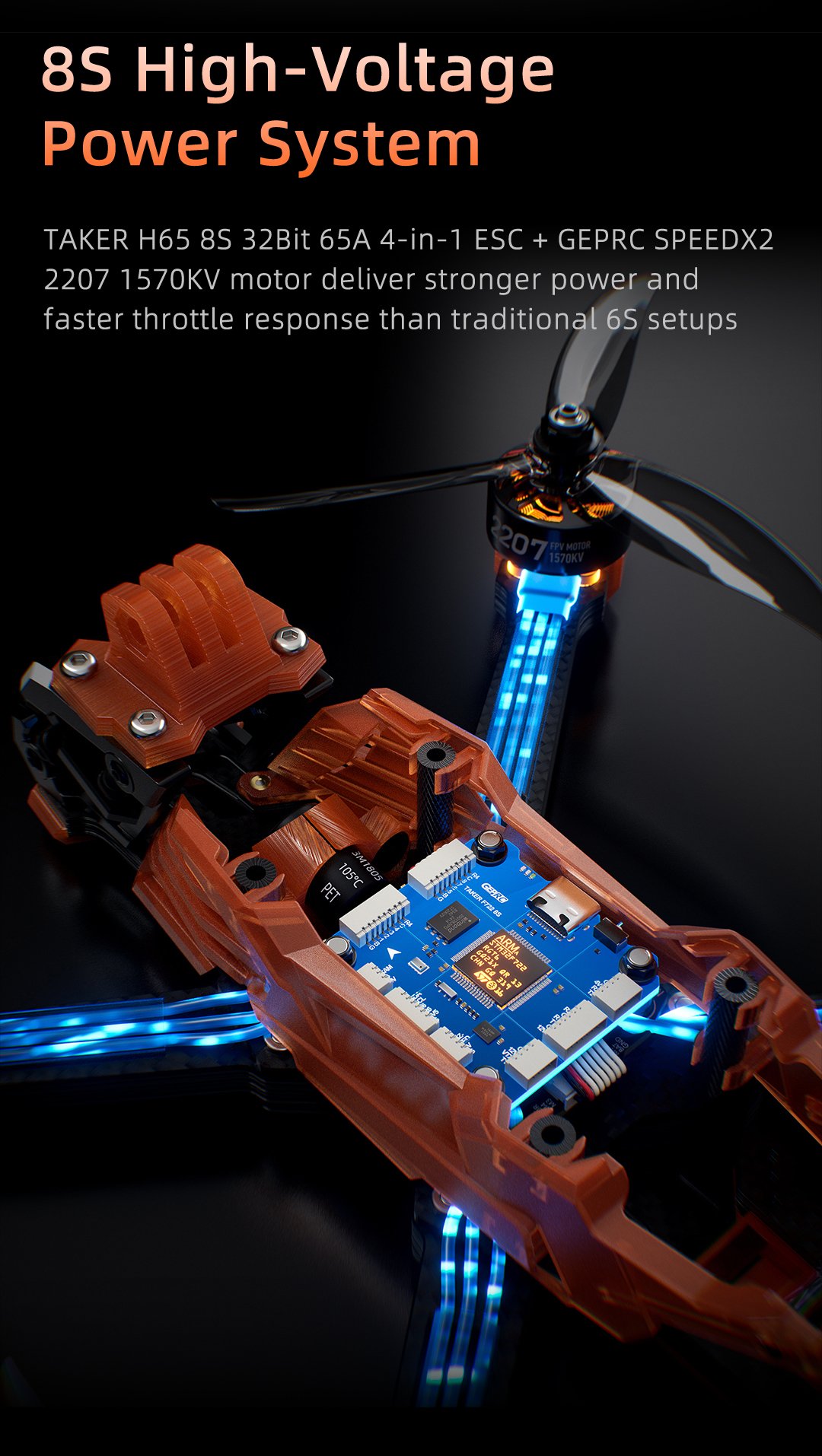
An eight-cell LiPo reaches about 33.6V at full charge, compared with about 25.2V for 6S LiPo. That 33% higher full-pack voltage is why a component rated “6S only” is not automatically compatible even when its XT60 plug physically fits. A compatible 8S ESC, flight-controller regulator, capacitors and other battery-connected components must all be selected for the full voltage and transient conditions.
Separate the 8S propulsion supply from the O4 Pro video supply
DJI specifies 7.4–26.4V input for the O4 Air Unit Pro. An 8S LiPo at 33.6V is therefore outside the O4 Pro’s direct-input rating. A factory-built Vapor-D5 8S must provide the O4 Pro with power via an appropriate regulated onboard supply. The existence of a genuine 8S O4 Pro aircraft is not permission to connect the bare video module directly to 8S VBAT during a repair or custom rebuild.
| Component | Approved or documented requirement | Wrong assumption to avoid |
|---|---|---|
| Battery | 8S LiPo, recommended 1300–1800mAh | Any XT60 pack is electrically equivalent |
| FC | GEPRC TAKER F722 8S | A similar-looking 6S FC will survive 33.6V |
| ESC | GEPRC TAKER H65 8S, 65A 4-in-1 | 6S ESC ratings apply to 8S |
| Motors | SPEEDX2 2207 1570KV | A 6S 1960KV motor can be swapped with no revalidation |
| Propellers | Gemfan 51477 5-inch type | Every 5-inch prop produces the same current at 8S |
| DJI O4 Pro | 7.4–26.4V at its own input | O4 Pro itself accepts 33.6V 8S direct input |
Why 1570KV matters when moving from 6S to 8S
KV describes approximate no-load RPM per volt, not motor wattage or ESC capability. A 1570KV motor on a higher-voltage 8S pack can have a very different electrical and mechanical operating range from a 1960KV 6S motor with the same 2207 stator size. The actual propeller load, winding design, ESC timing and thermal conditions determine current. “Both are 2207 motors” is not a compatibility test.
For example, the separate GEPRC SPEEDX2 2207E 1960KV motor is a manufacturer-designated 6S part with a 50A/6S ESC recommendation. Those 6S recommendations do not automatically transfer to the 8S Vapor-D5’s 1570KV propulsion system. Do not change just one motor to a different KV and run all four together.
8S capacity: why a large mAh number can still be inappropriate
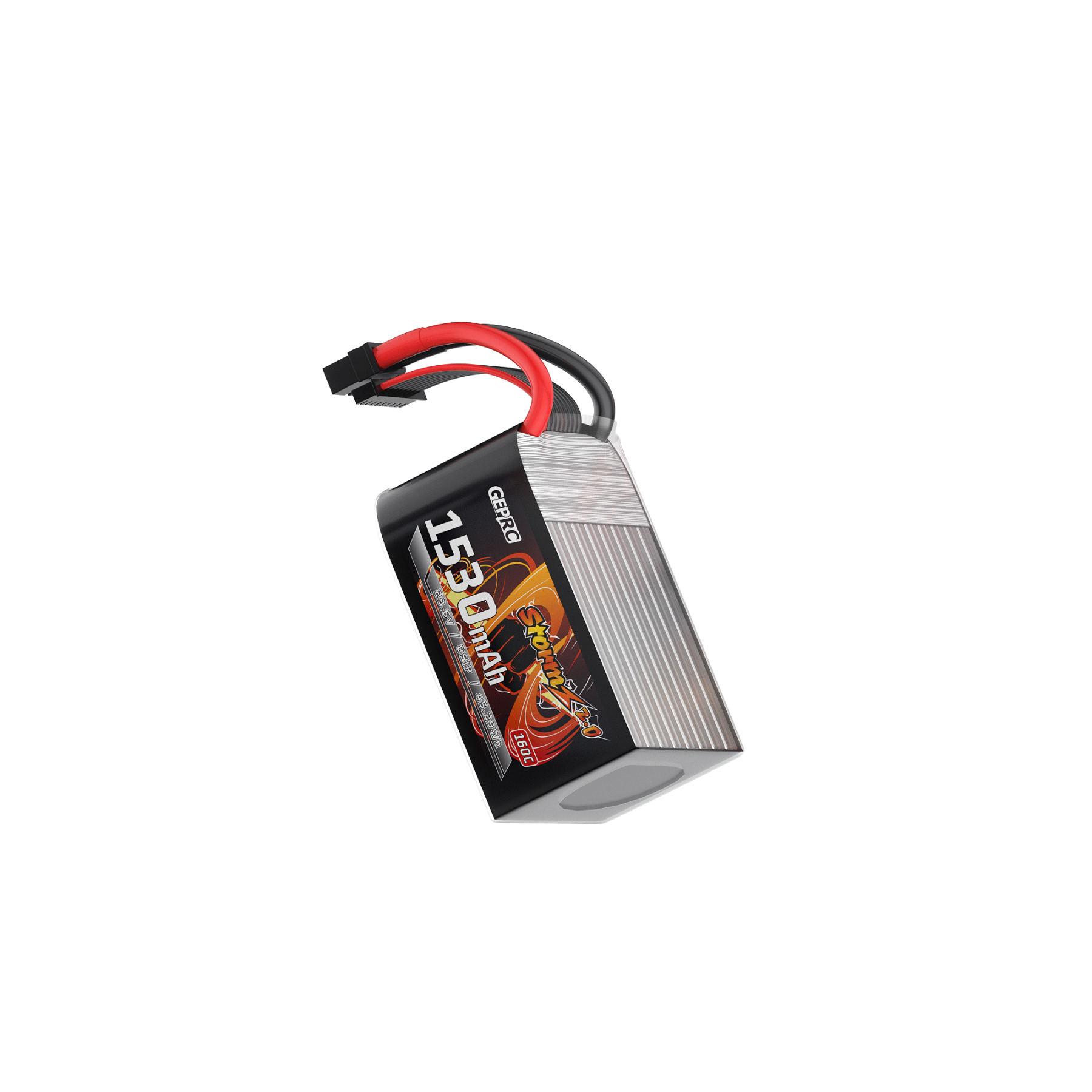
GEPRC specifies 1300–1800mAh 8S LiPo for the aircraft. An 8S pack stores more nominal energy at a given mAh capacity than a 6S pack, but also changes weight, size, connector wiring and handling. The 8S full-charge voltage and actual battery mass must be considered when choosing cable insulation, power protection, ESC capacitor voltage and flight reserve. A large heavy battery can reduce manoeuvrability and create more load during acceleration even if its energy rating is higher.
The manufacturer quotes 12 minutes as its flight-time reference. That number should not be used to promise twelve minutes of racing or full-throttle freestyle. Log actual energy consumption and leave a conservative return/landing reserve for the intended mission. If a pack is damaged or significantly imbalanced, stop using it rather than relying on the aircraft’s voltage warning to prevent a fault.
Typical failures after an 8S swap
- O4 Pro powers off or fails after a repair: confirm the video module is on a regulated supported output rather than direct 8S battery input.
- Flight controller dead after connecting a new battery: inspect whether the actual FC, ESC, capacitor and BEC are truly rated for full 8S voltage.
- Only one motor runs hot: check motor model/KV mismatch, damaged windings, ESC channel, propeller damage and excessively long motor screws.
- All motors heat at high throttle: inspect propeller choice, ESC timing, current logs, cooling and tuning; a generic 6S tune may not be suitable.
- Goggles link works but no camera picture: isolate DJI O4 Pro camera/coax and regulated supply before replacing radio antennas.
- Battery voltage measurement seems wrong: verify Betaflight cell-count detection and voltage scaling; do not use a 6S alarm threshold unchanged on 8S.
A safe rebuild checklist
- Read each board label. Confirm the exact 8S-rated TAKER F722 FC and H65/8S ESC, not visually similar 6S hardware.
- Record the original configuration. Save Betaflight CLI/dump and manufacturer reference before changing motor or receiver wiring.
- Inspect propulsion as a group. Confirm four matching 1570KV motors, correct Gemfan props, secure 7mm arms and suitable hardware.
- Verify regulated O4 power. Use the manufacturer 8S wiring diagram and check that the video unit receives a voltage within DJI’s 7.4–26.4V specification, with adequate current capacity.
- Check battery and connector ratings. Match actual 8S pack, XT60, capacitor ratings, insulation and BEC limits to the complete supply voltage.
- Remove props for the first power-on. Inspect polarity, FC-to-ESC harness pinout and motor mapping. Use only protection equipment explicitly rated for an 8S full-voltage system.
- Test within approved conditions. Review FC voltage sensing, failsafe, radio link, motor heat and O4 status, then conduct a controlled authorised flight with conservative energy margins.
Why an ordinary 1–6S smoke stopper is unsafe on this 8S build
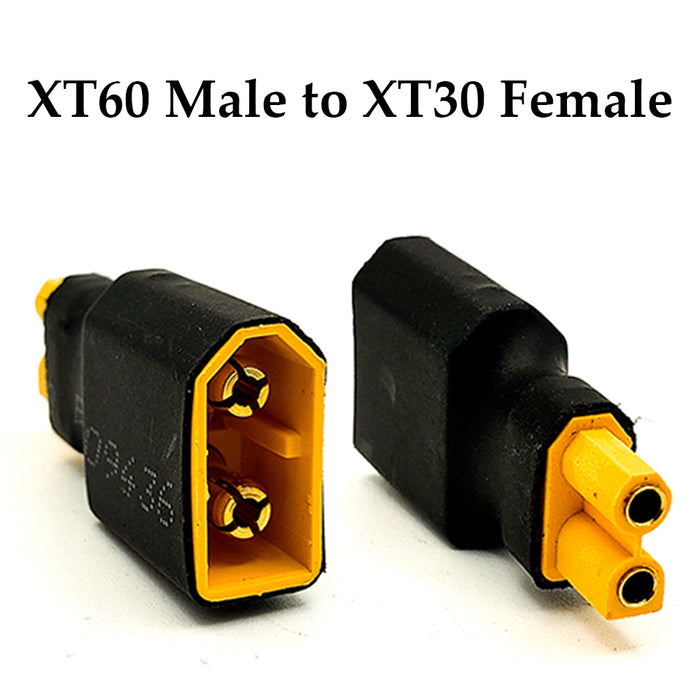
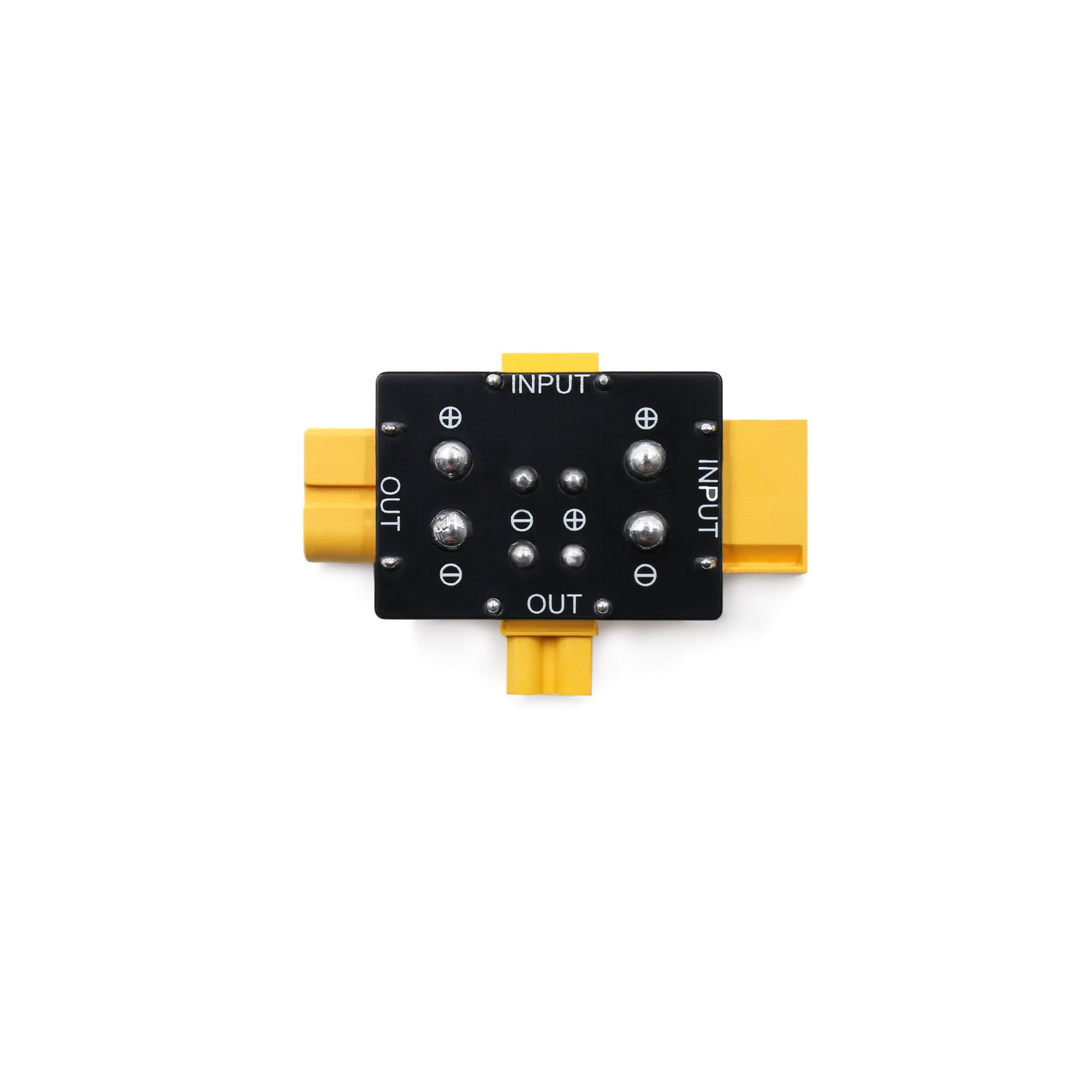
It is tempting to reuse a small XT60 smoke stopper from an older six-cell FPV drone during the Vapor-D5 8S first power-on. Do not do that without checking its voltage rating. GEPRC’s commonly sold Smoke Stopper is specified for 1–6S (3–30V), with a 1.0A trip and 0.5A hold current. A standard eight-cell LiPo reaches approximately 33.6V fully charged, above the device’s documented maximum. The matching XT60 connector is not proof that the test device is electrically rated for the pack.
Use a protective test method explicitly approved for the full 8S input voltage, and begin with power-off polarity, connector and continuity inspection. Work with all propellers removed, and do not use a low-current protection device for powered motor runs. A resettable fuse cannot guarantee that delicate components survive an electrical fault during its trip interval. Our FPV first-power-on safety guide explains the general process; always apply the stricter voltage rating of the exact hardware you own.
Use only the matching GEPRC 8S configuration file
GEPRC publishes separate Vapor-D5 8S O4 Pro ELRS2.4G and Vapor-D5 8S O4 Pro PNP configuration files, alongside older 6S Vapor-D5 and WTFPV releases. Never import an older 6S CLI dump wholesale into the 8S TAKER F722 build: UART mapping, receiver configuration, motor setup and voltage scaling should match the exact flight controller and receiver. Likewise, the PNP option is not the same purchase as an aircraft fitted with an independent ExpressLRS receiver. A healthy DJI O4 goggle image does not establish a bound ELRS control link.
The definitive starting point is GEPRC’s official Vapor D/X configuration downloads. Preserve a backup of the current Betaflight settings and confirm the target and wiring before making any firmware change.
Manufacturer documentation and the exact model
GEPRC’s Vapor-D5 8S O4 Pro specification confirms the 8S FC/ESC, 1570KV motors and intended pack range. Use its Vapor D/X configuration downloads rather than loading a 6S or wrong-frame Betaflight target. DJI’s official O4 Air Unit Pro specification establishes the critical 7.4–26.4V input limit. The exact Vapor-D5 8S O4 Pro listing at FalconFly should be checked before buying replacement electronics or batteries.