GEPRC 40-Degree Camera Damping Balls: Why One Wrong Durometer Can Add Jello

A cinewhoop owner replaces its camera-damping balls after a crash. The new parts look the same size as the originals, but the next DJI O4 recording shows more high-frequency jello than before. The first mistake may not be PID tuning: GEPRC sells its camera damping balls in 40°, 50° and 60° silicone hardness classes, and it assigns those variants to different models. “40-degree” here refers to the manufacturer’s damping-ball hardness selection, not a 40-degree camera tilt angle. A softer ball is not automatically better for every camera assembly.
The GEPRC camera damping specification
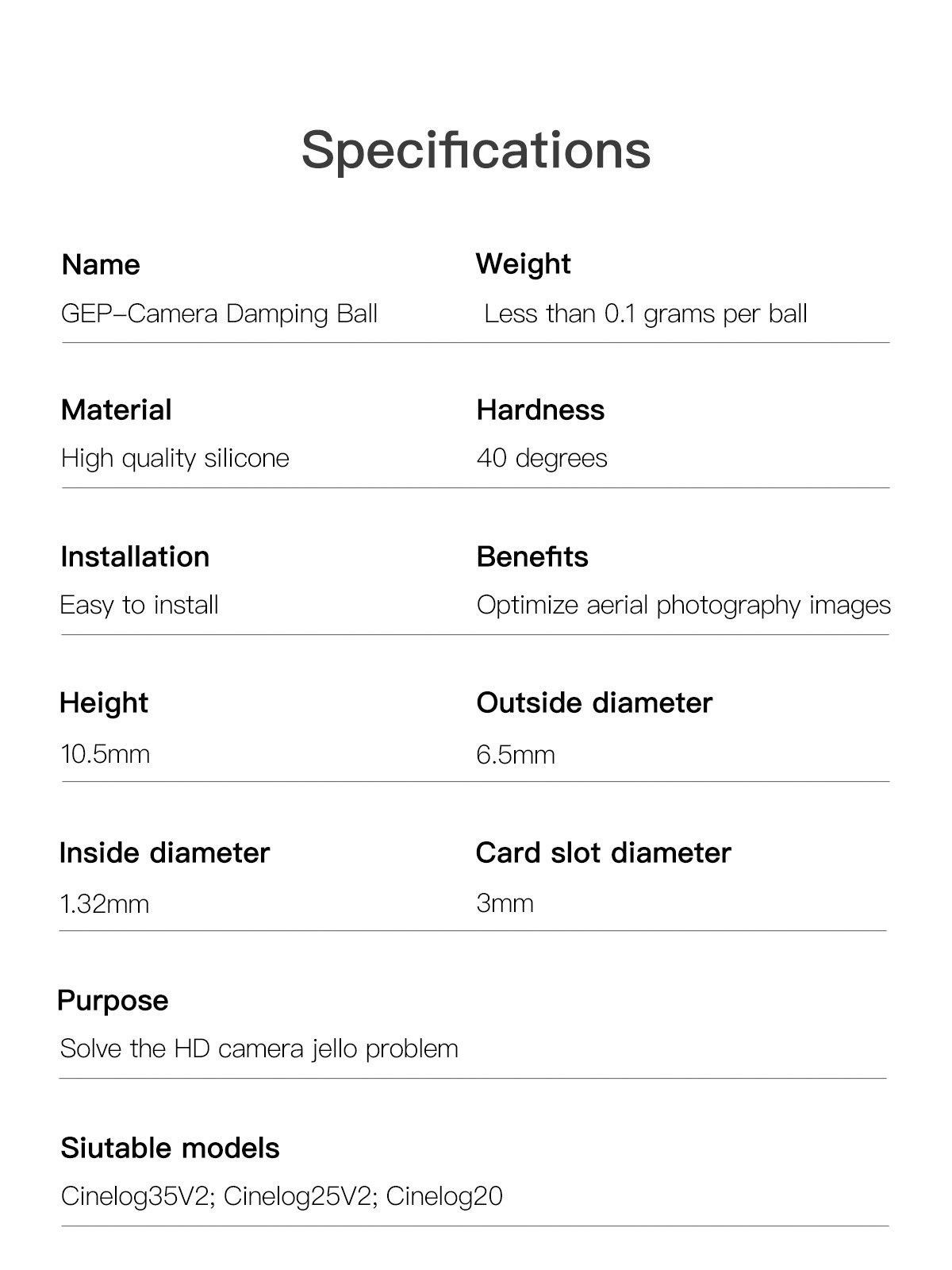
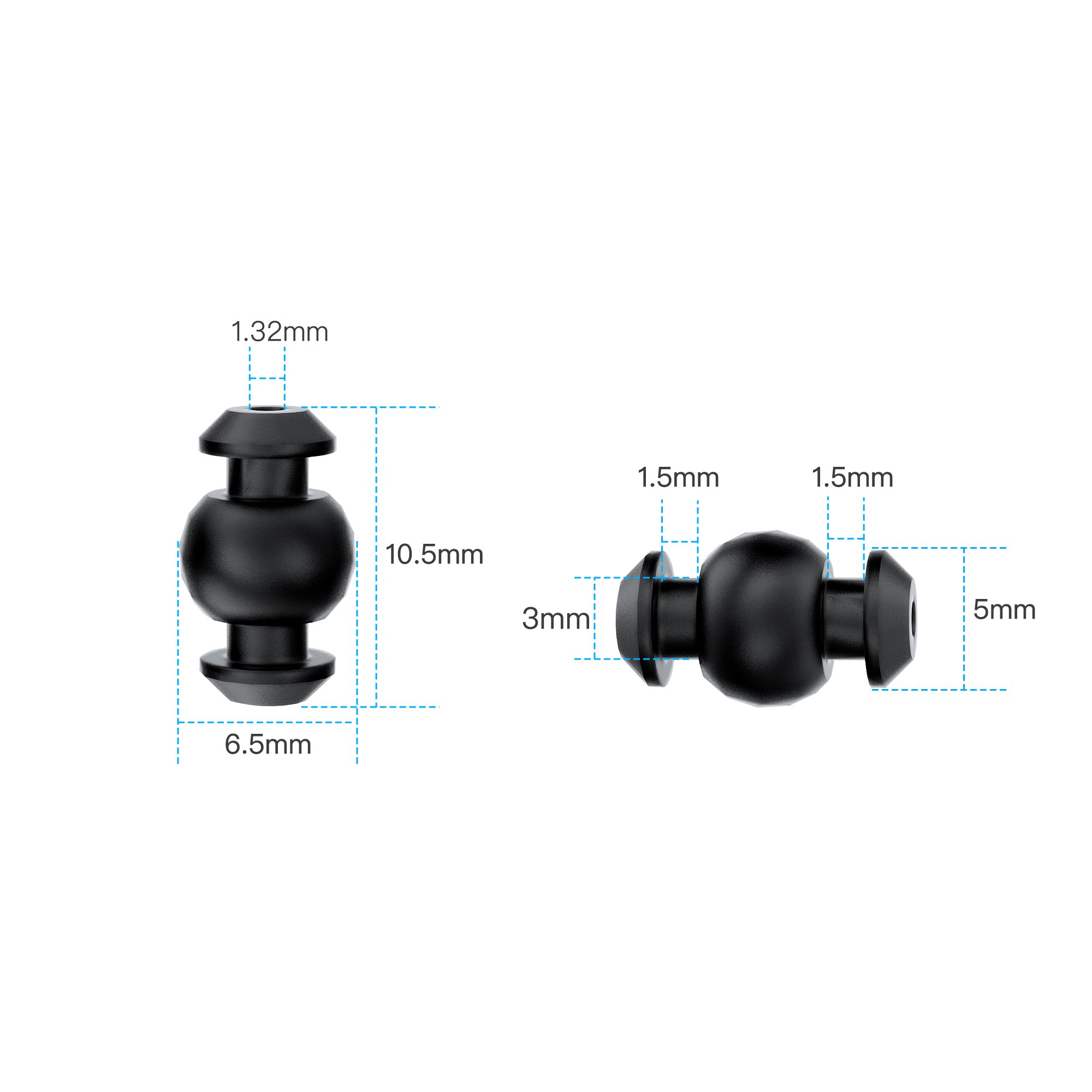
The GEPRC GEP 40-Degree Camera Gimbal Damping Balls are small silicone elements intended for particular GEPRC camera suspension systems. GEPRC’s manufacturer page specifies approximately 10.5mm height, 6.5mm outside diameter, 1.32mm inside diameter, and 3mm retaining-slot diameter, with mass below 0.1g per ball. These nominal dimensions help identify the family, but correct model/hardness and retaining geometry still matter more than whether a substitute physically fits into the frame hole.
Why 40, 50 and 60 are not interchangeable recommendations
| GEPRC option | Official compatibility examples | What it means for ordering |
|---|---|---|
| 40° / 6 pieces | CineLog20, CineLog25 V2, CineLog30, CineLog35 V2 | Use for the specific manufacturer-listed camera suspension |
| 50° / 7 pieces | DarkStar22 and DarkStar25 | Not the default 40° CineLog replacement despite similar dimensions |
| 60° / 6 pieces | DarkStar16 and CineLog35 V3 | Do not copy the DarkStar22 50° recommendation |
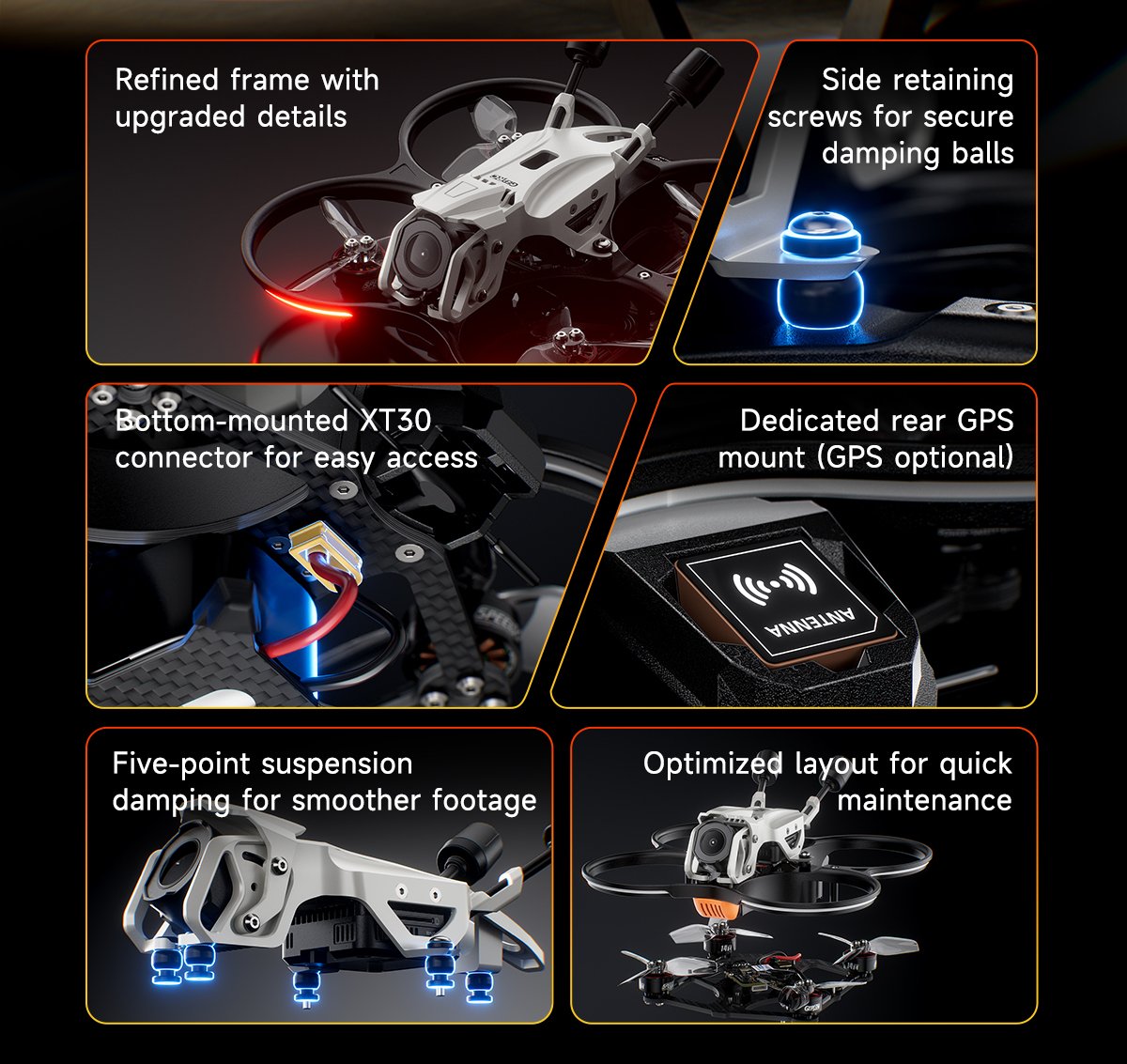
The number of pieces in the manufacturer option refers to the sold spare-parts pack, not necessarily the number used at every mounting point in every airframe. For example, DarkStar25’s camera assembly has a five-point suspension and can use a spare pack containing seven balls. Do not install extra balls or redistribute mounting points merely to consume an entire package.
How silicone hardness affects jello
Suspension dampers work by decoupling the camera from certain frequencies and amplitudes of airframe vibration. A softer element can reduce high-frequency transmission, but may allow excessive camera movement or contact against the canopy; a harder element can improve position control but transmit more frame vibration. The camera assembly’s mass, centre of gravity, preload and cable stiffness change the resulting mechanical system. A manufacturer-validated hardness class is therefore the correct baseline.
When a camera cable is stretched tight, it can bypass the damping balls and conduct frame motion directly into the camera. The same occurs if one of the retention screws over-compresses a silicone element or if the lens cover presses against the camera body. Fix the mechanical interference before changing hardness again.
Six checks after a crash
- Identify the exact frame: CineLog20, CineLog25 V2, CineLog30, CineLog35 V2, DarkStar16, DarkStar22 or DarkStar25; record the suspension design, not only the drone’s propeller diameter.
- Inspect all damping positions: check for torn lips, stretched silicone, displaced retainers, missing screws and hard contact with other frame components.
- Verify the correct hardness: use GEPRC’s 40/50/60 compatibility list and the specific model’s frame documentation. Do not substitute by appearance.
- Inspect the propulsion system: bent propellers, rough motor bearings and cracked ducts can create vibrations beyond what any damper can absorb.
- Check cable slack and camera guard clearance: the camera-to-VTX cable must not pull the suspended unit taut or rub against the frame.
- Compare recorded footage: after correct reassembly, examine O4 onboard video during a safe authorised flight under similar lighting and throttle, before changing Betaflight filters.
When the camera is too loose
A camera that moves freely on a damaged or misfitted damping mount can shift its viewing angle during braking and produce uncontrolled horizon motion. That is not a reason to glue the entire suspension rigidly. First replace torn silicone with the correct model-approved hardness and verify the retaining screws and brackets. A complete camera suspension needs controlled movement, not unlimited softness.
If a correctly fitted set still produces jello, use blackbox information and motor checks to determine whether the airframe has a new vibration source. Repeatedly switching between 40°, 50° and 60° without a recorded baseline makes it harder to isolate the defect.
Which GEPRC spare parts to buy
For the specific 40°-listed CineLog applications, the 40-degree damping-ball set can be appropriate. For a DarkStar22 or DarkStar25, consult the manufacturer-listed 50° option instead; for DarkStar16 or CineLog35 V3, evaluate the 60° set. A kit advertised only as “camera gimbal damping balls” without hardness, size and compatible models can cause an avoidable duplicate repair.
Manufacturer source and related guidance
GEPRC publishes the exact GEP Camera Damping Ball dimensions, hardness and model matrix. For the correct DarkStar25 five-point suspension, see GEP-DS25 frame parts. The correct 40° set is listed at FalconFly, while our FPV camera jello diagnostic guide helps distinguish mechanical defects from recording settings.