DJI RC Plus Controller: WB37 or USB-C for a Long Enterprise Shift?

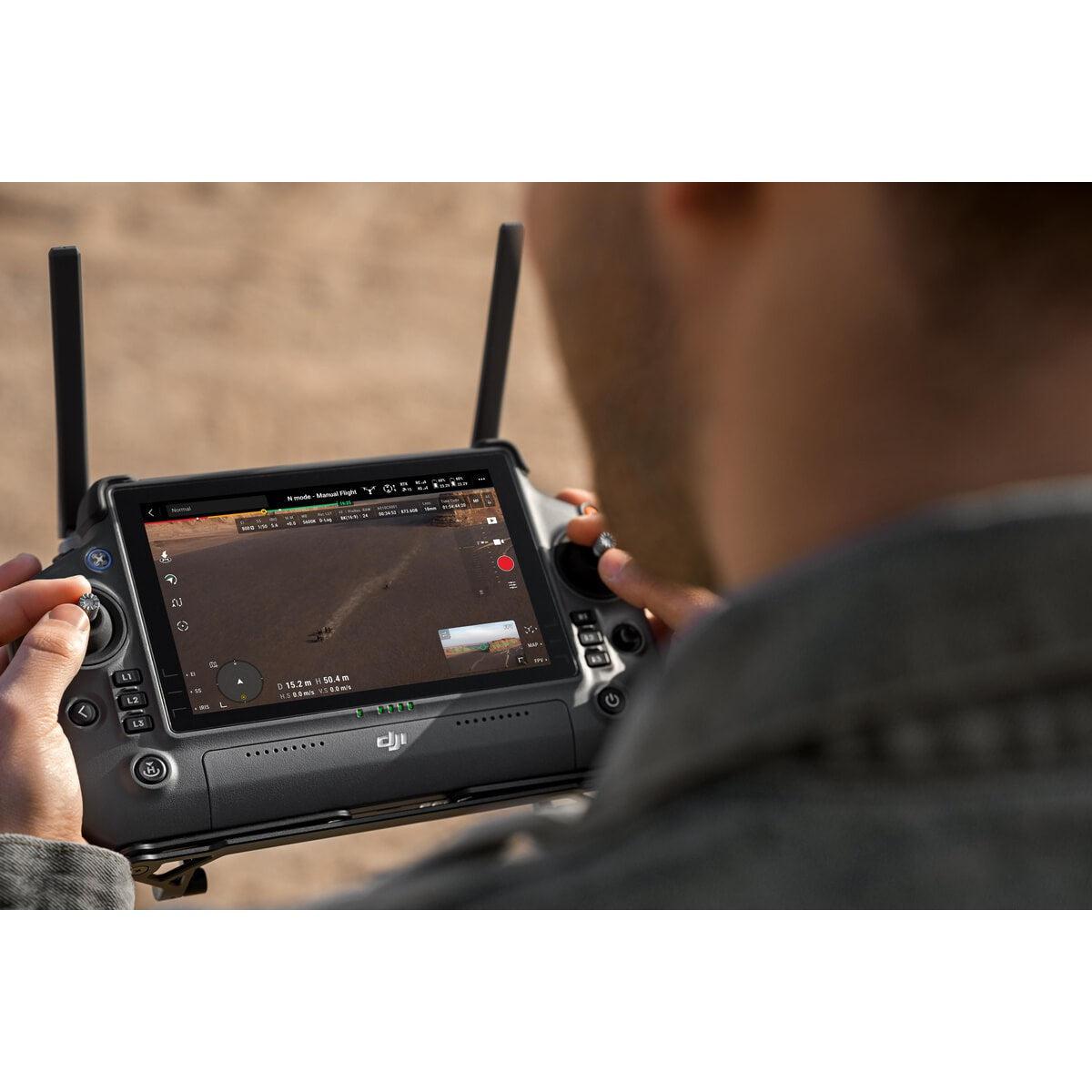
A DJI RC Plus controller starts a long inspection day with a full battery, but the display warns about remaining power before the aircraft crews finish. Is it better to pack a WB37 spare, connect a 65 W USB-C source or both? DJI specifies an internal controller runtime of approximately three hours and eighteen minutes, extending to about six hours with the external WB37 in laboratory conditions. Those figures make it essential to plan the controller’s energy separately from the drone’s TB65 flight batteries.
RC Plus actually contains two energy sources
The DJI RC Plus Enterprise Remote Controller includes a built-in lithium-ion battery and a replaceable WB37 intelligent external battery. The internal pack is listed at about 6,500 mAh at 7.2 V. The external WB37 module is an independently monitored battery, not a passive power-bank case. DJI’s Matrice 350 RTK overview explicitly advertises external-battery hot swapping, allowing a suitable ready WB37 to be exchanged while the internal battery maintains controller operation.
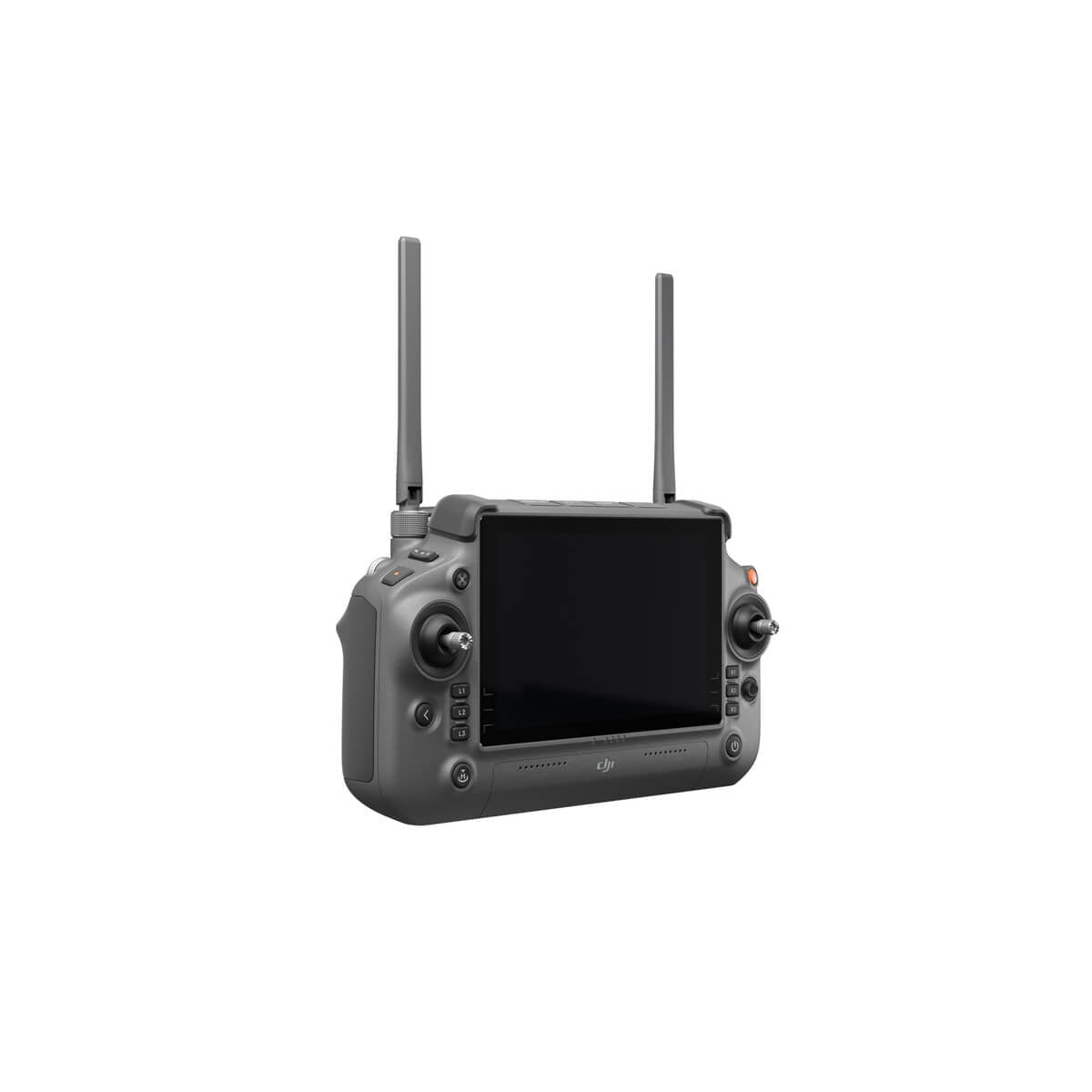
Hot swapping the controller’s external battery is not permission to power down the controller or detach its internal battery in flight. Check the actual on-screen charge indicators and follow DJI’s replacement sequence, keeping the control link and operator vigilance intact. Do not experiment with changing packs during critical manoeuvres or on a low internal-battery warning.
USB-C charging versus carrying a WB37 spare
| Power method | Operational advantage | Constraint |
|---|---|---|
| Internal controller battery only | Nothing external to mount or charge | DJI’s maximum reference runtime is about 3 h 18 min |
| Installed WB37 plus internal battery | Reference operating time can reach roughly 6 h | External battery must be compatible, healthy and charged |
| Spare charged WB37 | Replacement without powering the remote off when the internal pack is healthy | Use the authorised hot-swap procedure and monitor internal charge |
| USB-C external charging supply | Good at ground staging between missions | DJI recommends a suitable USB-C source rated for up to 65 W and 20 V |
| BS65 station USB-C charging output | Centralised aircraft/controller preparation | Do not confuse the charging output with the station’s maintenance USB-C socket |
Why a “65 W” label does not guarantee a fast recharge
The DJI RC Plus user manual recommends USB-C charging sources with a maximum rated output of 65 W and up to 20 V; DJI states approximately two hours for charging under its test conditions. A multiport charger claiming “100 W total” may allocate much less to the occupied USB-C port. Cable integrity, supported USB-C PD voltage/current profiles and another device simultaneously drawing power all affect the delivered charging rate.
When charging from the BS65, use its proper USB-C charging port. The separate maintenance interface is used for battery data, firmware and diagnostics, not as the default controller-power output. If the remote fails to charge from the station, verify the selected port and normal AC power before assuming the RC Plus battery needs replacement.
Five checks for short RC Plus runtime
- Record the actual start state: confirm the internal and WB37 charge indicators independently. A full removable WB37 cannot compensate indefinitely for an internal pack that begins the shift nearly empty.
- Identify the load: screen brightness, sun, active radio transmission, Wi-Fi/mobile network usage and simultaneous application activity can increase energy demand relative to DJI’s reference conditions.
- Compare a known-good external pack: if controller runtime varies dramatically between WB37 modules, inspect battery age and diagnostics rather than resetting every controller setting.
- Check charging equipment: confirm compatible source, cable and power allocation. Observe whether the controller recognises the charger, not merely whether an LED glows on the adapter.
- Review controller health and firmware: save any battery or system warning from DJI Pilot 2. Do not rely on an undocumented firmware downgrade as a first troubleshooting step.
How to prepare for a full-day enterprise shift
A ten-hour field day rarely means the controller should run continuously for ten hours. Build a schedule of powered-on preparation, test flights, aircraft charging, downtime and the next sortie. Stage charged WB37 spares in a safe insulated case, keep a compatible charging source available during ground breaks and assign a designated crew member to monitor controller energy before each launch. The most reliable plan avoids reaching a low-charge alarm while the aircraft is distant or conducting a critical inspection.
DJI states that RC Plus can be used with supported Matrice 350, M300 and Matrice 30 combinations subject to firmware and model selection. That does not make any RC Plus generation interchangeable with RC Plus 2 or RC Plus 3. Confirm the exact RM700-series remote and aircraft firmware before borrowing controllers across fleets.
Manufacturer references and available replacement
See DJI Matrice 350 RTK’s RC Plus runtime and hot-swap overview, DJI’s controller charging/compatibility FAQ and RC Plus manuals. The matching enterprise remote is listed at FalconFly’s RC Plus product page. Keep a separate controller-energy plan: spare aircraft packs alone do not keep the pilot’s ground station running.