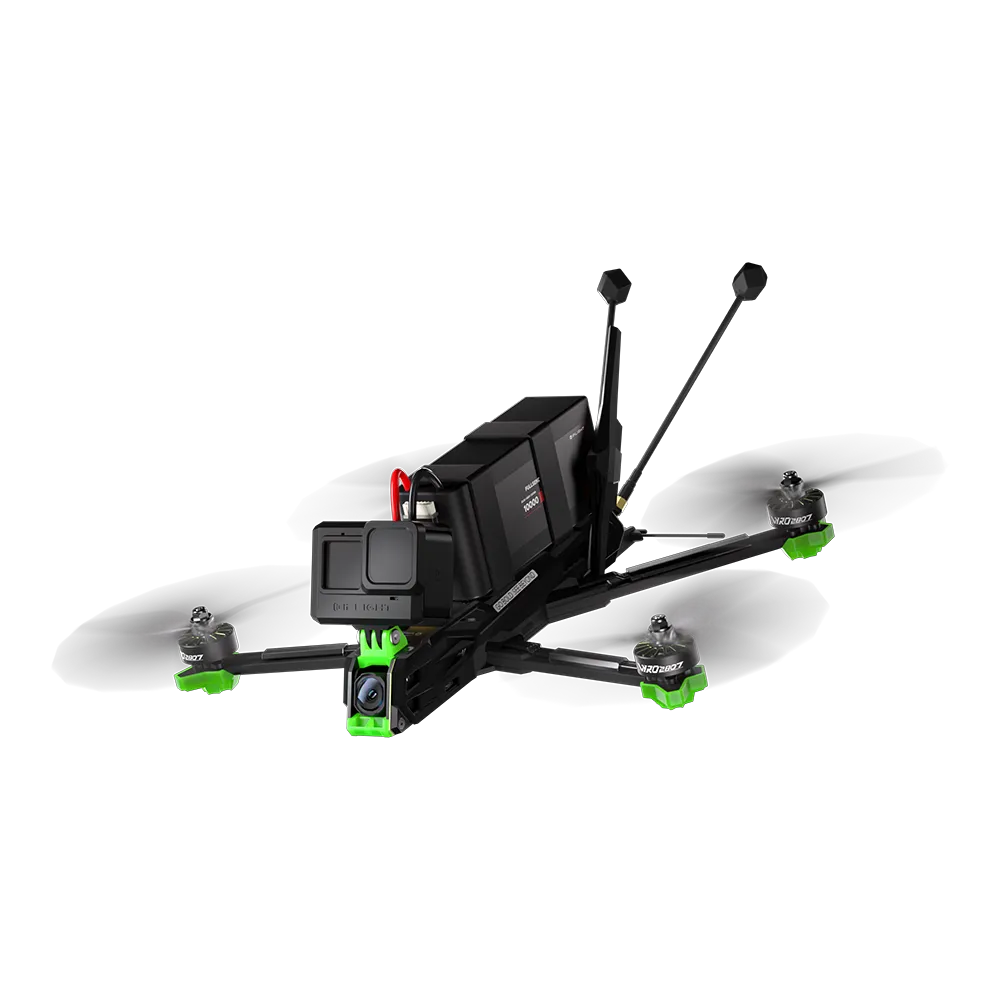
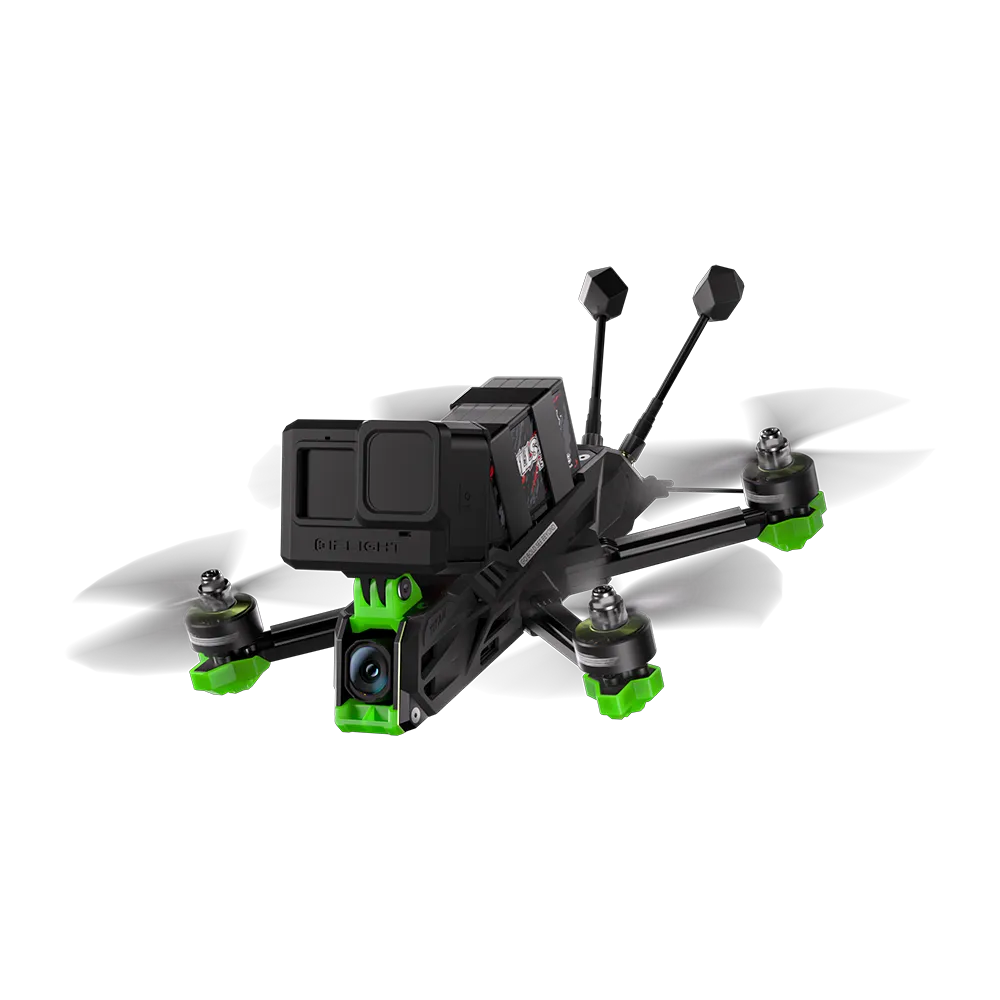
iFlight XING2 3110 900KV: Why Large Props Need a Motor-Specific Power Budget

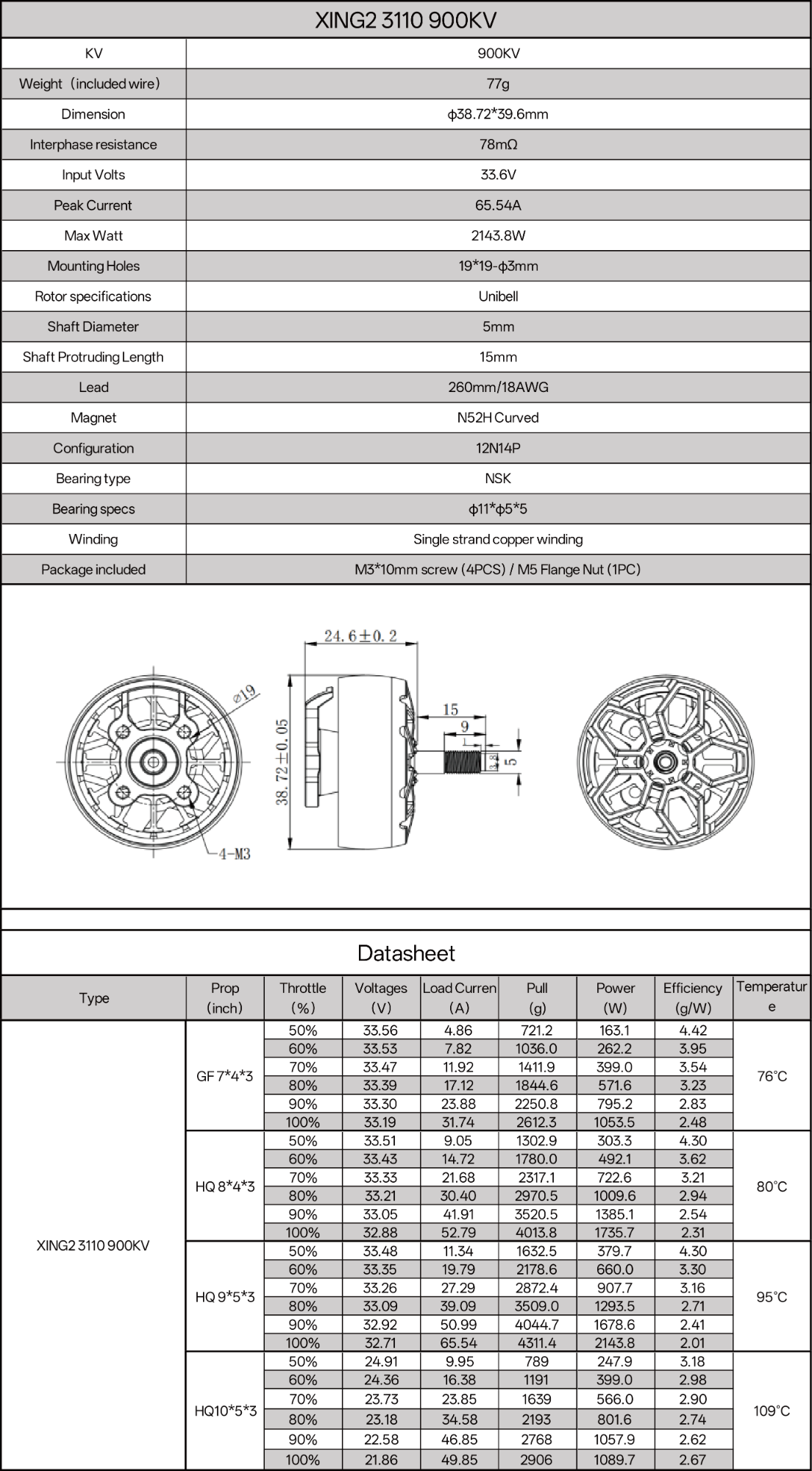
A cinelifter builder chooses an iFlight XING2 3110 motor because the frame accepts large 8-inch propellers, then assumes every 3110 KV option supports the same 8S battery and ESC. That is not what iFlight specifies. The 900KV version is listed at 33.6V (8S LiPo full-charge voltage), 65.54A peak current and 2,143.8W maximum power. The separate 1250KV and 1600KV variants have different voltage and current figures. A safe powertrain must be matched to the exact 900KV motor, actual propeller and complete battery/ESC assembly.
What the XING2 3110 900KV is designed to drive
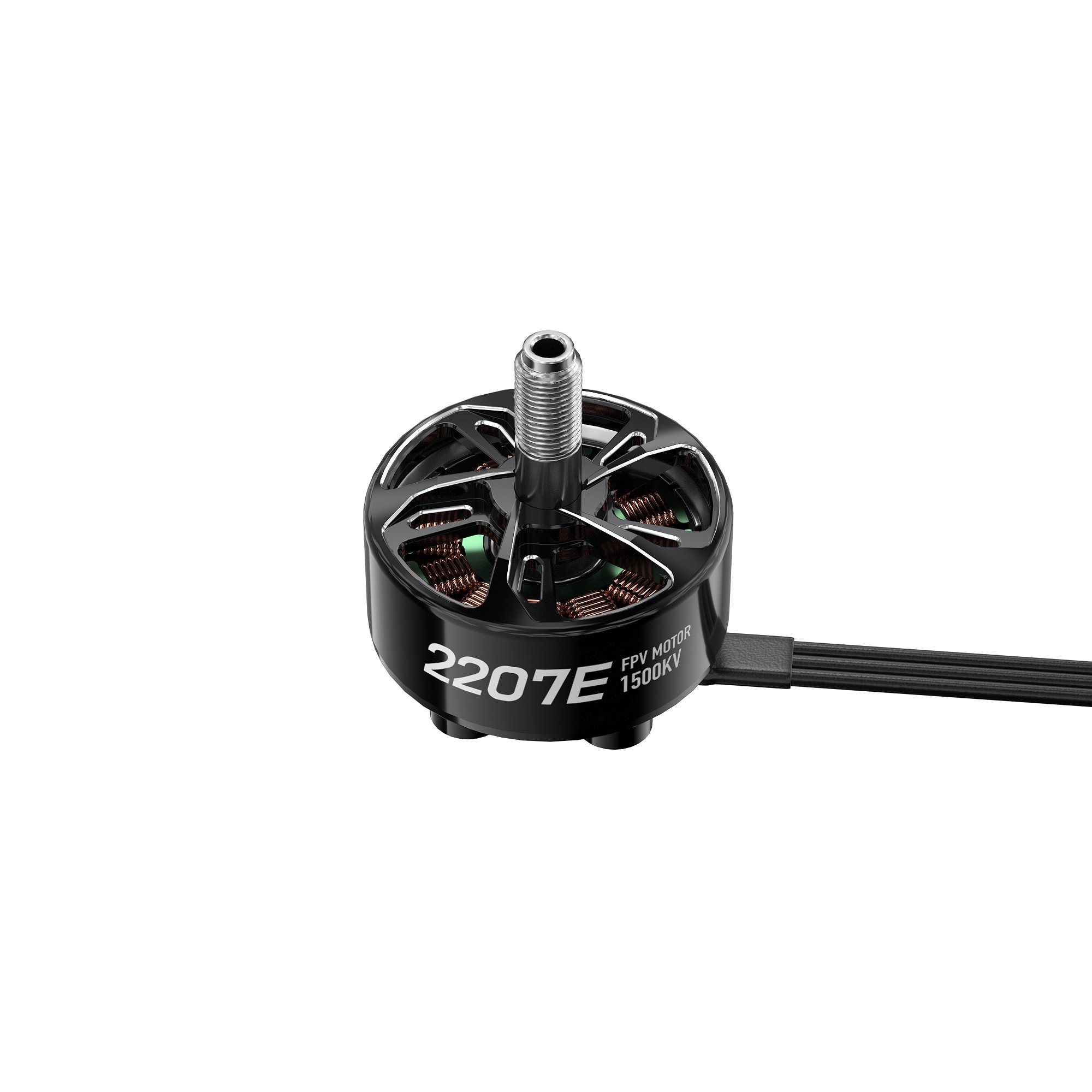
The iFlight XING2 3110 900KV motor is an approximately 77g cinelifter motor for the manufacturer’s described 7-, 8- and 9-inch propeller class. iFlight specifies a 12N14P layout, N52H curved magnets, NSK 11×5×5 bearings, a 5mm titanium-alloy output shaft with 15mm protruding length, and 19×19mm M3 mounting. The included-wire specification is 18AWG, 260mm. These dimensions affect whether a large propeller, motor guard, frame arm and ESC harness can be assembled without mechanical strain.
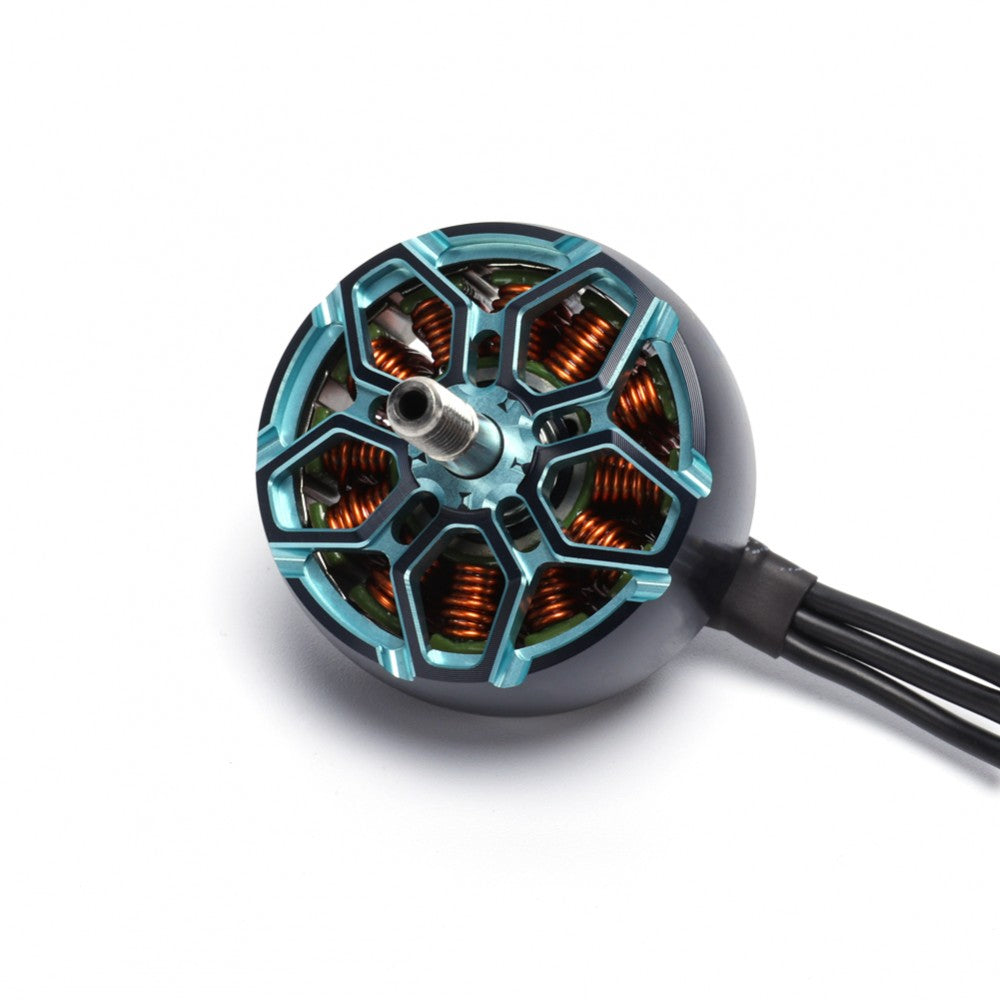
| iFlight XING2 3110 variant | Voltage reference | Peak current | Maximum power |
|---|---|---|---|
| 900KV | 33.6V (8S LiPo full) | 65.54A | 2143.8W |
| 1250KV | 4–6S | 84.68A | 1976.4W |
| 1600KV | 25.2V (6S LiPo full) | 65.06A | 1550.4W |
These are iFlight’s own variant specifications, not a claim that all three motors achieve the quoted peaks on the same propeller or battery. Peak current and maximum power are not normal cruise consumption; actual thermal stress depends on propeller aerodynamics, throttle, airflow, frame weight, ESC strategy and duration.
Why 900KV is not automatically “slow” or weak
KV is approximately the no-load speed constant of the motor in RPM per volt. A lower KV winding on 8S can attain meaningful no-load rotor speed while moving a larger propeller. However, calculating KV multiplied by battery voltage is only a no-load approximation. Under real thrust demand, motor load, propeller slip, resistance, controller timing and mechanical losses lower the actual operating speed. A 900KV 3110 motor may therefore be better matched to a heavy 8-inch cinelifter than a higher-KV 5-inch freestyle motor, even though its KV label is numerically lower.
Do not order “the highest KV for more thrust” without considering current and mechanical load. A 1250KV variant is not a drop-in 8S substitute merely because it uses the same XING2 3110 housing; iFlight specifically states 4–6S for that winding. Likewise, a 1600KV winding has its own 25.2V reference.
ESC sizing: 65.54A peak is not the complete design
The manufacturer’s 65.54A peak figure describes a reference maximum current for the 900KV motor. An ESC’s usable rating depends on continuous versus burst conditions, switching heat, voltage rating, airflow, acceptable temperature and board-layout quality. A properly selected 8S ESC must also tolerate the full 33.6V pack plus expected transients through its input capacitors and wiring. An ESC that only supports 6S is not made 8S-safe by a software motor-output limit.
On a cinelifter, all four or more motors may demand high bursts during recovery or manoeuvring with a camera payload. Avoid multiplying the nominal peak current by the motor count and treating the result as continuous expected battery current. Instead, evaluate total demand using the specific manufacturer propeller tests and actual logged flight loads with a suitable current/voltage measurement strategy.
Propeller selection requires more than diameter
iFlight positions XING2 3110 for 7-, 8- and 9-inch cinelifter propellers. Within that range, prop pitch, blade count, blade chord, mass and stiffness significantly alter both thrust and power draw. A heavy nine-inch three-blade propeller can demand substantially more motor torque than a lighter seven-inch two-blade at the same speed. Neither diameter nor KV alone confirms the combination is within the motor’s and ESC’s thermal envelope.
Use manufacturer propeller/thrust measurements where available. Match the propeller hub to the 5mm output shaft, verify adequate clearance from frame, landing gear and camera cage, and inspect a large rotor after any impact. Do not perform high-throttle bench tests with installed large propellers near people or equipment. For an article comparing different cinelifter sizes, see our large propeller selection guide; note that its 10–15-inch class is not an automatic recommendation for the 3110.
Seven critical physical-fit checks
- Confirm 900KV model: identify motor marking and original manufacturer part number, not only the 3110 stator size.
- Check arm mount: verify the 19×19mm mounting pattern and M3 screw fit. Use the intended M3×10 mounting screws only where arm thickness and safe engagement permit.
- Check screw depth: motor screws protruding into the stator windings can create electrical shorts and burn the ESC. Never assume the provided screw length suits every frame arm.
- Verify propeller hub: match its bore and locknut to the 5mm shaft, and leave room for the 15mm protruding length without mechanical interference.
- Check motor lead routing: the 260mm 18AWG wires must avoid moving arms, sharp carbon edges, propeller arcs and the flight battery.
- Check the actual 8S supply path: confirm battery, ESC, FC regulator, BEC, input capacitors, connectors and any video transmitter’s lower voltage requirement.
- Verify safe rotation: with all propellers removed, check ESC phase wiring, motor direction, vibrations and Betaflight configuration before flight.
What a bad motor/prop match looks like
Overheating after short throttle bursts can indicate an aggressive propeller load, insufficient ESC thermal capacity, poor airflow, damaged bearings or inefficient tuning. Desync or stutter under rapid throttle changes may involve ESC settings, connector integrity or winding damage. Persistent vibration after a prop change may reflect imbalanced propellers, incorrect mounting, a bent shaft or frame resonance. None of these outcomes should be “fixed” by a blind increase in motor current limit.
For a heavy filming aircraft, inspect the manufacturer’s maximum takeoff mass and thrust-to-weight margin as an integrated system. Adding a camera, gimbal or larger battery increases both static hover power and the control reserve required to brake or recover. A motor’s impressive maximum wattage is not a substitute for a tested payload and safe flight plan.
iFlight manufacturer specifications
iFlight publishes the exact XING2 3110 900/1250/1600KV comparison, including voltage, current, mounting pattern, bearing and winding data. See the actual XING2 3110 900KV at FalconFly for procurement. For avoiding stator damage during installation, consult our motor-screw-length troubleshooting guide.