Matrice 5T Can Detect Wires, but Can It Avoid Every Obstacle at Night?

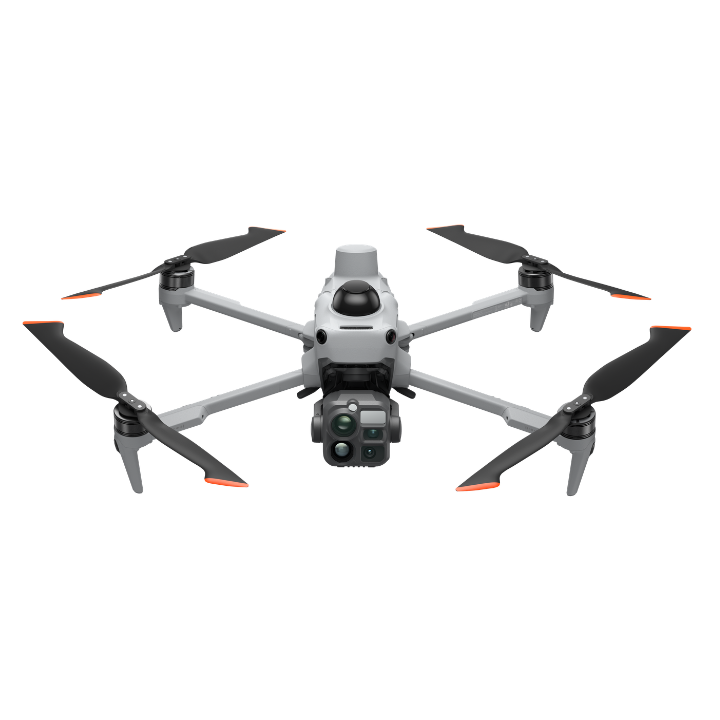
DJI Matrice 5T uses a more advanced obstacle-sensing system than many compact enterprise aircraft, but it is still unsafe to interpret “wire-level detection” as a promise to see every thin cable or fast-moving object. A powerline survey involves specific wire geometry, flight speed, weather, approach angle and visibility. DJI’s own performance figures are tied to particular test conditions.
What is actually looking for obstacles?
DJI lists a six-directional fisheye vision system, horizontal rotating LiDAR, three-directional mmWave radar (forward/upward/downward) and a downward ToF infrared sensor. These complementary sensors do not create an infallible 360-degree guarantee: their reliability varies with target material, shape, position and environmental conditions.
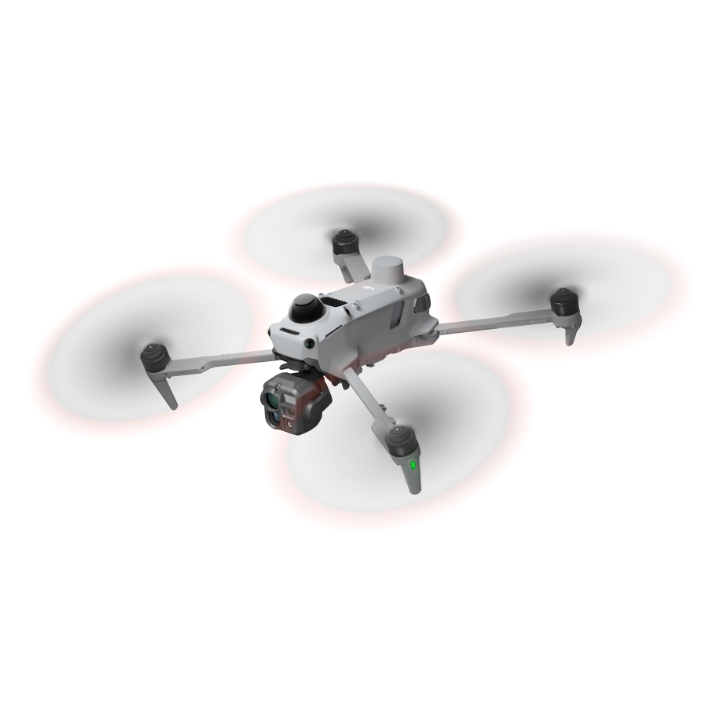
Wire-detection claims need their context
| DJI test target | Supported approach speed in specified conditions |
|---|---|
| 21.6mm steel-core aluminium transmission wire, directly faced | Up to 21m/s |
| 12mm distribution wire, directly faced | Up to 15m/s |
Those laboratory-style conditions are not suitable for generalizing to small service cables, angled wires, vegetation, mixed reflections or all weather. DJI further cautions that the aircraft cannot actively avoid fast-moving objects in some situations.
Why difficult weather deserves a stricter plan
Cloud, fog, rain, snow and target surface properties can interfere with different sensors. Matrice 5T is rated IP55, but the manufacturer warns not to fly in precipitation exceeding the specified rate and to dry the aircraft after wet operations. Waterproofing and dependable perception are separate concepts. Night flight introduces visibility, lighting and permission requirements.
A safer inspection workflow
- Survey the route for known lines, cables, protrusions and moving hazards before takeoff.
- Use independent minimum separation limits appropriate to the site; do not plan to skim close to conductors based on an obstacle-detection specification.
- Set a conservative speed and preserve manual intervention/line-of-sight where required.
- Evaluate visibility and sensor warnings in current conditions; if detection appears degraded, land and reassess.
- Keep payload additions in the risk assessment. DJI says the AL2 spotlight can affect vision sensing and propulsion performance; adding an AS2 speaker changes payload and endurance.
- Document thermal findings separately from navigation safety; a thermal imager does not automatically detect wires for obstacle avoidance.
What about Matrice 4T?
DJI Matrice 4T and Matrice 5T use different aircraft designs and sensing systems. When buying for powerline inspection, compare exact supported protection and perception specifications rather than assuming that similarly named thermal platforms share the same limits.
Related FalconFly guide
For broader practical context, read our limits of DJI obstacle sensing around small objects guide. It complements this product-specific troubleshooting workflow.
What DJI’s wire figures actually measure
The Matrice 5T combines vision sensors, a rotating LiDAR, and millimetre-wave radar. DJI reports that its LiDAR can detect a 21.6mm stranded transmission wire from approximately 32m and an 11.0mm contaminated insulated wire from approximately 19m, under the specified test lighting and target geometry. Its radar tests use a separate 10mm black insulated wire target, with different detection envelopes by sensor direction. These distances are not all-weather guaranteed braking distances for every cable.
| Detection system | Published example | Boundary to remember |
|---|---|---|
| Rotating LiDAR | 32m for 21.6mm transmission conductor, 19m for 11.0mm contaminated wire | Tested illumination, viewing angle, target and reflectivity apply |
| Forward mmWave radar | Up to 40m small-obstacle detection for the stated 10mm target | Coverage and compliance vary by region |
| Upward/downward mmWave radar | Up to 20m small-obstacle detection for the stated target | Not the same performance envelope as the forward sensor |
| Visual obstacle sensing | Depends on adequate illumination and textured scene | Can fail on transparent, low-contrast or textureless surfaces |
DJI additionally specifies supported detection for 21.6mm lines when approaching directly at speeds up to 21m/s, and for 12mm lines at speeds up to 15m/s, in its stated test conditions. These are sensor-performance references, not recommended operating speeds for close inspection. Operating near live conductors requires safe separation and the local utility’s procedures; do not test the claim by deliberately flying at a cable.
Flight-speed and sensing geometry must be planned together
DJI lists effective obstacle-avoidance speeds that differ between directions and sensing combinations (for example, down-facing avoidance ≤8m/s in the specified configuration and upwards ≤10m/s). Faster flight reduces time to identify, classify and respond to a small target. The aircraft cannot actively avoid fast-moving objects according to the manufacturer’s FAQ, and the radar system may be restricted in some countries. If the aircraft is fitted with additional accessories, reassess the entire sensing configuration, because selected payloads may change obstacle-detection performance.
Safer power-line inspection checklist
- Obtain permission and diagrams: verify circuit, pole geometry, guy wires, known crossings and safe approach distances before flight.
- Plan an offset route: observe conductors from a deliberate standoff, not by asking the aircraft to brake near the line at the last moment.
- Assign an observer and a stop criterion: check visibility, glare, rain, fog, wind and whether the route can be completed safely without relying on automatic avoidance.
- Check the available sensing hardware: inspect the aircraft configuration, the actual mmWave restrictions in the operating region and DJI Pilot warnings.
- Use reduced speed and controlled viewpoint: do not translate manufacturer maximum sensor-test speeds into recommended close-inspection speeds.
- Ground on uncertainty: if the targeted obstacle cannot be independently identified with adequate clearance, plan another capture position or method.
Compare the full Matrice 5T sensing geometry and wire-test specifications with DJI’s environmental and regional limitations. For wider context, see our published obstacle-sensing guide.
Authoritative sources
DJI Matrice 5T FAQ — sensing and weather limits and Matrice 5T technical specifications.