DJI BS65 Battery Station Charges Only Two TB65 Packs: Queue, AC Voltage and Fan Behaviour

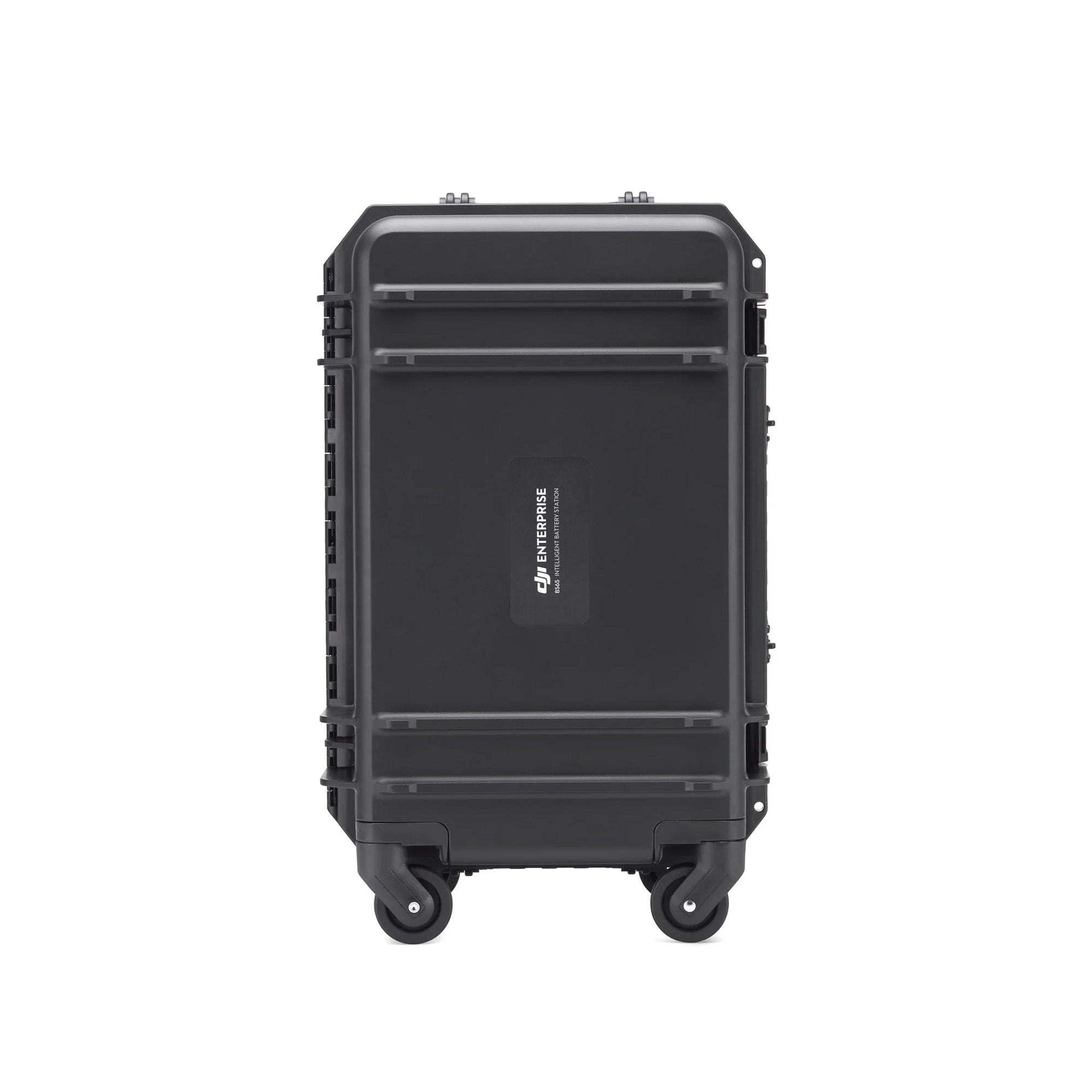
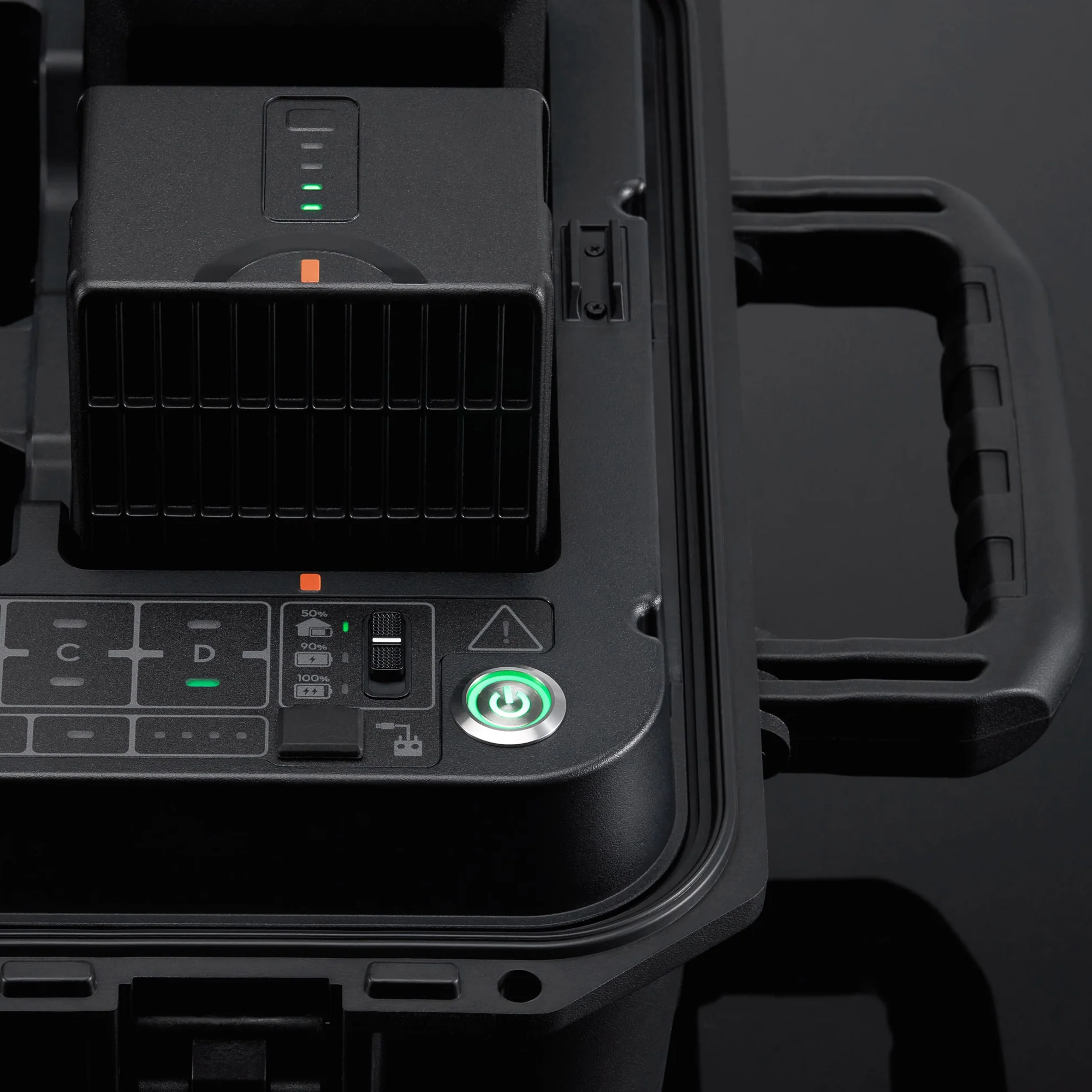
DJI BS65’s hard case looks like a large multi-bay battery charging cabinet, and a new operator may load eight TB65 packs expecting all eight to recharge together. The apparent fault is usually a misunderstanding of how the system is designed: BS65 can store eight TB65 packs but actively charges only two TB65 batteries and one WB37 at the same time. It also prioritizes packs with a higher state of charge.
Storage slots are not simultaneous charge channels
DJI specifies eight TB65 storage positions and four WB37 positions for the BS65. Only two TB65 and one WB37 can charge together. Its priority is intentional: batteries already closer to full are handled first, making a flight-ready pair available earlier for the dual-battery Matrice 350 RTK. Slots waiting their turn are not evidence that a battery pack or the station’s circuitry failed.
What are the actual two-pack charge times?
DJI’s lab results are based on particular AC supplies and ambient conditions. For two TB65 batteries, its published times are approximately:
| Supply | 20% to 90% | 0% to 100% |
|---|---|---|
| 220V AC | 30 minutes | 60 minutes |
| 110V AC | 40 minutes | 70 minutes |
A crew planning four aircraft battery pairs should not multiply those times blindly without accounting for starting state of charge, ambient temperature, cooling and the queue.
Six things to check when BS65 seems slow
- Verify the station and battery family. BS65 supports TB65 and WB37. It is not the BS100 for Matrice 400 or BS30 for Matrice 30.
- Check the facility’s AC supply. DJI specifies different 110V and 220V lab rates. Do not use unsafe converters or unapproved power distribution.
- Check the queue. Two charging TB65 packs while other packs wait is expected. Select a pair to observe rather than swapping randomly.
- Listen to the fans as a controlled variable. DJI says fans adjust automatically according to ambient and battery temperatures; fan speed changing between cycles is not necessarily a mechanical problem.
- Look for thermal delays. A battery recently removed from a hot aircraft can need cooling; a very cold battery may warm itself before accepting normal charge current.
- Inspect faults individually. If a single pack repeatedly fails across bays, isolate it; if every known-good pack fails with a supported source, stop and seek authorized service.
Why batteries feel warm when they have not been flown
DJI notes that TB65 batteries automatically discharge toward approximately 50% state of charge for long-term storage. That process can make the pack feel slightly warm. It is not equivalent to overheating during use, but operators should still inspect for abnormal temperature, swelling, damaged contacts or an unexpected warning.
Why TB65 replacement planning needs more than cycle count
For TB65, DJI describes service life limits based on 12 months, 400 cycles and 120 days of high-power storage, whichever comes first under its policy. Operational replacement policy should consider those manufacturer limits, logged battery health and criticality of the mission, rather than only the charge percentage displayed by a charger.
What about the RC Plus controller?
BS65 includes a dedicated charging function for DJI RC Plus through USB-C. That is a separate convenience, not a reason to treat every USB-C socket as an aircraft battery charging input. Keep the controller and station firmware in supported combinations.
Do not confuse the BS65’s chosen storage or ready-to-fly target with self-discharge caused by a defective pack. Our DJI battery self-discharge guide describes what normal battery-management behaviour can look like between operations.
Official references
DJI M350 RTK FAQ — BS65 charge queue, AC voltage, fans and TB65 limits, Matrice 350 technical data.