


Pavo20 Pro II 3S vs 4S: Which Cinewhoop Version Should You Buy?


Two versions of the same cinewhoop are not interchangeable simply because both carry a DJI O4 Pro camera. The 3S and 4S Pavo20 Pro II setups differ in power-system design and the battery ecosystem you commit to. The best choice depends on the weight of the finished aircraft, how aggressively you accelerate, how often you fly in confined filming locations and what packs you already own. Use this guide to choose a complete system rather than judging by cell count alone.
The decision in one table
| Consideration | 3S version | 4S version |
|---|---|---|
| Battery configuration | Three LiPo cells in series | Four LiPo cells in series |
| Electrical headroom | Designed for its own 3S powertrain | Designed for its own 4S powertrain |
| Best fit | Pilots prioritizing a compatible light setup | Pilots seeking the intended 4S setup under higher loading |
| Buying check | 3S-specific FC/ESC and motor specifications | 4S-specific FC/ESC and motor specifications |
These descriptions are qualitative—not a claim of fixed flight time or thrust. Exact results depend on payload, propeller, battery mass, voltage under load, tuning and local conditions. Do not assume the ESC or motors from one variant tolerate the other pack.
Why an extra cell changes more than voltage
A 3S lithium-polymer pack has a nominal 11.1 V; 4S is nominally 14.8 V. At similar mechanical output, a higher supply voltage can reduce the current required on the battery side, but it also raises the maximum electrical stress on components that are not rated for it. Motor KV, ESC MOSFET limits, low-voltage cutoffs and the DJI O4 supply arrangement matter. Never treat voltage as a standalone performance score.
On ducted aircraft, adding battery mass can erase part of any power advantage. The heavier pack can change braking distance, throttle response, propwash and crash energy. Measure ready-to-fly weight with the actual battery and protective hardware; compare complete configurations rather than batteries alone.
What to verify on the exact listing
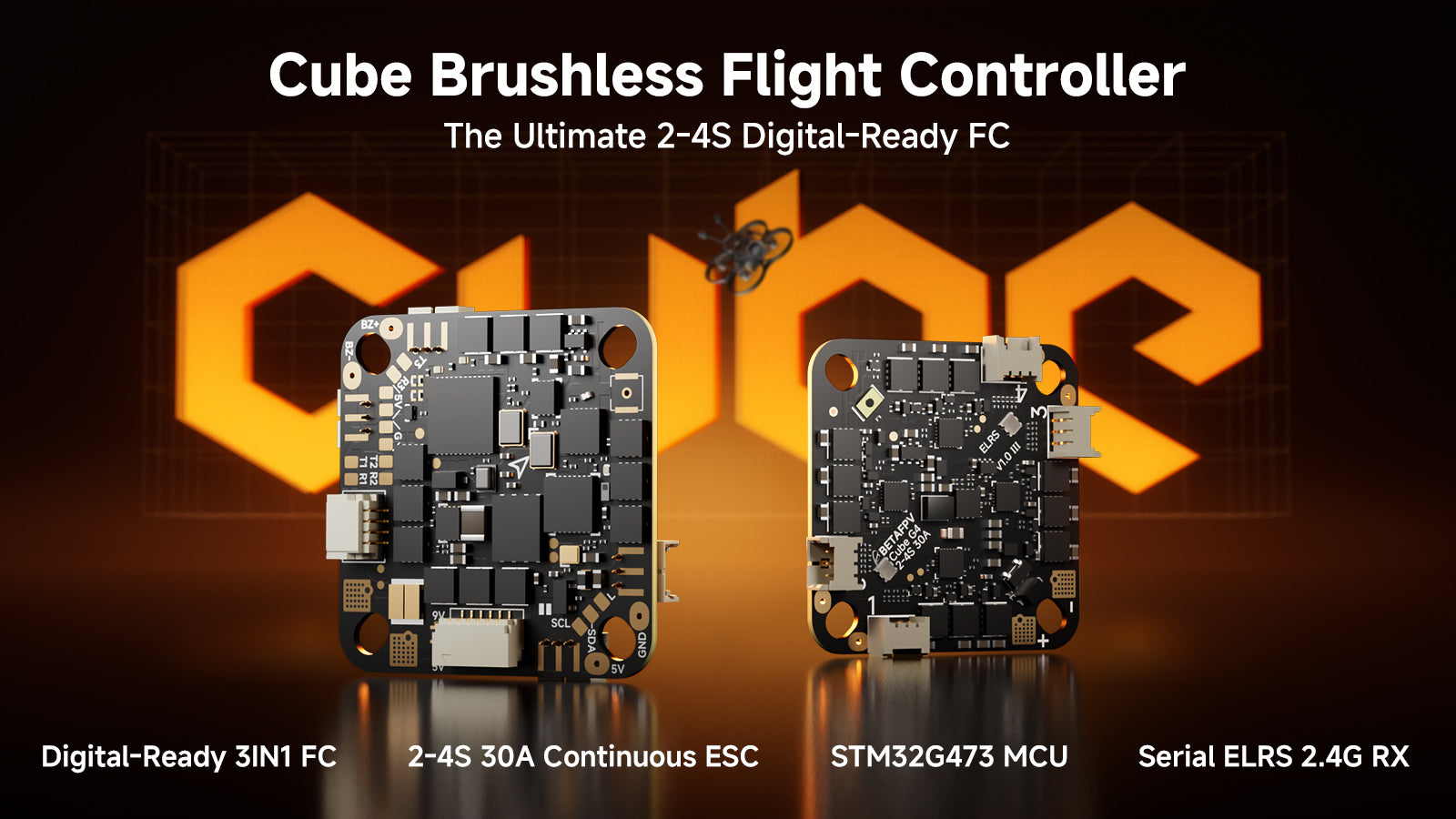
Confirm the official battery-cell range, the FC/ESC variant, installed motors, connector type and whether GPS or a buzzer is actually included. Product pictures can show optional accessories; photos are not a specification sheet. For instance, an optional GPS mount does not mean a GPS module ships in the box.
Compare the Pavo20 Pro II 3S DJI O4 Pro listing with the separate 4S listing below. Both use an O4 Pro video system, but their flight batteries and flight controllers differ.
Buy a battery only after checking physical dimensions and strap clearance. In a compact ducted frame, a pack that electrically fits may block airflow or shift the center of gravity enough to impair handling. Install batteries with adequate propeller clearance and protect cables against vibration.
A realistic test instead of headline claims
Use two fully balanced, healthy packs matched to the respective models, then fly the same short route with comparable pilot inputs. Log flight time to the same conservative landing voltage, post-landing pack temperature, voltage sag during an acceleration and any O4 thermal warning. Avoid full-throttle trials in confined spaces.
Observe whether the drone can hold attitude during deceleration, not only its top speed. Smooth footage benefits from predictable throttle resolution and stable camera mounting. A pilot learning precision lines may gain more from a lighter well-tuned model than a nominally higher-power option.
Best choice by flying scenario
Slow cinematic interiors: prioritize mass, controlled throttle and protective duct integrity. Outdoor passes with more load: assess the manufacturer’s intended 4S setup and its voltage sag, thermal behavior and total weight. Existing battery fleet: remaining within a verified battery ecosystem may save more money than a marginal theoretical benefit. Neither option makes flying close to people or property automatically safe.
Compare the frame fitment guide and motor and propeller matching tutorial before changing hardware.
Mistakes that cost new owners money
Do not install a 4S pack on a 3S-only variant, borrow tuning values from a different version, or assume identical product names imply identical spare motors. Avoid selecting batteries on mAh alone. Record the connector, charge lead and balance plug in your order. Always initialize Betaflight and confirm correct model/failsafe settings before fitting propellers.
Field checklist: before you commit
- Identify the exact product revision and verify electrical, mechanical and firmware compatibility.
- Check weight, fitment, included accessories and what is sold separately.
- Keep a safe baseline configuration and document any settings or hardware changes.
- Bench-test without propellers where electronics are involved; fly only in authorised locations.
- Stop testing if you observe overheating, unexpected movement or radio instability.
Frequently asked questions
Can I use a 4S battery on the 3S model?
Only if the complete specific aircraft and all its components are explicitly rated for that battery. Do not infer compatibility from frame size or another variant.
Will 4S always fly longer?
No. The flight time depends on stored energy, total weight, current draw, flight profile and usable battery capacity under load.
Which is more suitable for a beginner?
The better beginner option is the one with verified compatible packs, predictable controls, accessible spares and a safe flying environment—not simply the higher voltage.
Shop and read further
Explore a related FalconFly product or buying guide and our complementary technical guide. Use product specifications and latest manufacturer manuals to confirm the exact version before purchase.
Note: Observations in this guide are conditional; performance depends on equipment configuration, firmware, environment, payload and correct installation.
Example: comparing packs without misleading flight-time numbers
Suppose a hypothetical 3S 850 mAh pack and a 4S 650 mAh pack were both physically accepted by their intended aircraft versions. Their nominal stored energies would be approximately 9.44 Wh and 9.62 Wh respectively (nominal volts multiplied by amp-hours). This illustrates why counting cells or reading mAh alone does not establish which aircraft has more energy on board. Those numbers are an arithmetic example, not a recommended battery specification for either Pavo variant. Battery chemistry, weight, permissible discharge current and the specific electronics rating determine whether a pack is appropriate.
When comparing two real product bundles, put four figures side-by-side: pack watt-hours, measured ready-to-fly mass, approximate battery dimensions, and the price of enough spare batteries for the number of sorties you need. A lower-capacity pack on a lighter setup may deliver exactly the handling a pilot wants, while a heavier setup may make sense for a different payload. Record the actual battery SKU so replacement orders do not accidentally mix the 3S and 4S systems.
Pre-delivery compatibility questions
Ask for the exact manufacturer part number of the FC/ESC, motor designation and the approved battery range. Confirm the flight controller firmware target and whether the delivered aircraft contains the O4 Pro camera and antenna combination you expect. If using third-party goggles or radio equipment, verify that receiver and video-system compatibility are separate requirements. Shipping a drone that is ‘ELRS ready’ does not guarantee it binds to a customer’s transmitter without matching RF settings.
For camera work, agree on the real shooting scenario: narrow interiors, people-free outdoor passes, or slow vehicle tracking in an authorised space. That informs propeller protection, required spare ducts, battery rotation and pilot training. Budget for a damaged-frame replacement and extra propellers, not just headline flight duration. Selecting the correct ready-to-fly configuration is usually more economical than trying to modify a voltage-incompatible platform after purchase.

















