


GEPRC M10 Nano vs M10 vs M1025 GPS: Why Antenna Size Matters

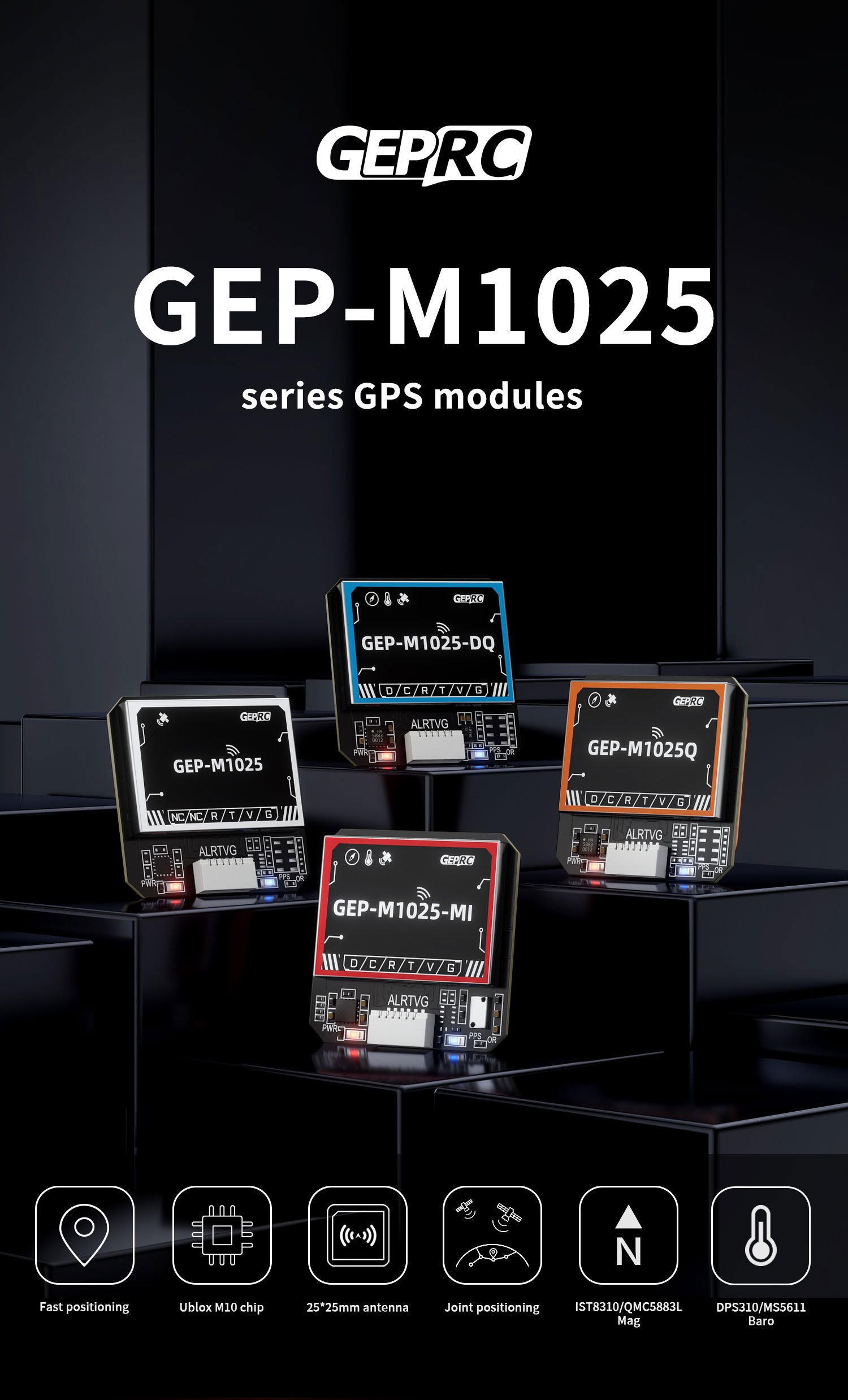
Two GPS modules may use the same chipset family and still behave differently when installed on a small carbon frame. The chip does not receive satellite signals on its own: the ceramic antenna, ground plane, placement and interference environment matter. A buyer choosing between the tiny GEPRC M10 Nano, the larger M10 and M1025 family needs to trade weight and mounting space against antenna size—not chase an unsupported promise of perfect satellite lock.
What changes when the antenna gets bigger
GEPRC lists a 12×12mm ceramic antenna for the M10 Nano, an 18×18mm antenna for a standard M10 version, and 25×25mm for the M1025 family. Larger antenna area can improve reception under certain conditions, but it comes with increased physical space and often weight. A large GPS placed under carbon or beside a noisy video transmitter can still perform poorly. Position can matter more than the module’s marketing headline.
For compact freestyle builds, the smaller module may fit without interfering with an antenna or propeller. A spacious platform may make better use of the larger antenna.
Don’t mistake optional sensors for standard GPS features
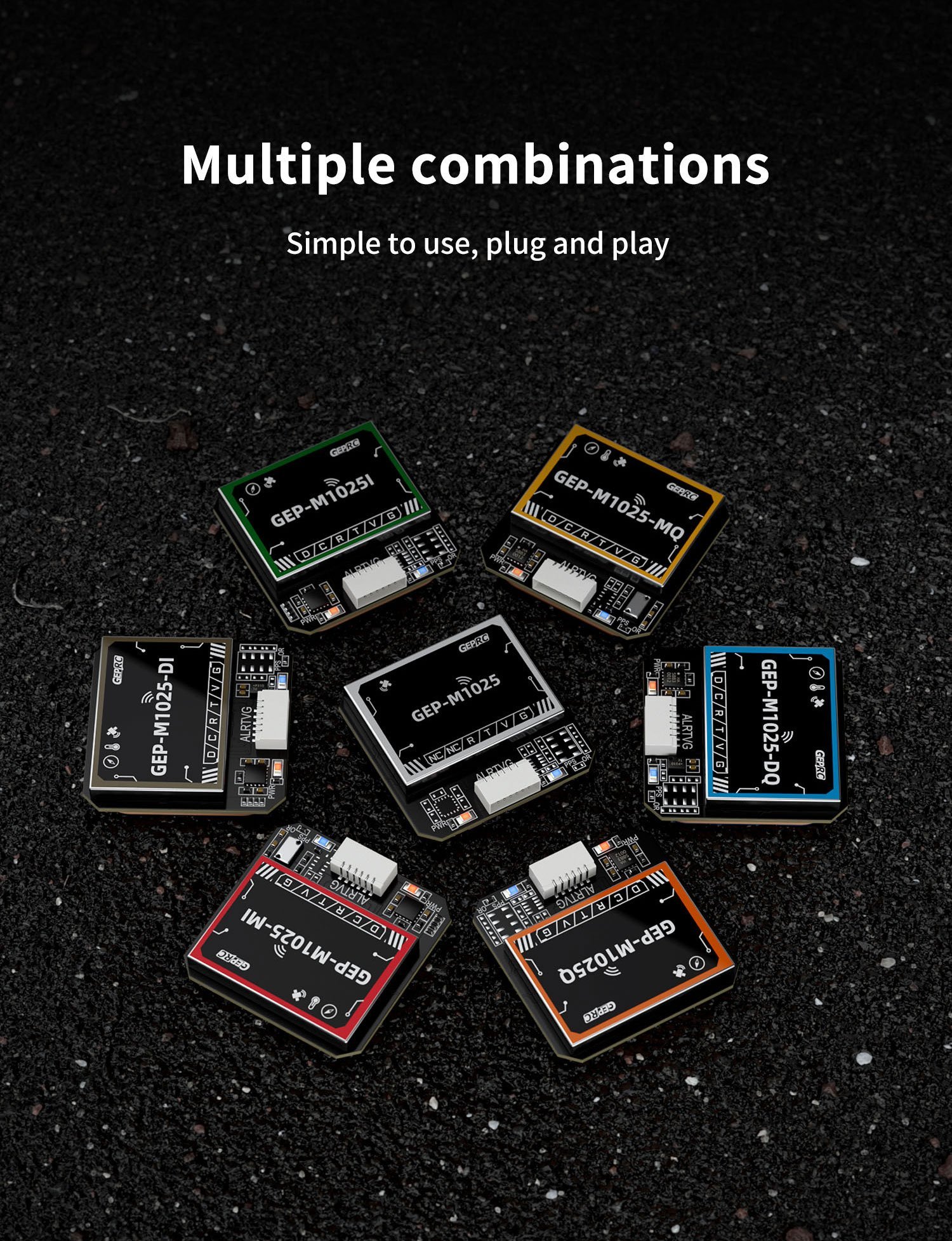
Some M10-family variants integrate a magnetometer and/or barometer. These are separate sensors with separate connections and configuration requirements; not every SKU includes them. For Betaflight GPS Rescue, a purchase decision may be different from an INAV fixed-wing navigation installation. If the autopilot expects I2C magnetometer and barometer inputs, check the exact product suffix and pinout. If you do not need those functions, buying an integrated sensor board may add complexity with no benefit.
Fitment worksheet
| Variant | Antenna class | Typical selection concern |
|---|---|---|
| M10 Nano | 12×12mm | Minimal weight and mounting area |
| M10 | 18×18mm | Balance between size and clear-sky reception |
| M1025 | 25×25mm | Space for larger antenna and optional sensors |
Compare the finished assembly dimensions and wire routing, not antenna size alone.
Start time and interference are easy to misread
A module that was moved a long distance or disconnected for an extended period may take longer to establish a position fix. Indoor tests are unreliable because walls, reinforced concrete and windows reflect or attenuate GNSS signals. Test outside in an authorized clear-sky location with props removed where practical, and keep video transmission electronics cooled. Check the flight-controller’s UART and protocol settings before blaming a new GPS receiver.
Which one belongs on your drone?
On a very light 2–3-inch build, begin with the smallest module that meets your documented navigation goals and can be mounted away from carbon and current-carrying wires. On a larger quad or fixed-wing aircraft with room for a 25mm antenna, M1025 can be a sensible option, especially if the chosen variant integrates sensors required by the autopilot. For either, a reliable satellite fix is not a substitute for correctly configured failsafe or permitted flying practices.
A product photograph is not a complete compatibility list. Confirm exact SKU, firmware, fitment and included accessories before buying or replacing hardware.
Buying a magnetometer version: when it creates extra work
An integrated compass may be valuable for a navigation-oriented autopilot that actually uses magnetometer heading, but it introduces another sensor requiring orientation and interference management. Place the module too near high-current wiring and the magnetometer may receive distorted magnetic measurements. A pilot using a simple Betaflight GPS display may not need that feature at all. Check the autopilot’s required navigation architecture before paying for a suffix that indicates additional sensors.
Likewise, an integrated barometer cannot be assumed to improve satellite reception. Barometric altitude and GNSS positioning are distinct measurements.
Build the mounting solution before ordering
Measure the available space above the frame and plan a protected location for the antenna. Leave enough cable length for service without routing directly beside high-current motor leads. A tiny GPS squeezed under a carbon plate may perform worse than a slightly larger module mounted with clear sky visibility. If the antenna must be protected in a TPU mount, verify that the holder does not tilt or obstruct it excessively. The correct module is the one that can be installed reliably in the actual aircraft, not the one with the largest antenna on a product photograph.
When ‘more satellites’ becomes misleading
A GPS screen showing many satellites is encouraging, but the count alone does not confirm positioning accuracy or a safe rescue function. Signal geometry, interference, the receiver’s configuration and the autopilot’s quality checks also matter. A module with a physically larger antenna might receive signals better under suitable mounting conditions, but a poor installation can still produce unstable fixes. If you are diagnosing an existing system, distinguish between no UART data, valid data without a fix, and a fix that becomes inconsistent when other electronics power on.
When purchasing for a navigation-dependent application, verify that the planned autopilot supports the module’s sensors and wiring. A Betaflight GPS display and an INAV navigation build may have different sensor requirements and safety procedures.
Frequently asked questions
Does the 25mm M1025 always lock faster than Nano?
Not in every environment. Installation, sky visibility and interference can outweigh the size advantage.
Do I need the magnetometer version for Betaflight GPS Rescue?
Not automatically. Check the exact firmware and feature requirements.
Can I plug any GEPRC GPS cable into any FC?
No. Match voltage, UART pinout, connectors and optional I2C sensor wiring.

















