


RadioMaster ER8G vs ER8GV: Does Your RC Glider Need a Variometer?


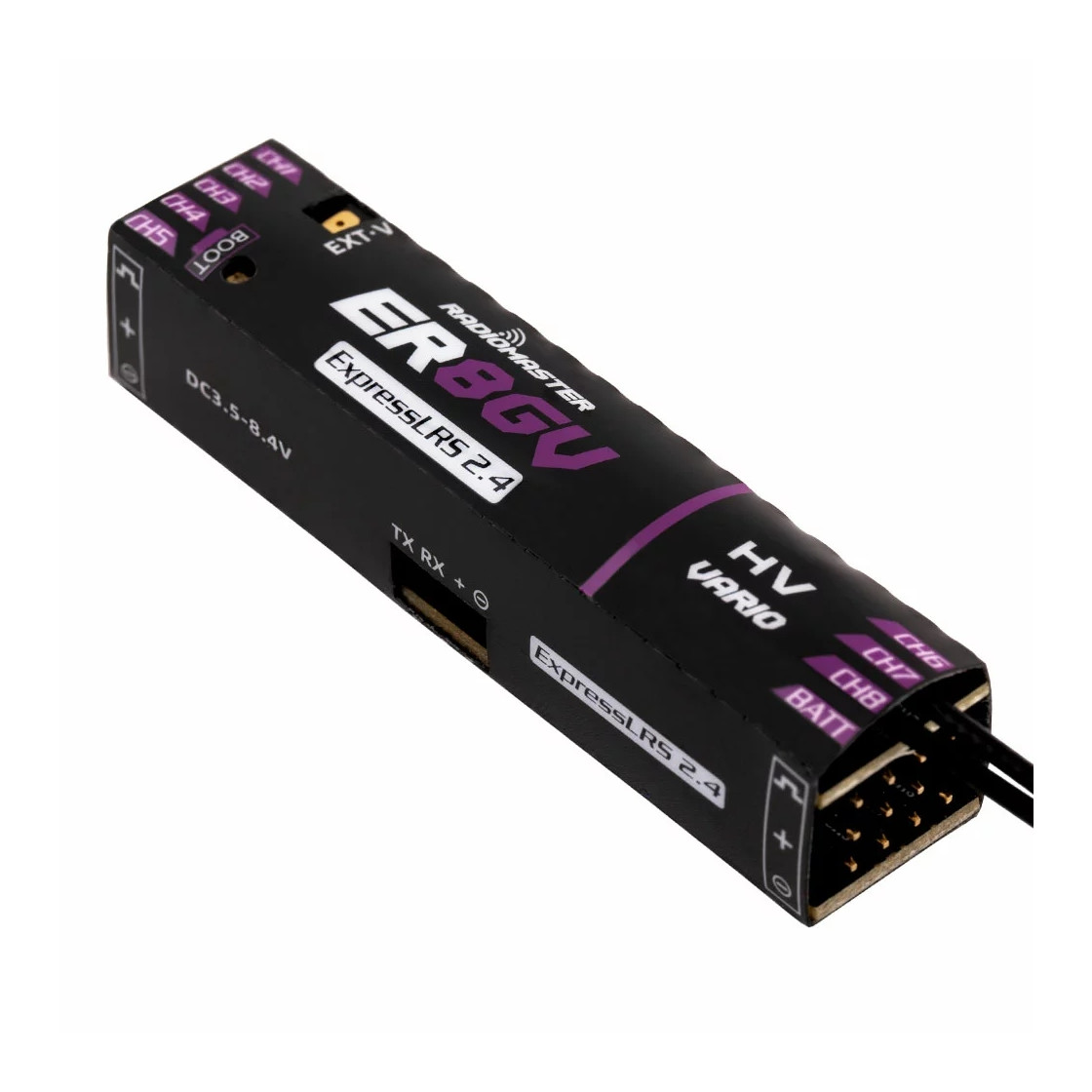
A fixed-wing pilot sees two almost identical receiver options: ER8G and ER8GV. Both have the kind of servo outputs that make sense in an RC airplane, so why consider the GV variant? In a sailplane, knowing whether the aircraft is climbing or sinking can change how you fly. For a basic powered trainer, that information may be a luxury. The decision should follow the aircraft and the pilot’s actual telemetry needs.
Start with the aircraft, not the receiver feature list
Count the required PWM channels: throttle, rudder, elevator, aileron or dual ailerons, flaps, retracts and any auxiliary functions. Make sure the receiver’s output voltage, physical dimensions and antenna installation fit the fuselage. A PWM ELRS receiver is not interchangeable with the tiny CRSF serial receiver commonly used in Betaflight drones. If you are building a flying wing with a flight controller, confirm which input protocol that controller actually needs.
What variometer data adds to a sailplane
A variometer estimates climb and sink rate, generally using barometric pressure changes or an associated sensor system. Pilots use the information to identify lift, maintain a thermal or judge whether a slope flight is gaining height. A standard receiver without a variometer can still control the airplane perfectly well. The variometer is an additional source of information, not a substitute for visibility, airspace awareness or safe altitude judgment.
Check the exact GV variant’s integrated sensor and compatible telemetry presentation on your radio firmware.
How to compare receiver versions
| Question | Why it matters |
|---|---|
| Do you need climb/sink cues? | Determines the value of a variometer variant |
| Are channel outputs sufficient? | Servos must receive the intended control signal |
| Does the radio support the telemetry sensor? | Data is useful only when displayed or announced correctly |
| Is the fuselage carbon? | Antenna placement can dominate RF reliability |
| Will the BEC supply all servos? | Servo power is not created by the receiver itself |
An example from a club field
A beginner with a basic four-channel powered trainer may get no meaningful benefit from variometer data in their first sessions. Their priorities are correct servo direction, reliable range and safe failsafe. A pilot flying an unpowered thermal glider for longer sessions may genuinely benefit from a climb-rate tone in the transmitter, especially when the aircraft is far away and small changes in altitude are difficult to judge visually. The usefulness comes from the flying task, not from more telemetry being inherently better.
Installation and setup details
Mount the receiver and its antennas as specified, avoid conductive shielding and secure servo leads against vibration. When setting up telemetry, verify sensor discovery, units, alarms and audio announcements on the exact EdgeTX model. For a variometer, protect the pressure sensing element from direct propeller slipstream or sealed-compartment effects as directed by the manufacturer. Finally, confirm failsafe and surface deflections with the propulsion system disabled before flight.
A product photograph is not a complete compatibility list. Confirm exact SKU, firmware, fitment and included accessories before buying or replacing hardware.
How to make variometer alerts helpful rather than distracting
A glider pilot may configure audio cues for climb and sink so they can keep their eyes on the aircraft instead of staring at the transmitter screen. Before flying, verify that the correct sensor is discovered by the radio, that the unit and scale make sense, and that thresholds are not so sensitive that normal turbulence produces constant noise. A well-set alert is an aid to situational awareness. It should never replace visual flight or accurate altitude awareness.
Mount the receiver according to its barometric sensor instructions and avoid exposing pressure ports directly to high-speed airflow if the manufacturer warns against it. Unexpected readings can result from installation rather than a failed sensor.
Choosing a receiver for an electric trainer versus a sailplane
On an ordinary powered trainer, reliable servo outputs and straightforward setup may be all you require. On a sailplane where finding rising air is central to the sport, the GV version’s additional telemetry function can justify the purchase. But do not forget the basics: assign failsafe, check correct servo direction, select an appropriate power supply and maintain the antennas clear of shielding. The best variometer receiver cannot compensate for an airplane with improperly adjusted control surfaces.
What a glider pilot should test before trusting telemetry
Set up the radio on the bench with the correct model selected and discover the receiver telemetry sensors. Check whether values change plausibly when the sensor is moved through a small height difference, without exposing the equipment to unusual pressure. If the radio supports audio cues, adjust thresholds to distinguish a useful climb indication from constant noise. A vario tone should help the pilot look at the aircraft, not distract them with false precision. Use the receiver’s exact manual for mounting orientation and pressure port guidance.
Before the first flight, independently test servo assignments, fail-safe behavior and battery voltage telemetry. Variometer data is not evidence of a reliable control link. An airplane with perfect climb-rate reporting and reversed control surfaces is still unsafe to fly.
Frequently asked questions
Will the ER8GV improve my radio’s range?
A variometer is not a range booster. Link performance depends on RF hardware, firmware and antenna installation.
Is a variometer necessary for a powered airplane?
No. It is most useful when climb and sink information helps the chosen flying task.
Does a PWM receiver power all servos itself?
No. Your aircraft must provide a properly rated servo power system.

















