
GEPRC GEP-M1025 GPS Module

  • GEPRC M1025 GPS module with 25 × 25 mm antenna
  • u-blox M10 chipset and multi-constellation GNSS reception
  • Up to 32 satellites, integrated flash and supercapacitor
  • GPS-only base version (no integrated compass/barometer)
  • Suitable for FPV, multirotor and fixed-wing platforms
BrandGeprc
GNSS Chipsetu-blox M10050 (M10 series)
Antenna Size25 × 25 mm ceramic patch
Module Dimensions29 × 29 × 8.5 mm (series spec)
WeightApprox. 13 g (series spec)
Input Voltage3.3–5 V
OutputUART (u-blox)
Navigation Update RateUp to 10 Hz (series spec)
Integrated Magnetometer / BarometerNo (base M1025 variant)
Supported ConstellationsGPS / BeiDou / Galileo / QZSS / SBAS
SKU: GEPRC-GEP-M1025 Categories: ,
Description

Product Overview — GEPRC GEP-M1025 GPS Module

The GEPRC GEP-M1025 GPS Module is the GPS-only model in GEPRC's larger M1025 navigation family. Built around the u-blox M10050 receiver, its most important physical distinction is the larger 25 × 25 mm ceramic patch antenna, selected for builds where reception performance matters more than saving the last few millimetres of space.

It supports combined GPS, BeiDou, Galileo, QZSS and SBAS operation and provides GNSS data to a compatible flight controller over UART. Built-in flash memory and a supercapacitor help preserve configuration and improve the conditions for quicker subsequent satellite starts.

The M1025 series also includes versions with additional magnetometers and barometers, but those are separate models. This specific listing is the standard GEP-M1025 GPS version: it supplies satellite positioning and should not be described as having a built-in compass or barometer.

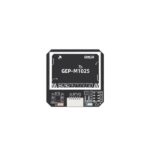
GEPRC M1025 GPS module official front product image
25 × 25 mmceramic antenna
M10050GNSS receiver
32satellites up to
GPS-onlybase version

Key Features — GEP-M1025

  • Larger patch antenna: The 25 × 25 mm ceramic antenna is the defining feature of the M1025 series and provides a larger receiving element than GEPRC's 12 mm Nano and 18 mm standard M10 modules.
  • M10 multi-constellation navigation: The u-blox M10050 architecture supports GPS, BeiDou, Galileo, QZSS and SBAS positioning to expand the set of usable satellites for compatible navigation systems.
  • Stable satellite acquisition: GEPRC advertises fast positioning and stable signal reception. Real lock time and accuracy still depend on sky coverage, antenna orientation, RF noise and the current location.
  • Flash-backed configuration: Onboard flash and a supercapacitor support retention of configuration and fast subsequent acquisition when stored assistance information remains useful.
  • Easy-to-read status indication: An onboard indicator LED assists basic module-status checks during wiring and setup; precise behaviour may vary with the firmware and production revision.
  • GPS-only base model: No built-in compass or barometer is included in the standard M1025. Buyers requiring those sensors should select a clearly identified Q, DQ or other sensor-equipped series variant instead.

The real performance of any GPS module also depends on your antenna installation, interference conditions and flight-controller configuration.

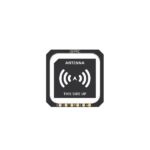
GEPRC M1025 GPS Module – Antenna top

GNSS Reception and Navigation

The M1025 GPS family uses the modern M10 receiver for combined constellation positioning. Unlike a single-constellation receiver, this approach can make use of more satellite systems when enough of the sky is visible.

The larger 25 × 25 mm patch antenna gives this unit more antenna area than the smaller M10 models. It is especially relevant for larger FPV frames where the antenna can be placed away from carbon-fibre shielding and high-current wiring.

GEPRC uses flash memory and a supercapacitor for settings retention. The unit can therefore benefit from hot-start conditions on subsequent flights while still requiring normal satellite acquisition when first installed or after moving to a different region.

GEPRC M1025 GPS Module – Multi GNSS positioning

Technical Specifications — GEP-M1025

Manufacturer / ModelGEPRC GEP-M1025 GPS (base model)
GNSS chipu-blox M10050 / M10 series
Satellite systemsGPS + BeiDou + Galileo + QZSS + SBAS
Maximum tracked satellitesUp to 32
Ceramic patch antenna25 × 25 mm
Module footprintApprox. 29 × 29 × 8.5 mm (confirm mount clearance)
Power input3.3–5 V (series reference)
Serial positioning dataUART / u-blox protocol
GPS update rateUp to 10 Hz (family reference)
CompassNot included in base model
BarometerNot included in base model
Configuration retentionOnboard flash and supercapacitor
IndicatorsOnboard status LED
Compatible aircraftFPV quads, multirotors and fixed-wing, subject to FC support

Manufacturer specifications are reference values. Installed performance and compatible features depend on the host aircraft and its flight-controller firmware.

Electrical Interfaces and Flight Controller Integration

Check that your frame has enough space for the larger module and a secure mounting platform. A sky-facing antenna position, away from powerful VTX modules and electrical interference, generally produces the best installation.

Connect the module's power, ground and UART pins according to the wiring diagram for your flight controller. Cross GPS TX to FC RX and GPS RX to FC TX if needed; do not rely on a cable's colour alone.

Enable and configure the GPS feature in the flight-controller firmware, verify satellite reception outdoors and confirm any GPS rescue, return or navigation parameters before flight. This base version does not provide I²C compass/barometer data.

Important model distinction

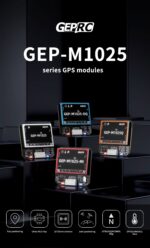
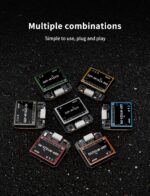
Images may show the wider M1025 family including labelled Q, DQ or other models. Your purchase is the standard GEP-M1025 GPS-only version, without integrated magnetometer or barometer.

GEPRC M1025 GPS Module – Family configurations

Installation & Setup Guide

  1. Check your flight controller: Confirm the power rating, free UART pads and the supported GNSS firmware/protocol before soldering or plugging in the module.
  2. Choose an unobstructed position: Orient the ceramic antenna towards open sky. Keep it away from carbon-fibre shielding, VTX antenna feeds and noisy motor or battery wiring.
  3. Verify the wiring: Connect ground and a supported supply. Cross GPS TX to the flight controller's RX pad; connect GPS RX to TX when the firmware requires communication in both directions.
  4. Configure firmware: Enable GPS on the right UART, select the protocol and appropriate baud rate, and enable any additional sensors only when the specific model and controller support them.
  5. Test outdoors before flying: Check for a satellite fix, correct position reports and acceptable sensor readings. Inspect GPS rescue or return-to-home settings rather than assuming they activate automatically.
  6. Secure and retest: Mount the module firmly with safe cable strain relief and verify reception again after assembling the frame and powering the VTX.

Recommended Applications

  • Long-range FPV builds: Useful on larger quadcopters where there is room for a 25 mm antenna and satellite reception is a key part of the navigation and failsafe strategy.
  • Multi-rotor and fixed-wing platforms: A serial GNSS option for flight controllers that accept u-blox GPS data and supply the correct module voltage.
  • Pilots prioritising antenna area: An alternative to the smaller Nano when space is less constrained and the larger receiving patch is desirable.

Which GEPRC GPS Should You Choose?

Choose the M1025 if your airframe can accommodate its 25 mm patch antenna and you need robust GNSS reception without integrated compass/barometer hardware. For compact aircraft compare the Nano; for a small combined GPS + magnetometer + barometer module, review the M10-DQ.

What Comes in the Manufacturer's Package?

  • GPS module: One unit of the selected GEPRC GPS model
  • Terminal cable: The GEPRC manufacturer pack lists one wiring cable
  • Instructions: The GEPRC manufacturer pack lists a module instruction manual
  • Accessories: GEPRC lists a sticker and heat-shrink tube for the standard package; contents can vary by supply batch

The exact retail package is supplied as received from GEPRC. The information above describes the manufacturer's typical accessory set rather than extra modules or sensors.

Before You Fly

These modules provide GNSS measurements; they do not independently fly or steer the aircraft. Satellite-assisted rescue, heading hold, waypoint functions and altitude control require appropriate flight-controller hardware, firmware, tuning and safe test procedures.

For the most detailed manufacturer reference, see the official GEP-M1025 series product specifications.

Official GEPRC model specifications →

Reviews (0)

Reviews

There are no reviews yet.

Be the first to review “GEPRC GEP-M1025 GPS Module”

Your email address will not be published. Required fields are marked *

About GEPRC
Brand spotlight

GEPRC

Explore the technology behind your next build.

Discover GEPRC

GEPRC focuses on the FPV ecosystem, from ready-to-fly quadcopters and cinewhoops to airframes, electronics, motors and navigation accessories. Its product families serve pilots looking for cinematic flying, freestyle performance, long-range exploration or carefully selected parts for custom aircraft.

GEPRC equipment rewards attention to the complete build rather than any single component. A GPS module must match the flight controller's available connections, a battery must suit the voltage and dimensions of an airframe, and a video or radio configuration must align with the pilot's existing control and viewing system.

Explore the brand by starting with your flying style and aircraft size. Check receiver protocols, video transmission, mounting, operating voltage and firmware before choosing related parts. That compatibility-first approach makes it easier to build a dependable and purposeful FPV setup.

FPV AircraftNavigation & ElectronicsCustom Builds
Explore GEPRC products 49 products listed in this brand collection
Shipping & Delivery

Shipping Information

  • Dubai Deliveries: Free one-day delivery within Dubai on business days, with an option for cash on delivery.
  • UAE Deliveries: Delivery to other Emirates outside Dubai is available for a flat fee of AED 35, with an estimated delivery time of 2–3 business days. Please contact our team to check availability.
  • International Deliveries: Shipping to GCC countries, the Middle East, and Africa is available upon prior arrangement with our support team due to varying import regulations. Customs, clearance fees, and taxes are the buyer's responsibility. For international shipping of additional accessories, all shipping costs, customs duties, and related fees will also be borne by the buyer.