


FPV Drone Feels Heavy After Adding an Action Camera? Calculate Thrust Margin

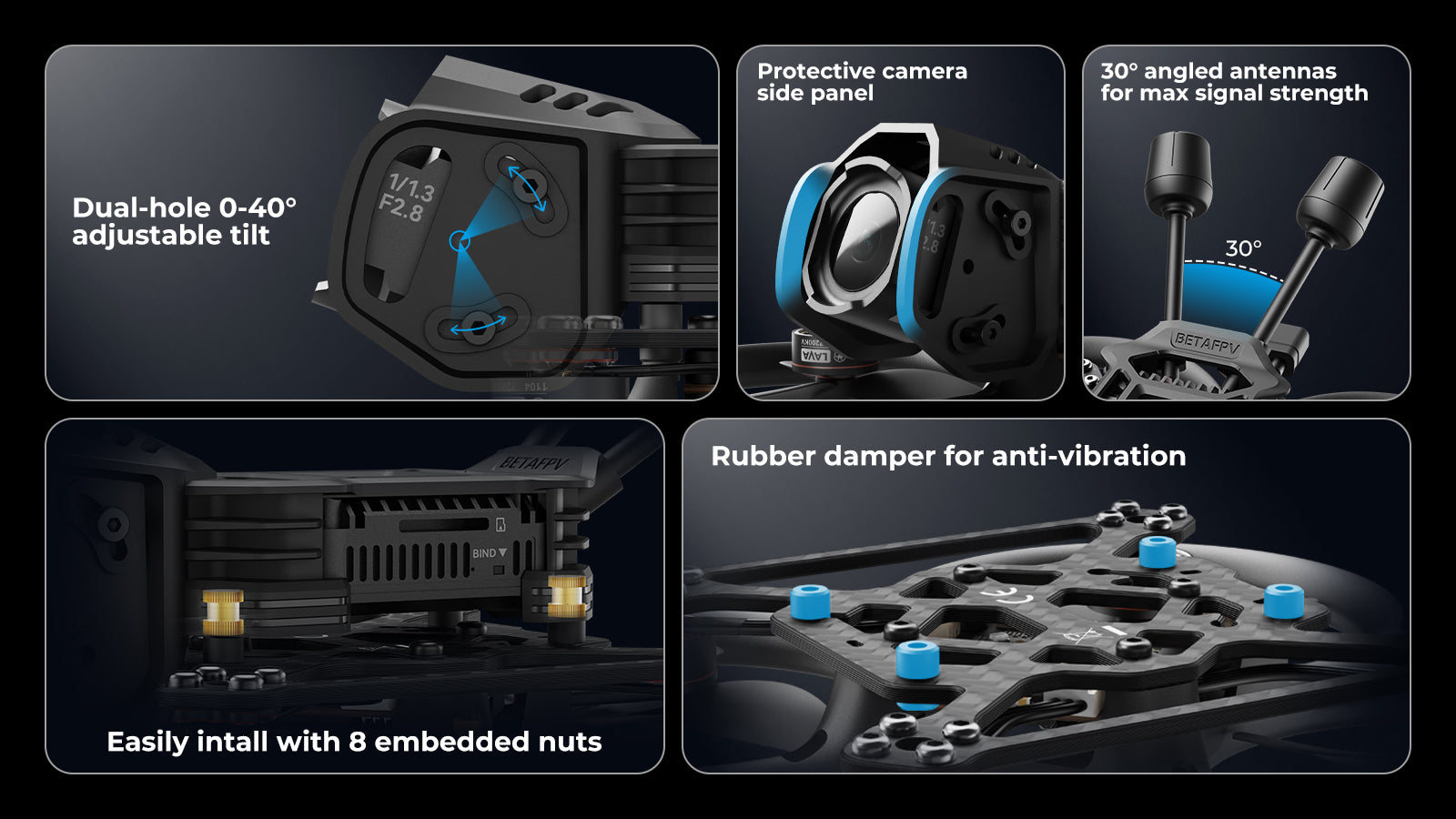
A cinewhoop that flew smoothly before a camera mount may now sag in turns or consume far more battery. The right question is not only total thrust but the reserve thrust, control authority, heat and battery behaviour at the new all-up mass.
Measure payload mass before changing the tune
Adding a camera changes much more than the number on a scale. All-up weight, centre of gravity, propeller load and voltage sag interact, so compare the complete ready-to-fly configuration rather than the dry frame specification.
| What you notice | What to investigate |
|---|---|
| Hover throttle much higher | Added mass has reduced available thrust reserve |
| Motors hot after short test | Prop loading, efficiency or tuning may be stressed |
| Wobble only after mount installation | Check stiffness, centre of gravity and camera vibration |
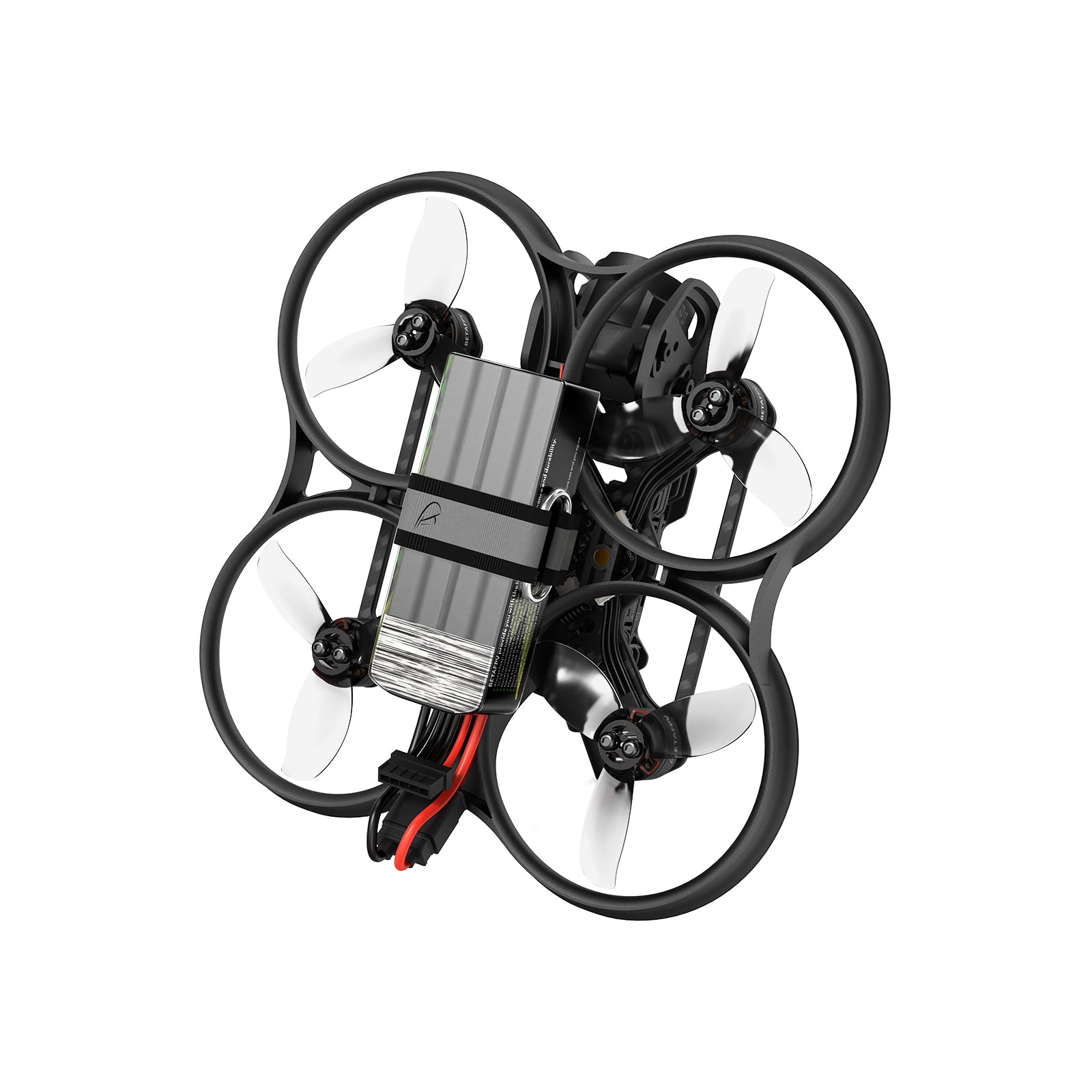
Diagnosis map
1. Weigh the complete flying configuration
Measure battery, action camera, mount, screws, filters and accessories. Avoid relying on marketing dry weight.
2. Estimate meaningful thrust margin
Compare all-up weight with credible motor-prop thrust test data at the intended cell count. Published bench thrust often uses ideal cooling and doesn’t guarantee sustained flight performance.
3. Check centre of gravity and clearance
Camera offset can change pitch control requirements. Confirm props never touch mounts and the battery remains secure under braking.
4. Test conservatively
Measure hover throttle and motor temperature after a short open-area hover. Reassess when motors are unusually hot or the craft consistently struggles to control descent.
5. Choose a balanced remedy
A bigger battery adds both energy and weight. A new motor KV alone won’t rescue an overloaded prop, ESC or frame; consider lighter camera hardware or a larger suitable platform.
Practical technical analysis, examples and decisions
Dry weight versus real all-up weight
Manufacturers may advertise an FPV frame or PNP quad weight without its flight battery, action camera, camera cage or filtering accessories. The propulsion system has to lift the complete flying mass. Place the finished drone, battery and every accessory on a scale before comparing it with published thrust data. A camera can add tens or hundreds of grams, and the extra mount may be far from the vehicle’s centre of gravity. A lighter battery does not always solve the issue if energy becomes insufficient; a larger pack may increase total mass again. Start with measured grams rather than guessing from a product category or maximum speed claim.
Thrust-to-weight ratio is useful but incomplete
A simple starting estimate is total static thrust from all motors divided by the aircraft’s actual weight. For example, four motors each producing 800 grams of bench thrust suggest 3200 grams total static thrust under those test conditions, not 3200 grams guaranteed in hot air with an enclosed frame. A 1000-gram all-up vehicle would show a nominal 3.2:1 static thrust-to-weight ratio, but dynamic behaviour, inefficiency and heat can reduce practical reserve. A ratio alone cannot tell you whether the vehicle will fly smoothly around people or carry the camera safely. Check available control authority, continuous loading and sustained current in addition to quoted peak numbers.
Why a heavier pack can produce shorter flight time
A bigger battery adds Wh but also extra mass and may shift the vehicle beyond an efficient hover range. In a ducted cinewhoop, the motors may need more throttle to hover and the power consumed can increase substantially. A 20% increase in capacity will not automatically yield 20% longer flight. Compare real flight logs or measured current during a conservative hover with two correctly specified packs, keeping camera and flight conditions constant. Inspect the battery’s ability to deliver current under load, not just its nominal capacity. A heavier pack can also reduce braking and change manoeuvre response. Pilot expectations should be realistic for filming versus freestyle flying.
Centre of gravity and camera mount stiffness
An action camera installed far forward can force persistent pitch correction and alter how the drone behaves in fast turns. A flexible 3D-printed mount may introduce resonance, causing video vibration and making the control loop work harder. Check that the camera, its protective filter and fixing screws remain secure under acceleration. Ensure no propeller or duct touches the mount at any frame flex position. Reposition the battery or mount to restore an appropriate centre of gravity within the manufacturer’s guidance. Avoid drilling load-bearing carbon members or improvising a mount that can break into propellers during a crash. Mechanical stiffness and balanced mass placement often matter more than increasing PID gains.
Motor heat as a field instrument
After a short, safe and appropriately controlled test flight, note whether motors and ESC are unusually hot for that build. Elevated heat may mean over-propping, an overloaded airframe, a dragging bearing, excess vibration or an aggressive tune; it is not proof of only one cause. Compare the configuration with motor-prop test data and previous flight records, and stop if components smell hot or performance becomes erratic. Do not run a long full-throttle bench test with propellers mounted. When adding a camera, an easy diagnostic is to compare similar short flights with and without the payload, including hover throttle and battery consumption. One variable at a time produces useful evidence.
When a larger drone is the sensible purchase
If the aircraft needs sustained high throttle simply to hold altitude, or consistently overheats with the intended payload, upgrading a single motor or ESC may be insufficient. Check whether a larger suitable cinewhoop platform is specifically rated for the camera and intended flying conditions. For close-quarters filming, propeller guards, low-speed control and safe operating margin may outweigh raw top speed. For cinematic outdoor work with clear space, a different platform may offer better efficiency than a heavily burdened tiny whoop. Specify total camera mass, desired flight time, working environment and mounting requirements before purchasing. A manufacturer’s nominal maximum payload should be treated with its conditions and caveats, not as a guarantee of production-ready handling.
Deeper troubleshooting and practical decisions
Understand the all-up-weight number
A drone advertised as 400 g may include only frame, motors and electronics, without flight battery or additional camera. Once an action camera, ND filter, isolation mount, battery strap and a larger pack are fitted, its flying mass can increase substantially. Weigh the complete, flight-ready aircraft on a scale. Record camera and mounting position, payload centre of mass and battery location as well as total mass. This gives a defensible baseline for comparing configurations. Quoting a dry weight in a thrust-to-weight calculation is misleading, particularly for a cinewhoop that already carries ducts, protection and a heavy digital video system.
Calculating a meaningful thrust-to-weight ratio
A basic static estimate divides the combined maximum thrust of the motors by the all-up weight, using consistent units. For example, four motors that each produce 500 g on a specified propeller and battery voltage give 2,000 g of combined bench thrust. If the aircraft weighs 500 g, the idealised static thrust-to-weight ratio is 4:1. That ratio does not guarantee four times the manoeuvrability: bench measurements may not match duct effects, voltage sag, motor heating or reduced airflow in flight. It is a comparative planning metric, not a safety certification. Real sustained thrust available after a long hot take can be lower.
How to interpret hover throttle
A heavier aircraft must produce more average thrust to remain level, so it often requires more throttle at hover. Compare hover throttle in similar wind and battery conditions before and after payload changes. If the craft hovers very high in its available command range, there is less upward thrust reserve for stopping descents or recovering from disturbances. Do not attempt extreme throttle tests to measure this near buildings or people. For a cinewhoop, poor efficiency in ducts and propeller wash can make the resulting flight feel worse than a simple weight calculation suggests. Record motor temperature and voltage sag after a short safe test.
Why centre of gravity is a control problem
A camera mounted far forward moves the centre of gravity away from the geometric centre. The flight controller may maintain level flight by applying different motor outputs to counter the moment, consuming control headroom and making the drone more sensitive to abrupt inputs. A flexible mount also introduces vibrations that degrade video and may contaminate gyro measurements. Mount equipment rigidly enough for control while using suitable vibration management for the camera. Keep all objects outside propeller arcs and verify that fasteners cannot reach motor windings. A lighter accessory installed centrally can improve flight more than a heavier battery.
Battery upgrades have diminishing returns
Larger-capacity batteries usually carry more energy but also add weight. At some point, the extra hover power and higher inertia consume much of the theoretical runtime gain. Different battery chemistry and C-rating also influence voltage sag during high-current manoeuvres. Compare actual usable flight duration between packs under similar conditions with conservative landing reserves rather than reading only milliamp-hours from the label. For a small cinewhoop, the wrong pack may shift the centre of gravity or obstruct duct airflow. Selecting an efficient motor-prop combination often offers better results than fitting the largest battery the strap can hold.
What to change first for an overloaded build
If the aircraft became sluggish immediately after adding a camera, temporarily remove the accessory and compare hover behaviour to confirm the load is causal. Check damaged props, bent ducts and motor bearings so a coincidental mechanical problem is not mistaken for payload weight. Consider a lighter camera or mount, a more centrally located battery or a frame designed for the intended payload. If significant thrust is genuinely required, design a compatible motor, propeller, ESC and power system rather than upgrading only one component. Include motor current, temperatures, prop clearance and expected flight style in the purchasing decision. A compact platform will not become a reliable heavy-lift drone by tuning alone.
Repair, upgrade, or keep the existing equipment?
Choose a different camera, mount or airframe only after measuring all-up weight and control reserve. A more expensive part is not automatically the correct fix. Explore the related FalconFly UAV product category for equipment that matches the verified requirement.
Realistic workshop and field scenarios
Case 1: A 3.5-inch cinewhoop feels sluggish only after adding the camera
Compare the all-up mass including battery, mount, filter and action camera against the motor-prop test data. A new payload changes hover throttle, acceleration and the power needed to stop a descent. If the aircraft was already near its efficient operating region, a modest mass increase can have disproportionate handling and endurance consequences. Measure rather than relying on advertised frame-only weight. A good decision starts with camera grams, battery Wh and target flying style. It may be better to choose a lighter recording option than push a small craft past a comfortable thrust reserve.
Case 2: The video develops jello after the camera mount was installed
A flexible or poorly centred mount can transmit frame resonance and change the loading of the flight controller. Inspect mount stiffness, camera contact, fasteners, the centre of gravity and any propeller clearance under frame flex. A heavier camera can also excite vibrations that were previously subtle. Fix the mechanical system before increasing software stabilization or tuning filters aggressively. Use a controlled comparison with the same flight path and no payload where safe. If the original footage is clean but the mounted footage vibrates, the problem has useful mechanical evidence rather than simply a poor video codec.
Case 3: A larger battery makes flight time worse
Greater capacity does not guarantee longer flights because the pack itself has mass and can increase average current required to hover. Compare energy stored and load under a repeatable safe flight rather than assuming that the number in mAh translates directly to endurance. Check the battery’s cell count, connector, discharge capability and manufacturer-recommended mass for the platform. A new pack can also shift the centre of gravity or interfere with ducts. The optimal choice balances usable energy, weight, heat and manoeuvring reserve. Marketing flight-time figures measured without a camera may not reflect a fully loaded filming configuration.
Case 4: Motors feel excessively hot after a short hover
Stop before attempting a longer shot. Elevated temperature might indicate the propeller load, overall weight, bearing drag, tuning or cooling is unsuitable for the new configuration. Compare against motor and ESC manufacturer instructions and look for physical friction. A larger ESC does not automatically create more useful thrust if the propeller-motor combination is already overloaded. Similarly, replacing only motor KV may create a new current problem. When an application requires sustained safe payload operation, consider a platform designed for that mass rather than forcing a tiny whoop to behave like a heavy-lift cinewhoop.
Frequently asked questions
Does a bigger battery always give longer flight?
No. Added mass can erase part of the energy benefit and reduce handling.
Can a stronger tune create more thrust?
No. Tuning cannot overcome the propeller and motor powertrain’s physical limits.
Final quality and safety check
After fitting extra camera weight, test a short hover in an appropriate clear area and inspect temperature and voltage sag. If the craft operates near its thrust or thermal limit, reduce payload or move to an airframe genuinely suited to the job.
Examples of size and payload trade-offs
The iFlight TITAN X5 5-inch 6S and TITAN X7 7.5-inch long-range FPV drone illustrate different frame-size and payload choices. iFlight specifies maximum extra loads of 200g and 800g respectively, but those are limits rather than recommended permanent payloads. Verify real thrust margin, centre of gravity, temperatures and battery reserves for each installed camera or pack.
Primary technical reference
Oscar Liang motor selection reference. Motor thrust curves must use the actual propeller and battery voltage; marketing maximums are not flight guarantees.

















