


ExpressLRS Receiver Wi-Fi Won’t Open at 10.0.0.1? Fix the Update Path

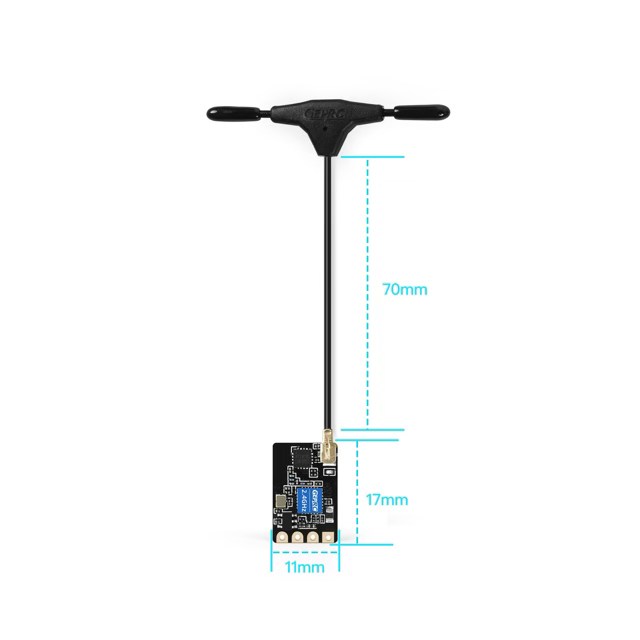
The ExpressLRS receiver LED enters Wi-Fi mode, but the browser reports that 10.0.0.1 is unreachable. That does not automatically mean the receiver is bricked. In many cases the phone quietly reconnects to mobile data or a saved network, or the browser sends the request through HTTPS.
Quick triage: symptom to next action
| Observed symptom | What it may indicate | Safe first check |
|---|---|---|
| Receiver Wi-Fi visible, web page unreachable | Phone switched networks or browser forces HTTPS | Join receiver AP and open http://10.0.0.1/ |
| No receiver Wi-Fi access point appears | Receiver not in Wi-Fi mode or lacks power | Check target-specific LED and Wi-Fi activation process |
| Update succeeds but receiver will not bind | Wrong firmware target, version or binding phrase | Verify exact receiver and firmware before reflashing |
1. Confirm you connected to the correct access point
An ELRS receiver creates a short-range Wi-Fi access point during Wi-Fi updating. Stand close to the receiver and connect your laptop or phone to that exact network. Small receivers have tiny antennas and much shorter Wi-Fi coverage than a normal router. Do not assume Bluetooth pairing is part of this process.
2. Open the correct local URL
Type http://10.0.0.1/ explicitly into the browser address bar rather than a search field. The receiver page is locally hosted and is not an internet website. If the operating system flags the network as having no internet, choose to stay connected. Temporarily disable network switching that silently prefers mobile data.
3. Check whether another update route is better
For some target devices, an ELRS Configurator passthrough workflow may be available, depending on receiver firmware, FC wiring and platform support. If the receiver’s Wi-Fi network never appears, inspect power, LED status and official instructions for forcing or waiting for Wi-Fi mode before suspecting a firmware failure.
4. Avoid flashing a similarly named target
Download the correct firmware for the actual hardware target and appropriate major version. A matching-looking product name is not sufficient. Do not upload a random binary because the web page accepts it. Keep power stable and avoid unplugging the receiver until the update has finished and restarted.
5. Verify link behavior after reboot
Once a firmware update reports success, check the LED state and rebind or verify binding phrase and model matching as appropriate. Treat the web page confirmation as one step in a complete test, not proof that the aircraft is ready to arm. Inspect receiver channel movement with props removed.
Confirm that receiver Wi-Fi and RF control both work
The receiver Wi-Fi network should appear when the device enters its supported Wi-Fi update mode, and http://10.0.0.1/ should load locally while the phone remains on that access point. After any flash, verify the actual firmware target, binding phrase, RF link and receiver channel movement in the FC with all propellers removed. Confirm failsafe before flying; a successful web-page upload alone is not a flight-readiness test.
Before buying replacements
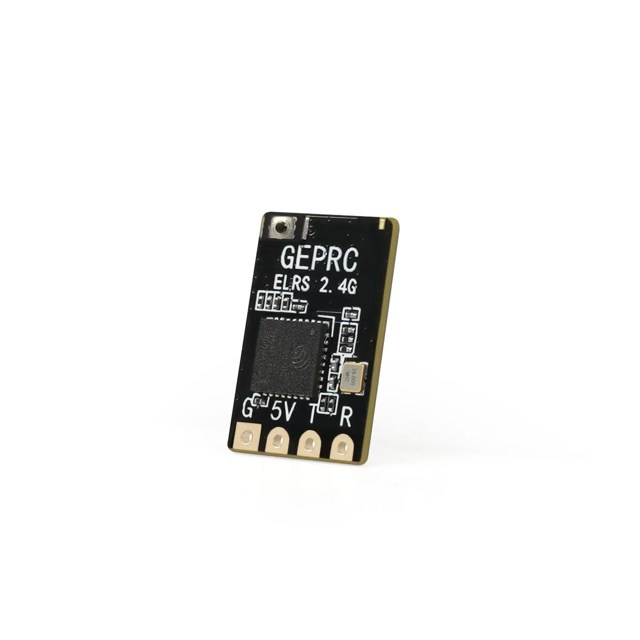
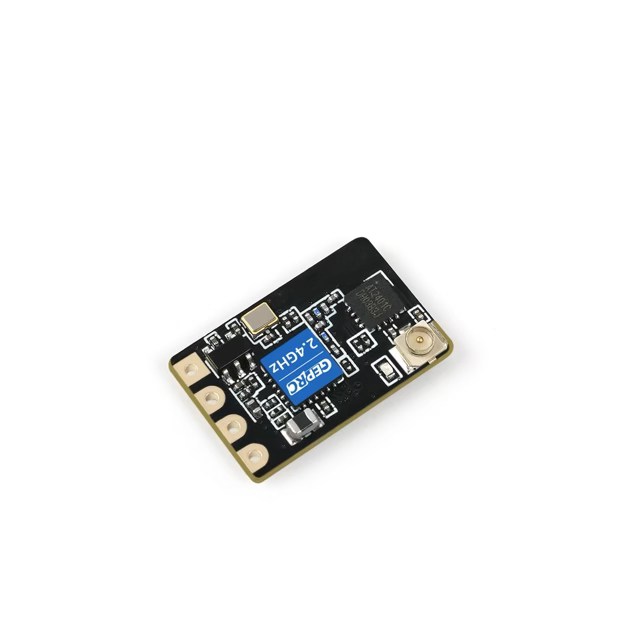
Confirm connector type, board revision, voltage range, mounting dimensions and firmware support against the manufacturer’s documentation. A similarly named product can have different wiring and compatibility. FalconFly keeps relevant products in its drone and FPV shop (related equipment: GEPRC ELRS Nano PA100 receiver), but a troubleshooting article is not evidence that a particular part must be replaced.
Related FalconFly guides
- ExpressLRS Not Binding? A Practical Troubleshooting Sequence
- ELRS Telemetry Lost but Controls Still Work? Diagnose Both Radio Links
A failed browser page is not proof of bricked firmware
The receiver Wi-Fi network does not provide public internet access. Some phones abandon it to use cellular service, then the local HTTP page at 10.0.0.1 stops responding. Stay close to the receiver, explicitly select its network and type the full HTTP address in the address bar. Disable automatic switching only for the controlled update. A short-range receiver Wi-Fi antenna is not comparable with a home router.
Firmware selection is a separate hazard. Do not flash by product name alone; inspect the hardware target and supported major version. Keep stable power throughout the update and verify receiver channel movement and failsafe afterwards with propellers removed. An update-success message is the start of verification, not the end.
Frequently asked questions
Why does 10.0.0.1 open the wrong page or search the internet?
The address is local to the receiver’s Wi-Fi network. Type http://10.0.0.1/ directly into the URL bar and ensure the phone has not switched to mobile data or another Wi-Fi network.
Why can I see the ELRS Wi-Fi network but not the page?
Check that you stayed connected to the no-internet access point, try a different browser and verify that HTTPS-only mode or a VPN is not intercepting the local request.
Can I flash a firmware target with a similar receiver name?
No. Choose the exact hardware target and the appropriate ExpressLRS major version. A wrong target can require a more involved recovery method.
Technical reference
Read ExpressLRS Wi-Fi update procedure for firmware- or hardware-specific implementation details.

















