


FPV Current Sensor Shows Wrong mAh Used? Calibrate Before Trusting Battery OSD


You land at a healthy voltage but the OSD says the quad consumed more than the battery’s rated capacity. Or it displays almost no mAh used after a hard flight. Current-sensor calibration is worth checking before using that OSD number as your primary landing trigger.

Quick triage: symptom to next action
| Observed symptom | What it may indicate | Safe first check |
|---|---|---|
| mAh used stays at zero | Incorrect sensor source or absent current telemetry | Verify FC/ESC sensor hardware and configuration |
| mAh used is consistently too high | Current-sensor scale or offset may be wrong | Compare controlled flights with charger data |
| Voltage drops sharply under throttle | Voltage sag, not necessarily capacity calibration | Assess battery health and wiring separately |
1. Separate voltage from consumed capacity
Voltage is an instantaneous electrical measurement; mAh used is an accumulation calculated from reported current over time. A misleading reading can result from the wrong sensor source, scale, offset or wiring. Voltage sag under throttle is normal and not proof that the capacity sensor is wrong.
2. Verify sensor source and hardware
Check whether Betaflight expects an on-board analog current sensor or ESC-reported current telemetry. Some AIO boards do not expose the sensor you assumed they had. Consult the exact FC wiring diagram and board specification, not a screenshot from a different hardware revision.
3. Take a repeatable measurement
Start with a healthy charged pack, note the Betaflight mAh used after a controlled flight, and then record what a trusted balance charger returns when restoring the battery to its intended charge endpoint. The charge-back figure is not a laboratory-perfect reference—charging losses, cell balance and endpoints matter—but a large consistent gap points to calibration.
4. Change scale conservatively
Use the documented calibration workflow for your Betaflight version; do not paste generic current-meter scale values from another FC. Repeat with comparable flight duration and pack condition. If the mAh reading is zero, diagnose source and wiring first; multiplying a missing signal cannot create valid current data.
5. Use multiple landing indicators
Treat voltage per cell, flight time, throttle-load behavior and calibrated capacity estimates as complementary clues. A single mAh counter can fail, particularly after a board swap or firmware reset. Set conservative warnings and avoid intentionally draining LiPos to prove a number.
Verify a corrected current-meter reading
After selecting the genuine analog or ESC-telemetry current source, run several comparable short flights with healthy packs. Note Betaflight-reported mAh used and the charge returned by a calibrated balance charger to the same full-charge endpoint, allowing for normal losses. Adjust the scale only by the procedure for your Betaflight generation and board; do not infer usable capacity from one flight or fly to battery exhaustion to test a reading.
Before buying replacements
Confirm connector type, board revision, voltage range, mounting dimensions and firmware support against the manufacturer’s documentation. A similarly named product can have different wiring and compatibility. FalconFly keeps relevant products in its drone and FPV shop (related equipment: GEPRC TAKER F722 45A AIO), but a troubleshooting article is not evidence that a particular part must be replaced.
Related FalconFly guides
- FPV Battery Voltage Sag on Punch-Outs: Internal Resistance, C-Rating and Wiring
- LiPo Charger Says Cell Error or Connection Break: What to Check
Why the charge-back number is useful but imperfect
Suppose Betaflight reports 900mAh consumed, while a balance charger repeatedly returns about 1200mAh to the same pack at the same endpoint. That persistent difference can point toward current-meter calibration. It is not a precise measurement of battery health: charge losses, temperature, balancing and discharge endpoint introduce uncertainty. Compare multiple similar flights rather than recalibrating based on a single charge.
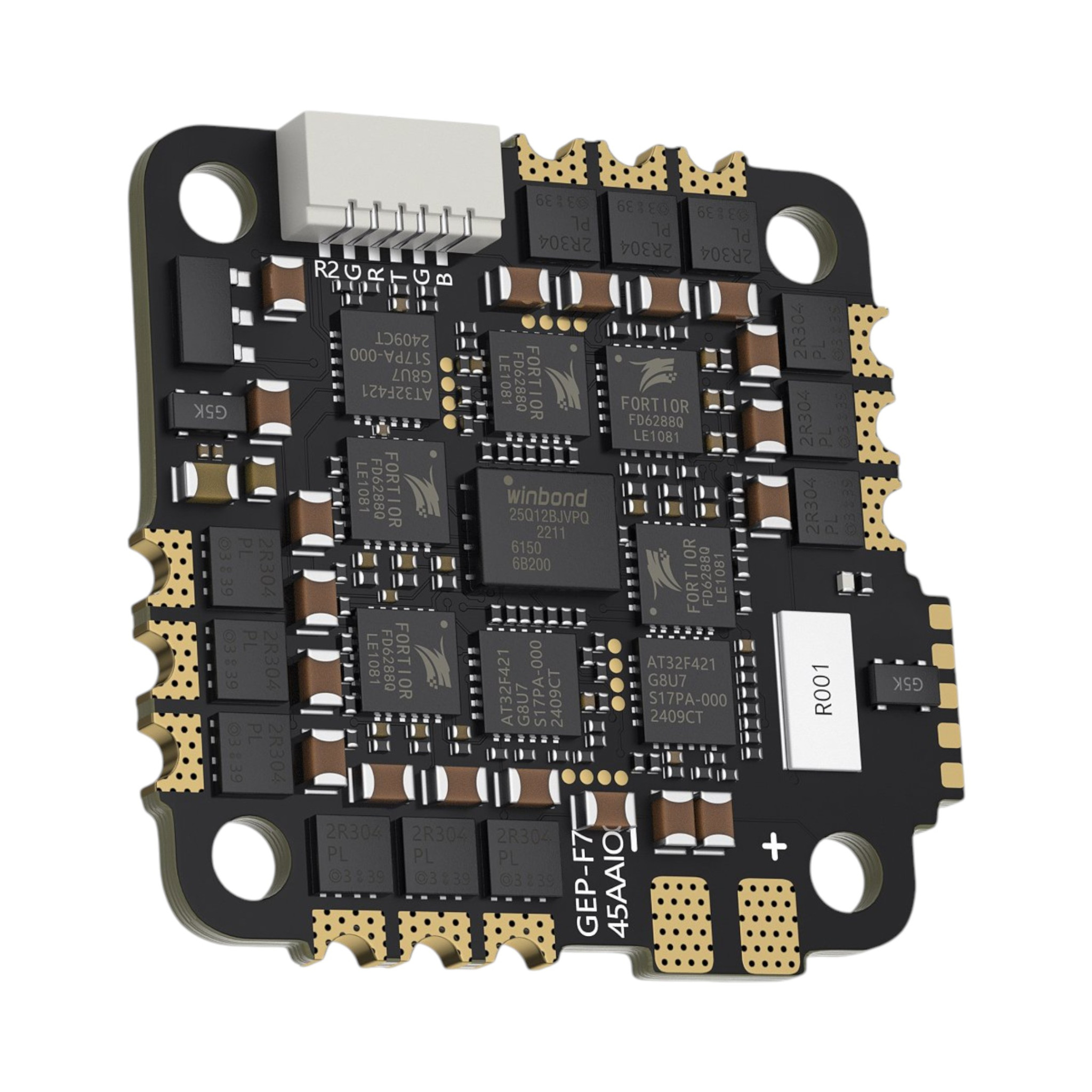
A real analog current sensor, ESC telemetry sensor and virtual current estimator may use completely different settings. Use the instructions for the selected hardware and firmware generation. The practical objective is a consistent estimate that assists conservative landing decisions alongside per-cell voltage, not a mathematically perfect remaining-capacity percentage.
Frequently asked questions
Why does the mAh counter disagree with the charger?
A flight controller integrates current samples, while the charger reports energy returned under its own termination conditions. Some difference is normal; a large repeatable discrepancy suggests sensor-source or scale calibration.
What if Betaflight always reports 0 mAh consumed?
First confirm your FC or ESC actually provides current data and that the correct source is selected. A scale adjustment cannot fix a missing input.
Can I use mAh alone to decide when to land?
No. Combine a calibrated estimate with per-cell voltage under load, battery condition, flight duration and a conservative margin.
Technical reference
Read Betaflight current sensor calibration for firmware- or hardware-specific implementation details.

















