


Two-, Three- or Four-Blade FPV Propellers? Thrust, Noise and Efficiency

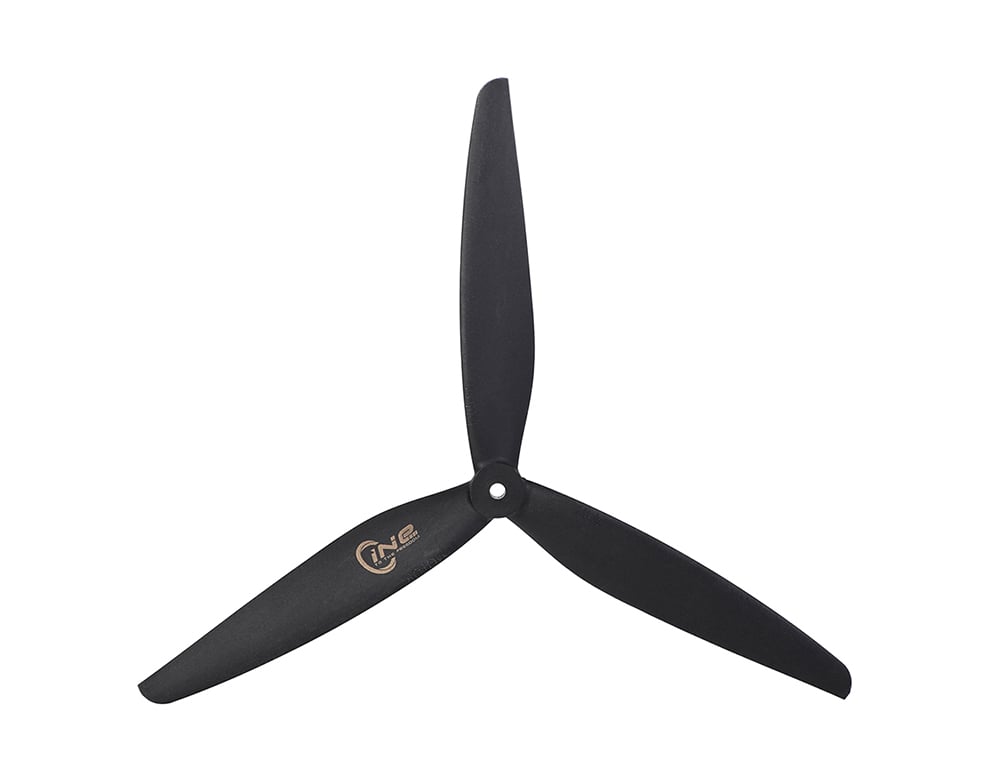
Pilots commonly upgrade propellers expecting an instant jump in control authority, only to discover higher current, shorter endurance or a louder aircraft. Blade count is only one variable. Diameter, pitch, blade chord, material, motor torque and duct clearance all influence the outcome. The correct comparison starts with the aircraft’s intended job: smooth slow video, freestyle snap, endurance cruising or a heavy payload lift. Here is a practical way to select rather than guess.
Blade count changes loading, but not in isolation
More blade area can produce useful thrust and grip at certain operating points, yet increases aerodynamic drag and electrical load. Two-blade setups often suit efficiency-focused configurations when matched appropriately. Three-blade props are common for responsive freestyle and cinewhoop builds. Four-blade configurations can be useful for specific compact ducts or handling goals but are not universally quieter or more efficient.
Pitch, diameter and blade width can overturn any simplistic comparison. A high-pitch two-blade prop can load a motor more heavily than a mild-pitch tri-blade design.
What the size markings really tell you
| Property | What to inspect | Why it matters |
|---|---|---|
| Diameter | Actual prop size and frame/duct clearance | Clearance, rotor area and tip speed |
| Pitch | Manufacturer’s specification | Potential advance per rotation; not a direct speed guarantee |
| Blade count/shape | Two, three, four; blade chord | Motor loading and handling response |
| Hub/shaft | Mount diameter and fastening method | Physical compatibility and safe retention |
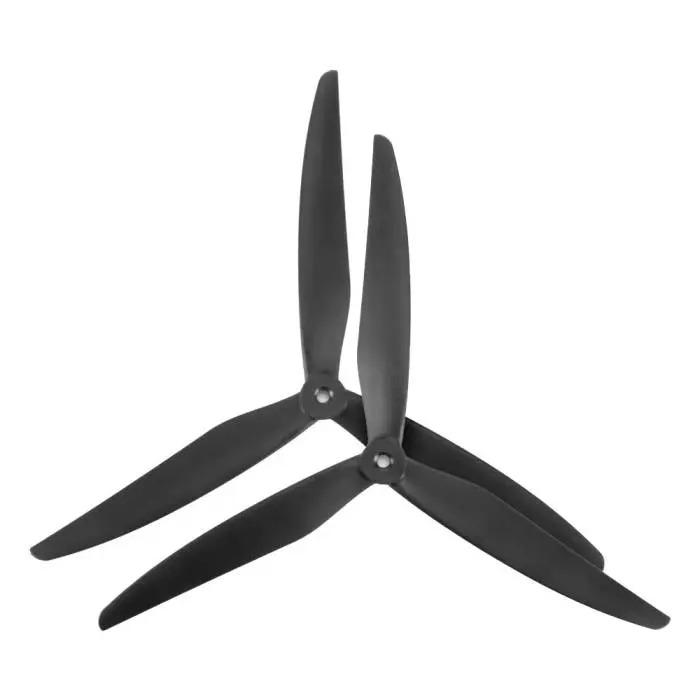
For large cinelifter props, check CW and CCW quantities carefully: listings sometimes contain one of each rather than a complete four-motor set.
Noise is a frequency and installation problem
More blades alter the tonal profile, but a change in perceived loudness also depends on rotational speed, motor bearings, vibration transfer, blade tip shape and surrounding geometry. A prop rubbing a guard generates noise and instability that no blade-count theory can fix. Record audio from the same microphone position if noise is important for a filming location.
A controlled A/B test
Compare props at the same all-up weight and battery state, with intact matching propellers on all motors. Use a conservative short test path, record battery voltage under acceleration, log current if available, and check motor temperature promptly after landing without contacting moving parts. Changes to motor output should be evaluated alongside throttle feel and video jello, not only speed. Land immediately if oscillation or unusual motor heat appears.
When the propeller is not the root cause
Excessive vibration may arise from a bent shaft, a cracked arm, incorrect motor mounting screws, a bad gyro installation or damaged bearings. Changing propellers without identifying the fault can hide it temporarily. See the fitment guide and KV and prop guide for the rest of the powertrain.
Selection examples
Compact ducted whoop: prioritize manufacturer-specified props that clear the duct and suit its motor. Five-inch freestyle: balance grip, braking, electrical load and durability. Heavy cinelifter: choose props explicitly rated for the aircraft’s weight and expected operating speed; inspect every blade before flight. No generic blade count is a substitute for the exact propulsion-system specification.
Field checklist: before you commit
- Identify the exact product revision and verify electrical, mechanical and firmware compatibility.
- Check weight, fitment, included accessories and what is sold separately.
- Keep a safe baseline configuration and document any settings or hardware changes.
- Bench-test without propellers where electronics are involved; fly only in authorised locations.
- Stop testing if you observe overheating, unexpected movement or radio instability.
Practical example: why equal diameter does not mean equal current
Take two five-inch propellers of equal nominal diameter, one with a lower pitch and modest blade area and another with more aggressive pitch and broader blades. At similar RPM, the latter can demand much more motor torque, which means additional current from the battery. Changing from three blades to two while increasing pitch may not lower load at all. That is why a propeller selection should be evaluated against the motor’s tested performance curves and the ESC’s safe continuous operating range.
For a heavy camera lift, the margin between expected hover power and maximum available thrust is especially important. A prop that can produce sufficient peak thrust in a short bench test may still produce excessive motor heat in a long hover. This matters in UAE summers when ambient temperature reduces available cooling margin.
Choosing a replacement without guessing
Write down diameter, nominal pitch, hub diameter, direction, mounting type and number of pieces per package. Note whether a product is a 2-piece CW/CCW pair or a full 4-piece set. Where a manufacturer supplies a thrust table, compare its voltage, motor, ESC and propeller setup with yours instead of treating results as universal.
After fitting a replacement set, inspect balance and clearance manually with the battery disconnected. A bent or chipped blade can create severe vibration and contaminate gyro measurements. If a new propeller produces significantly hotter motors, stop and reassess the loading before assuming a PID or filtering change will solve it.
Frequently asked questions
Will four blades create more thrust than three?
Not necessarily at an equal safe electrical operating point. Geometry, rpm and motor torque determine the actual comparison.
Can I mix different propellers on the same quad?
Not advisable. Use matched designs with the correct rotation directions and consistent condition.
How can I reduce noise without losing too much control?
Measure a few manufacturer-approved lower-loading prop options while monitoring temperature, current, handling and blade-tip clearance.
Shop and read further
Explore a related FalconFly product or buying guide and our complementary technical guide. Use product specifications and latest manufacturer manuals to confirm the exact version before purchase.
Note: Observations in this guide are conditional; performance depends on equipment configuration, firmware, environment, payload and correct installation.

















