


SkyRC B6neo+ vs Gens Ace iMars D300 Plus: Portable or Dual-Channel FPV Charger?

FALCONFLY UAV • TECHNICAL FIELD GUIDE • UAE
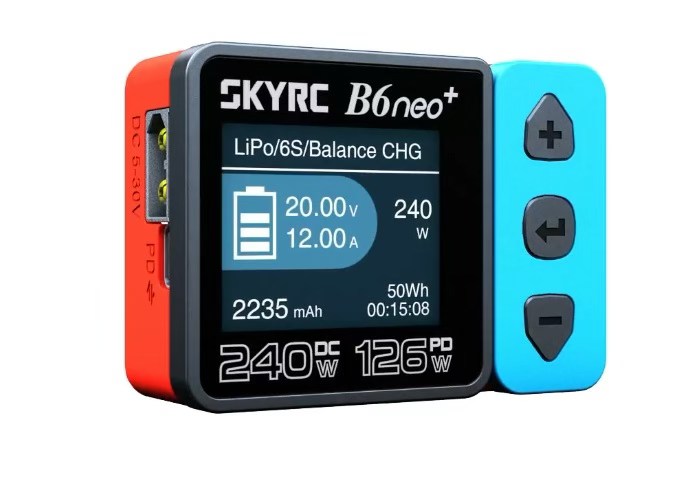
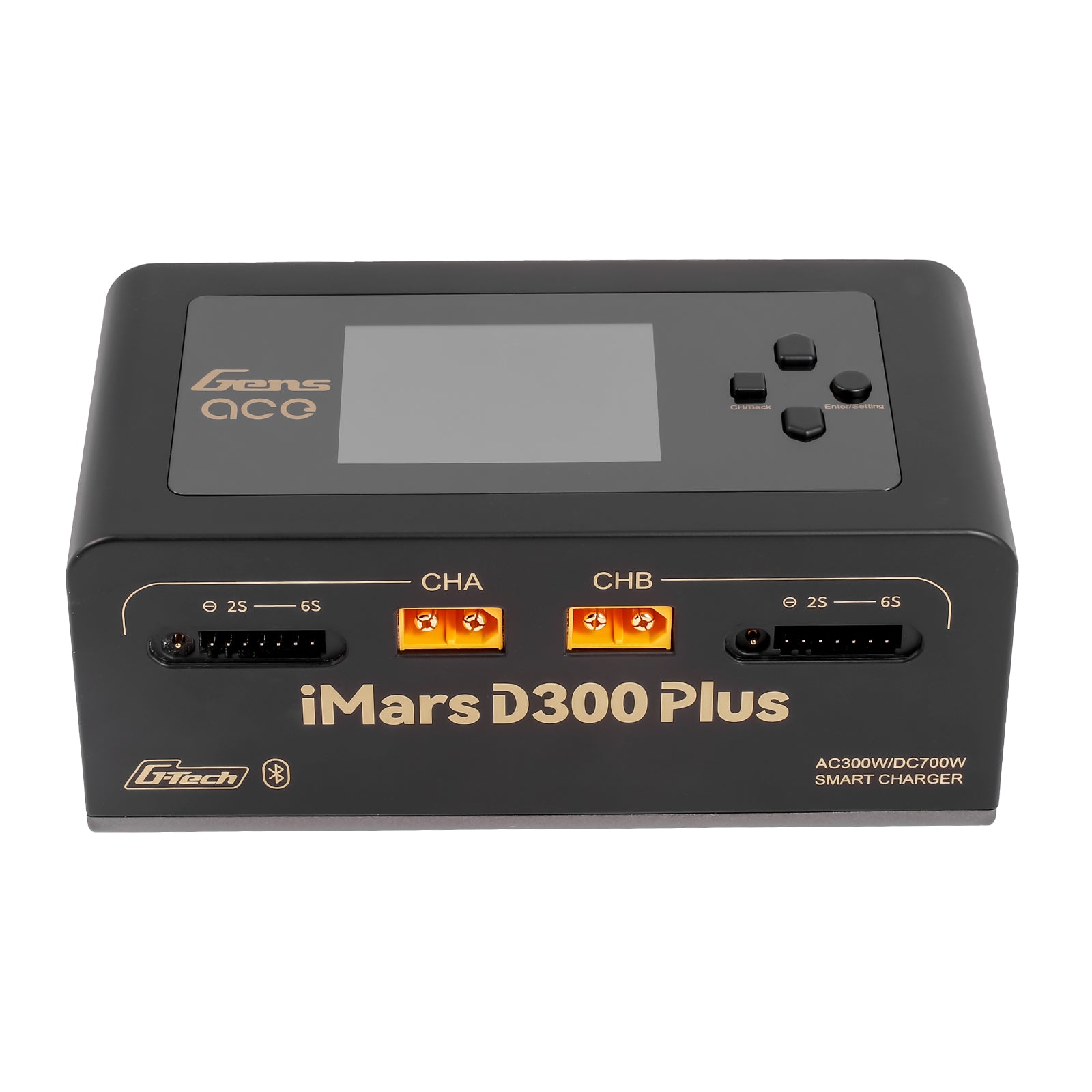
Two chargers may both accept 6S LiPo packs while serving completely different workflows. SkyRC’s B6neo+ is a compact single-channel unit designed around an external DC or USB-PD source, while the Gens Ace iMars D300 Plus is a larger dual-channel workbench charger with integrated AC support. A fair purchase comparison must include your power supply, battery quantity and connector ecosystem.
Quick-reference decision table
| Signal or factor | Meaning | Recommended response |
|---|---|---|
| Channels | B6neo+: single charging output | D300 Plus: dual charging channels |
| DC charging rating | B6neo+: up to 240W | D300 Plus: up to 350W per channel |
| USB-PD input | B6neo+: up to 126W charging power | D300 Plus: built-in AC power input |
| AC charging rating | External compatible supply required for B6neo+ | D300 Plus: 300W AC total |
1. Compare actual input paths before peak wattage
SkyRC specifies up to 240W with suitable DC power and up to 126W from a compatible PD source for B6neo+. The Gens Ace D300 Plus specifies a 300W AC charging budget or as much as 350W per channel from adequate DC input. The power figures are not interchangeable: a 65W wall adapter cannot provide 240W simply because the charger label mentions that number.
2. One channel versus two changes the workday
For one pilot charging one pack at a time near the flight area, compact size is valuable. For teams preparing several LiPos, a dual-channel charger saves manual swapping and allows separate charge programs. It does not authorize parallel charging of mismatched packs; each output still needs correct chemistry and cell-count selection.
3. Input-voltage and adapter details
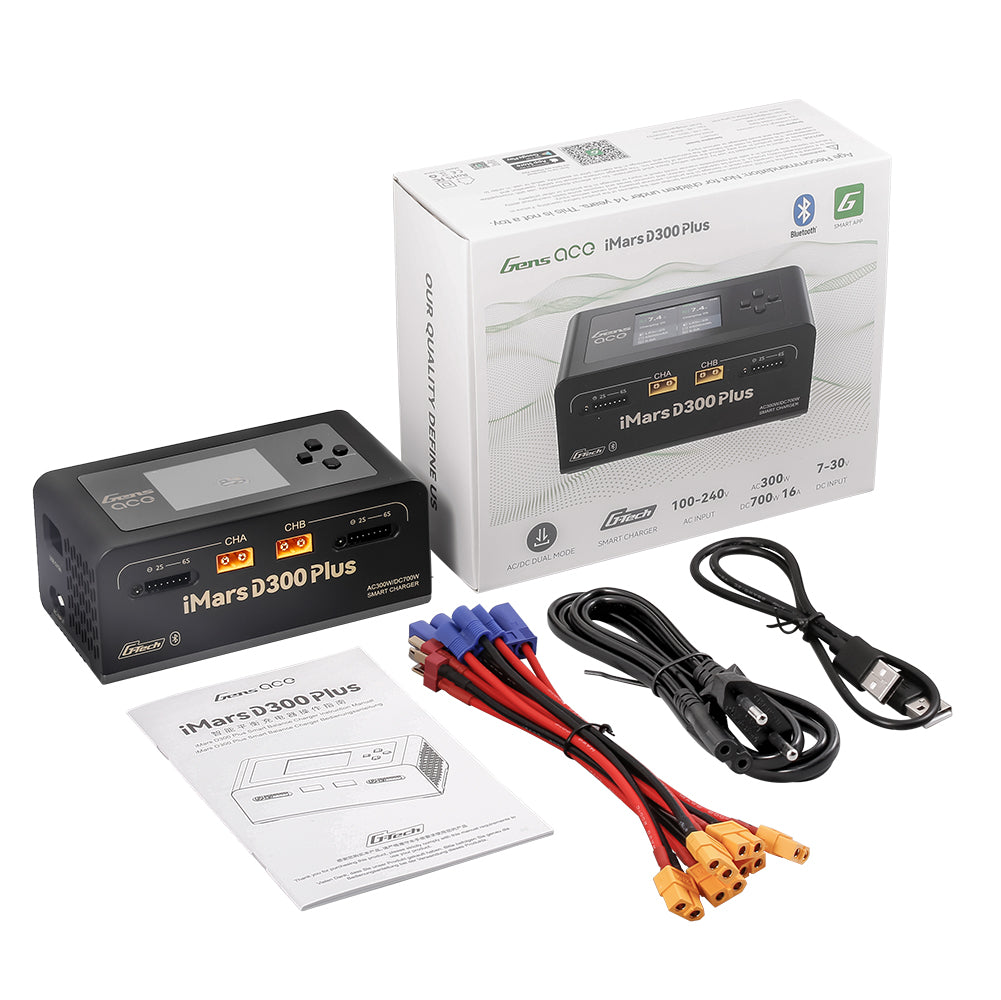
B6neo+ requires the correct DC supply or supported USB-PD negotiation. D300 Plus offers an AC input directly but needs appropriate DC feed for its higher stated output. Confirm the UAE mains plug, supplied power lead, connector adapters and whether your existing supply has the required headroom.
4. Balance charging and safe current selection
Both chargers support balance charging for compatible lithium batteries. Select the correct LiPo, LiHV or other chemistry and cell count. Do not assume the maximum ampere number printed on a charger is safe for a small pack: safe current is limited by the battery manufacturer’s charge-rate recommendation, wiring and connector ratings.
5. What about display and app functionality?
The D300 Plus adds an IPS interface and connected management features on supported versions; Gens Ace describes Bluetooth app monitoring. B6neo+ prioritizes portability and control from its small screen. A mobile app should never replace physical supervision of charging batteries.
6. The real kit price
Add the external DC or USB-PD power supply, XT60 adapters, balance-board suitability and a fire-conscious charging surface to the B6neo+ budget. For the D300 Plus, confirm what cables and adapters ship with the exact retailer SKU. An apparently less expensive charger can require several accessories before it is operational.
7. Our selection rule
Buy the B6neo+ when packing light and working with individual batteries is the primary requirement. Choose D300 Plus when a workshop or film crew frequently charges two packs independently from AC mains. Regardless of model, charge on a nonflammable surface, inspect packs first and never leave a LiPo unattended.
Before you order or test
- Confirm the precise hardware model and firmware edition; a similarly named product can use a different component.
- Check manufacturer electrical limits, connection type, physical fit and accessories in the product listing.
- For troubleshooting, work with propellers removed, observe temperature and stop at the first unsafe symptom.
- Make changes one at a time and document your baseline to avoid confusing correlation with the actual fault.
- Perform any flight testing only where permitted, with people and property well clear of the aircraft.
Frequently asked questions
Can B6neo+ deliver 240W from any USB-C charger?
No. Input method and USB-PD capabilities limit usable charging power.
Does D300 Plus output 700W from a wall socket?
No. Its higher 700W combined DC rating depends on adequate DC input; its AC rating is 300W.
Can both charge 6S FPV LiPo?
Yes, when configured correctly and used within their supported chemistry and cell limits.
Further technical reference: https://gensace.de/collections/d300/products/gea300wplus-ew. Always check the current manufacturer documentation, and do not rely on estimated flight times or charging limits as guarantees.
FIELD NOTES • PRACTICAL APPLICATION
Worked power budget for a two-pack charging session
Suppose a workshop needs to charge two 6S packs at 5A per channel. At nominal 22.2V, each pack represents roughly 111W before accounting for higher charge voltage and conversion losses. Two channels therefore need significantly more than 222W from the source to sustain that rate as the charge voltage rises. A 300W AC total charger may fit the workflow while a portable single-output charger would require sequential sessions. Always choose charge current based on the packs’ manufacturer limits, not the charger’s headline wattage.
Why input accessories decide the true price
A compact B6neo+ needs a capable input supply and the correct power cable. USB-C connectors are not proof that every adapter negotiates a high wattage. A dual-channel desktop unit has a different footprint, power cable and ventilation requirement. Include the appropriate charge lead, balance connection and locally compatible mains input. Never improvise high-current adapters with unknown polarity or unsuitable gauge.
Field service plan for charger faults
If a charger reports connection break, stop the charge before touching any connectors. Inspect the main lead and balance connection with the battery isolated. Repeat on a different known-good compatible lead only if the battery itself is healthy. Persistent cell imbalance or damage requires retiring the pack rather than trying faster modes. A technician should inspect intermittent charger outputs; a faulty charging connector presents a significant heat risk.

















