


GEPRC MATEN 2.5W vs 3W vs 4W Analog VTX: The Power Trap

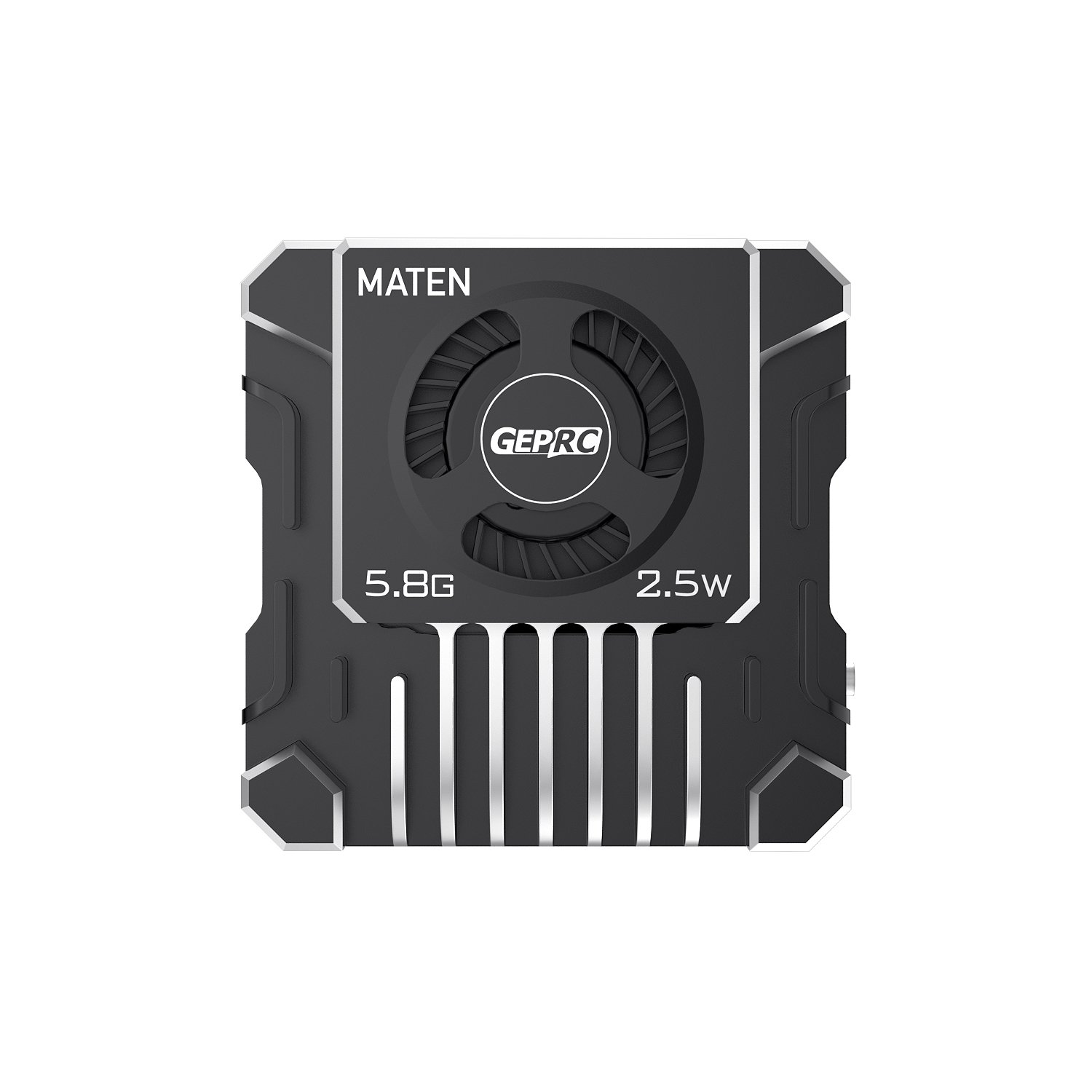
A pilot sees three transmitters with 2.5W, 3W and 4W on the label and assumes the largest number must provide the best video. It might not. Transmitter output power, receiver sensitivity, antenna quality, cooling and the legal operating limit form one system. A high-power unit can be a poor purchase for a compact aircraft if it cannot be cooled or mounted safely. The more useful question is what problem your existing video link is actually suffering from.
First determine whether you need more power at all
Is the picture breaking up whenever the aircraft turns, or only when it is farther away? Orientation-specific problems often indicate antenna shadowing, a damaged coax connection or polarization mismatch. Increasing transmitter power does not repair any of those. Check the receiver antenna, FPV goggles or ground-station placement, and the transmitted channel. A poor antenna mounted alongside a carbon plate can waste much of the transmitter’s potential performance.
Before changing hardware, document the flight environment, selected channel, current output setting and whether the link is legal and permitted at that location. A 25mW mode may be required in some places even if the device can generate much more.
Power ratings do not tell you the cooling requirement
GEPRC’s MATEN family includes different revisions and cooling approaches. The official 2.5W model lists adjustable output up to 2500mW, 7–36V input, IRC Tramp control and a CNC aluminum housing. A 3W PRO version lists a fan-cooled design, 7–36V input and multiple mounting patterns. A 4W unit cannot be assumed to have the same dimensions, connector or fan design as either model. Confirm the exact version and hardware drawing.
Higher RF output generally means more heat to manage. Leaving a VTX sitting powered on the bench without airflow can trigger protective temperature behavior or damage. Never remove the antenna to make the board easier to handle while powered.
Fitment checklist for an existing frame
| Part | Why it decides compatibility |
|---|---|
| Mounting pattern | A 20×20 or 30.5×30.5 stack does not accept every transmitter directly |
| Available height | Fan housings and connectors need real clearance |
| Input voltage | Supply rail must be inside the specified range |
| Antenna connector | MMCX, SMA, RP-SMA or U.FL require the correct mating parts |
| Protocol | Flight controller must support the intended VTX control method |
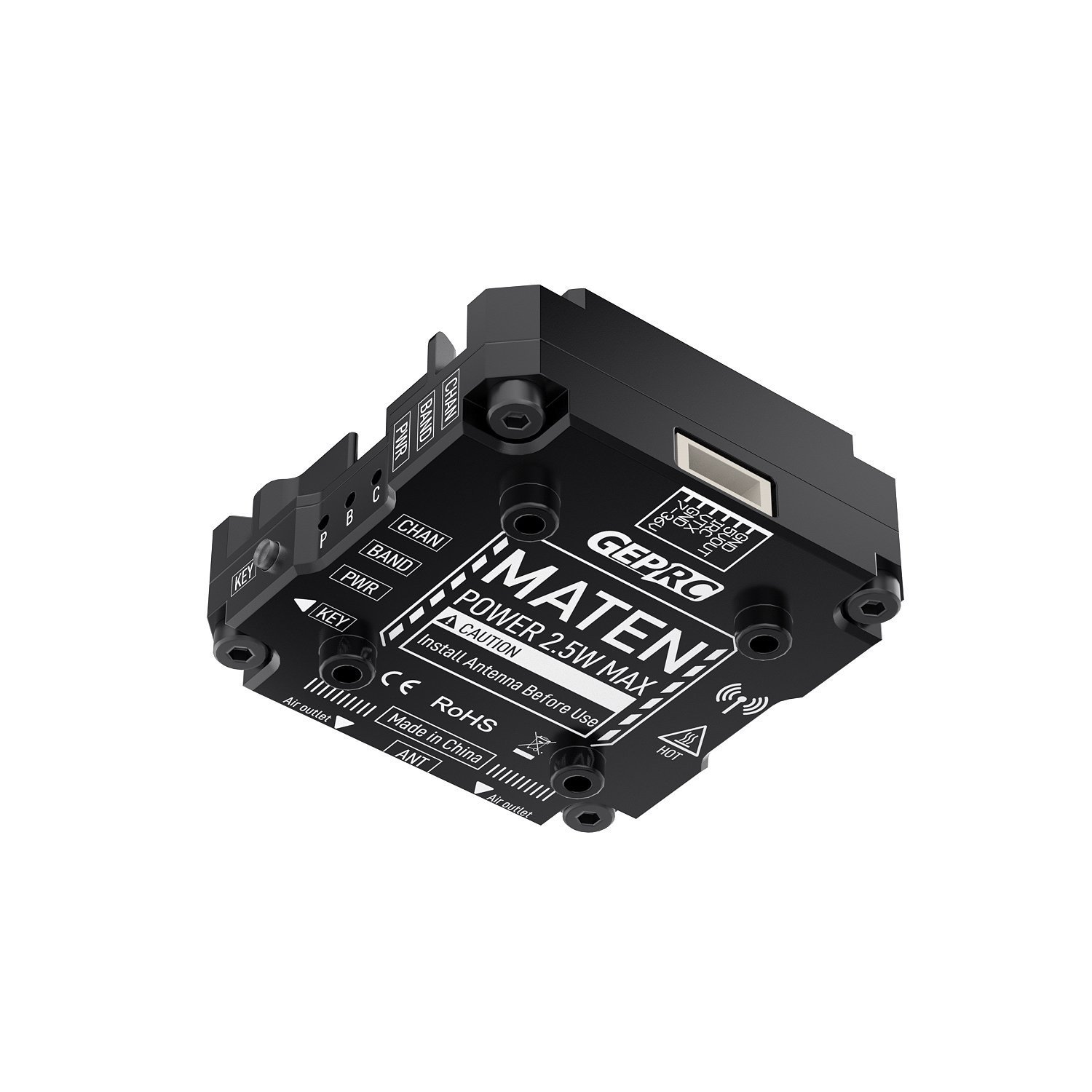
What the wattage label does not guarantee
The theoretical difference between 2.5W and 4W is about 2dB of output power. That is meaningful in a link budget but far from a guarantee of dramatically greater real-world range. A change in antenna gain, orientation or interference can easily have an equally important effect. Effective output and receiver conditions—not the number printed on the enclosure—determine picture quality.
Do not assume a transmitter operating at 4W is permitted in the UAE. Check the requirements of the applicable radio regulator and flying authority, and use the permitted frequency/power combination.
A safer buying sequence
First fix damaged antenna and cable routing. Then ensure your existing VTX is correctly configured and adequately ventilated. Only after those checks should you compare a replacement’s mount, input range, cooling, video format and supported channels. If you still need a more capable system, make sure your aircraft can carry its mass and operate it within radio rules. Buying the most powerful option without a cooling plan can turn a reception problem into an electronics problem.
Before checkout
Confirm exact model revision, electrical limits, connections, any included accessories and the manufacturer’s installation notes. Good fitment is a system property: matching one specification does not confirm the rest.
How to read a real-world RF complaint
Consider an analog pilot who reports snowy video near a building corner. The first instinct might be to order 4W. But reflection, antenna polarization and receiver placement can all be the actual problem. Ask whether the picture improves if the pilot stands elsewhere, whether the receiver antennas are unobstructed and whether the same interference appears on multiple channels. If failures occur at close range with a physically damaged VTX antenna, buying more transmitter power is unlikely to cure them.
It is also possible for power output to be lowered automatically when a transmitter gets too hot. That can make a high-rated unit perform poorly during a stationary test. Confirm the VTX’s cooling and permitted operating conditions before interpreting the result as low-quality hardware.
Calculate rather than exaggerate the wattage difference
Transmitter power ratios are logarithmic: 10 log10(4/2.5) is about 2.0dB. That is why ‘4W versus 2.5W’ is not the dramatic range multiplier it appears to be. Real-world range also depends on antennas, receiver sensitivity, clutter, interference and the applicable legal power limit. Better antennas and careful installation can provide more reliable benefit than changing the number on the VTX box. For shopping, compare supported frequencies, mounting dimensions, thermal protection, antenna connector and control protocol first.
Customer questions
Is 4W automatically better than 2.5W?
No. RF conditions, antenna installation, heat, legal limits and receiver performance matter at least as much as the power rating.
Can I run a VTX without an antenna briefly?
Avoid it; many transmitters can be damaged by operation without a correctly matched antenna. Follow the specific manual.
Does higher power help inside buildings?
Reflection and multipath may still dominate. Check legal permission, antenna orientation and actual flight environment before changing power.

















