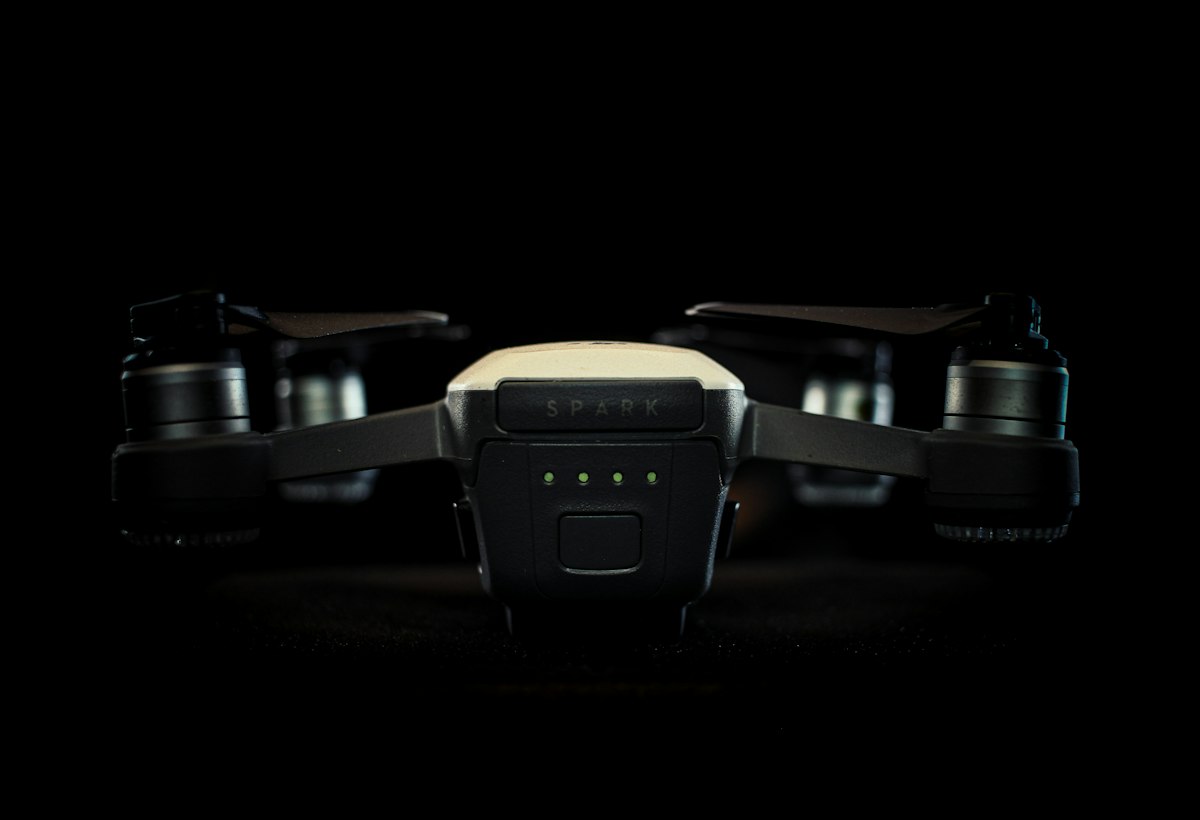
A new pilot arms the quad for the first time and panics: all four props start turning without any throttle. On most Betaflight multicopters that is deliberate, not an ESC defect. What matters is whether the spin is expected, symmetrical, controllable and consistent with a verified safe arming setup.
Before adjusting the aircraft: Never arm a quad with props installed on a workbench. The fact that idle is normal does not make it safe to test in your hands or near people.
Why Betaflight spins motors after arming
The official Betaflight Safety documentation states that the default setup starts propellers at a low speed as soon as the aircraft is armed. This gives the pilot immediate feedback that the aircraft is live. Motor idle also supports consistent low-throttle behavior in many control configurations, though the actual idle implementation depends on firmware, ESC protocol and features. If all motors start spinning gently when the arming switch activates, that may simply be the normal armed state.
Normal idle is different from one runaway motor
A quad with four motors spinning at low speed is not the same as a single motor accelerating dramatically or a craft attempting to flip. Remove props and check the arming response only in a controlled environment. Look for motor order, FC orientation, accelerometer calibration and receiver input errors if the response is inconsistent. With props off, motor sound alone cannot confirm correct thrust direction; propeller installation and motor mapping must still be checked separately.
MOTOR_STOP can change the behavior—but think twice
Betaflight documentation recognizes the MOTOR_STOP option, which can prevent propellers from turning while armed at minimum throttle. The fact that this option exists does not mean it is universally appropriate. A spinning prop is a conspicuous visual indicator that a quad is armed; suppressing that indication can make handling more dangerous. Certain DShot and dynamic idle configurations require special care at very low motor speed. Follow release-specific documentation before changing idle logic for a production build.
Dynamic idle is about control authority, not a sound preference
Dynamic idle works with motor RPM feedback in supported configurations to maintain enough rotational speed for predictable response near zero throttle, including during abrupt maneuvers. It is not a generic way to make motors ‘quiet.’ Excessively low idle can make a motor stop or hesitate in flight, while overly aggressive settings may increase unwanted thrust or heating. If your build uses bidirectional DShot or RPM telemetry, verify it functions correctly before tuning low-speed behavior.
A field checklist for beginners
Test arm/disarm switch operation with props removed, verify each receiver channel, confirm the failsafe path, inspect the motor assignment, then install correct props only immediately before a safe outdoor flight. Stand clear during arming. When diagnosing unexpected movement, reduce variables: compare motor behavior with a fresh battery and unchanged PID settings, check for arming warnings, and avoid random ESC flashing. A stop-switch that works every time is more important than silence at idle.
Troubleshooting at a glance
Armed behavior
Interpretation
Action
Four motors gently spin at low throttle
Common default idle
Verify normal arm/disarm
One motor surges unexpectedly
Possible config/wiring/FC issue
Disarm; test without props
Motors stop in flight at low throttle
Idle/ESC/propulsion issue
Land; inspect telemetry and idle
No motors spin but FC says armed
Motor-stop or output issue
Inspect config and ESC path
Understand the difference between armed idle and a motor runaway
In a typical Betaflight multirotor setup, motors beginning to turn when the craft arms is an intentional behavior. A small commanded idle helps the motors maintain stable rotation so the controller can respond promptly when a corrective torque is needed. The pilot may be surprised because the throttle stick is at its lowest position, but the controller’s arming state and throttle command are not the same thing. A correctly configured idle is distinct from a motor suddenly accelerating to an unexpectedly high value or one motor behaving differently from the others.
Before touching settings, identify the pattern. Do all four motors start gently and consistently after arming, or does one motor surge, stutter or refuse to start? Does the problem exist before arming, or only when the flight controller begins stabilization? A quad moving on a bench may produce unusual motor commands because the PID controller is trying to correct motion without a free airframe response. Never hold or restrain an armed aircraft with propellers attached to ‘see what happens’. Perform bench configuration with propellers removed.
What dynamic idle actually changes
Dynamic idle is not primarily a comfort feature for making the aircraft quieter. In supported Betaflight and ESC configurations, it can help maintain a controlled minimum motor rotation in changing conditions, often using information from the motor protocol and RPM-related feedback. Proper behavior depends on the firmware, motor protocol, ESC setup and tuning. The intended benefit is reliable motor response when the controller rapidly needs more or less torque, not arbitrary spinning for its own sake.
Copying a dynamic-idle value from an unrelated five-inch freestyle quad to a tiny whoop is not a reliable calibration method. Motors have different inertia, props have different loading, and the ESC can behave differently at low command levels. Review the firmware-matched documentation and relevant preset before altering the configuration. If a motor has trouble starting, inspect mechanical drag, connectors and ESC operation first. Raising idle to compensate for a damaged winding or failing ESC can conceal the root cause and create a new safety issue.
Why MOTOR_STOP is not a universal safety upgrade
Some Betaflight configurations offer a MOTOR_STOP setting that changes idle behavior, and pilots sometimes activate it because stationary props at low throttle look safer. That visual impression can be misleading. Motor-stop behavior may not be appropriate for the selected flight modes and operating style, and it does not replace safe arming discipline. A craft with motors stopped can still produce immediate thrust when the controller commands rotation. The only reliable protection against accidental propeller injury during configuration is to remove the propellers and avoid unintended arming.
Before using any setting that changes motor response, identify the behavior recommended by the current Betaflight documentation for your firmware and aircraft type. Consider how the controller recovers from sudden low-throttle maneuvers, inverted flight or changes in desired attitude. A setting that feels harmless on the ground can alter control authority in the air. Save the original configuration and consult a qualified technician if the intended result is unclear. Do not use trial-and-error flights near people to evaluate the difference.
Recognize a motor or ESC problem disguised as idle behavior
Healthy motors should rotate smoothly with no grinding, binding or repeated twitching under a suitable no-prop bench procedure. If one motor needs noticeably more command to begin turning, inspect its connector, phase wires, solder joints, shaft bearings and ESC output for damage. After a crash, small debris or a bent motor bell can be enough to make low-speed behavior inconsistent. A quad that flips on takeoff may have a motor-order, propeller-direction or gyro-orientation fault, not an idle setting that simply needs to be increased.
When diagnosing, record which motor is affected and whether the symptom follows a component or a connection after a safe inspection. Do not hot-swap motor wiring while the battery is connected. If board traces or wires show overheating, stop powering the system and inspect it professionally. Basic evidence such as a consistent stutter on one output is more useful than repeatedly altering PID settings. Avoid running motor tests with propellers attached even when the throttle slider is set low.
Do not diagnose PID behavior from a restrained aircraft
The flight controller expects an aircraft that is free to rotate in response to motor thrust. If a quad is held fixed, the gyro sees little of the correction it expects, so integral and proportional control effects can drive motor commands in surprising directions. That is not a meaningful proof of a normal airborne tune. The same problem occurs when an operator arms an aircraft with its propellers removed and interprets a changing motor speed as a runaway fault. A no-prop bench test is appropriate for checking order and response, but not for validating actual thrust and stabilization.
If the aircraft is known to be safe for flight, the final assessment belongs to a conservative hover by a capable pilot in a clear area. Do not perform that test until propeller direction, motor order, FC board alignment, radio channel directions, failsafe and arming logic have been verified. Record the symptom rather than chasing the first unusual sound. If the craft lunges, flips or loses control, disarm when safe and return to ground diagnosis instead of trying a second immediate launch.
Checklist after a firmware flash or configuration reset
Firmware updates and restored presets can change default idle-related settings, motor protocol configuration or available controls. Start by comparing the saved configuration with the new version’s documentation, not by blindly pasting every old command. Verify motor protocol and ESC compatibility, RPM-related options where applicable, motor direction and motor numbering. Inspect the arming warnings and ensure the receiver’s minimum throttle value is within the expected range. An endpoint calibration problem can make a pilot think the idle value is incorrect when the root cause originates from the radio.
When several variables are different, change and test one at a time. Keep a small record of each change and the observed result with the aircraft disarmed and propellers removed. Recheck failsafe behavior before normal flight. If the same firmware and profile work on three aircraft but one has a problematic motor, inspect the unique aircraft hardware before replacing its settings. This controlled approach avoids creating inconsistent fleet configurations and makes future repair much easier.
Explain motor idle correctly to a new FPV customer
A new customer accustomed to camera drones may expect every motor to remain perfectly still until the throttle is raised. The workshop should explain that arming an FPV quad enables the flight-control system and usually commands a small amount of idle rotation, while disarming removes the intent to generate thrust. The arm switch is therefore a primary safety control and must be configured deliberately. Teach the customer how to confirm the correct model, arm only in a clear takeoff area and disarm immediately after landing.
Also explain what is not normal: one motor failing to rotate smoothly, unexpected full-speed surges, repeated desynchronization, or an aircraft that flips or shoots sideways on lift-off. These symptoms call for inspection, not simply accepting the behavior as ‘how FPV works’. Provide a short printed checklist for before and after flight. Good operator understanding prevents accidents and gives the workshop better diagnostic information when a real motor or ESC fault later develops.
Frequently asked questions
Are spinning props with zero throttle always normal?
Low-speed spin after arming is a documented default, but sudden acceleration, unusual heat or instability requires investigation.
Should I enable MOTOR_STOP?
Only after understanding the safety and flight-control implications for the exact Betaflight and ESC setup.
Will more idle RPM increase range?
No. Idle RPM is a motor-control matter, not an RF range feature.
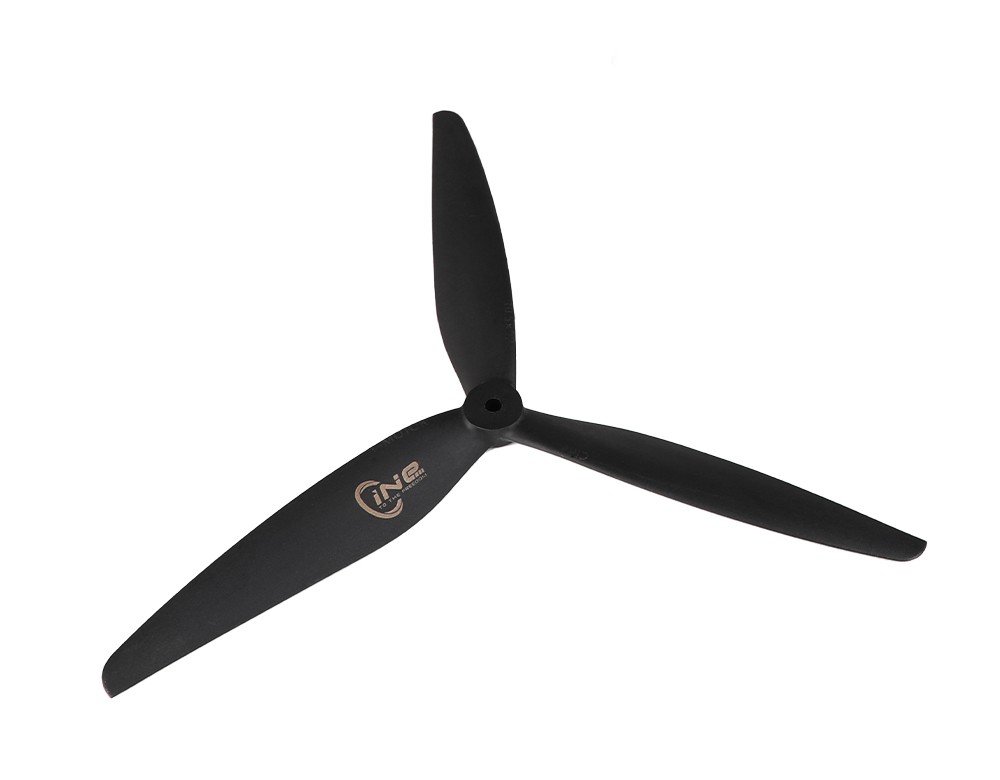
Illustrative FPV propeller. Remove all propellers before bench-testing motor settings.
The iFlight TITAN X2 O4 2S HD is an example of a compact 2-inch Borg F7 AIO quadcopter. As on other Betaflight-powered aircraft, verify the actual receiver, motor direction, propeller installation and arming behavior before flight; do not diagnose armed idle by holding the model by hand.