


FPV Drone Flips on Takeoff? Diagnose Motor Order, Props and Runaway Protection

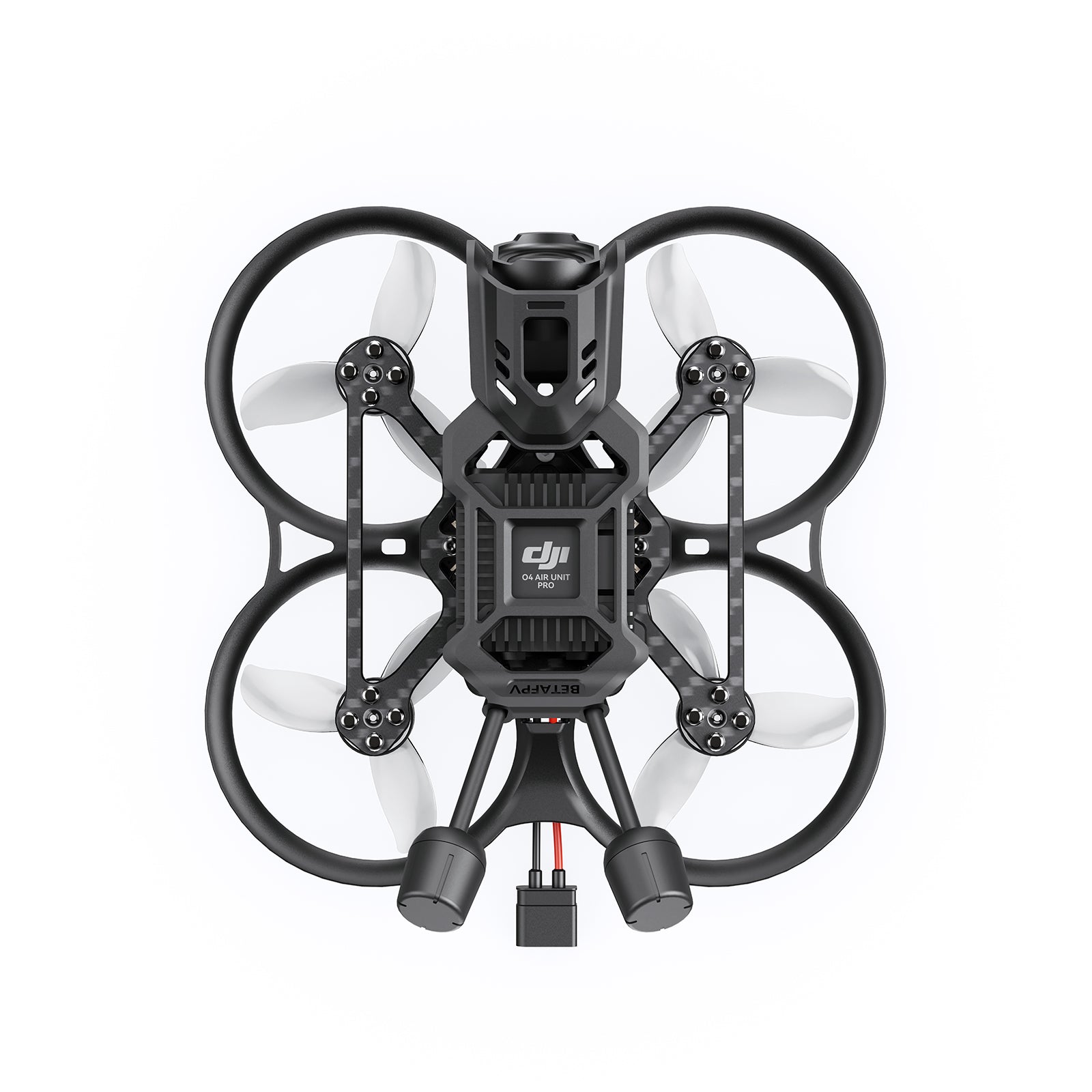
You have just rebuilt a quad, armed it, raised the throttle—and it instantly rolls over and disarms. The most useful first question is not “Which PID value should I change?” It is “Does Betaflight’s expected direction of thrust match the actual aircraft?”
Why the quad flips and disarms
Betaflight’s runaway takeoff protection is intended to stop a rapidly diverging response. It can be triggered when the control loop demands a correction but the airframe moves in the opposite direction. A wrong propeller, reversed motor, incorrect motor mapping or rotated gyro can all produce that symptom. An automatic disarm is therefore a diagnostic clue, not necessarily a defective flight controller.
Use the symptom to narrow the cause
| Observed behavior | Likely checks | First safe action |
|---|---|---|
| Instant sideways flip | Motor order, propeller orientation, gyro alignment | Remove props; compare motor map with physical frame |
| Violent yaw on lift-off | Motor direction and props-in/props-out selection | Verify each motor’s actual rotation |
| Motors speed up on bench without props | PID correction with no physical movement | Disarm; do not interpret bench RPM as a hover test |
| Disarm only after a rebuild | Reversed motor wires, FC mounting direction, changed mixer | Compare configuration backup to the rebuilt aircraft |
Step 1: Verify flight-controller orientation
Connect to Betaflight Configurator with the battery disconnected unless your hardware requires otherwise. Move the aircraft by hand and watch the animated model. Pitch forward, roll right and yaw clockwise separately. Each movement should be represented correctly. If not, inspect the board alignment settings and the physical FC installation before touching the PID tune.
Step 2: Check motor numbering—not just whether all four spin
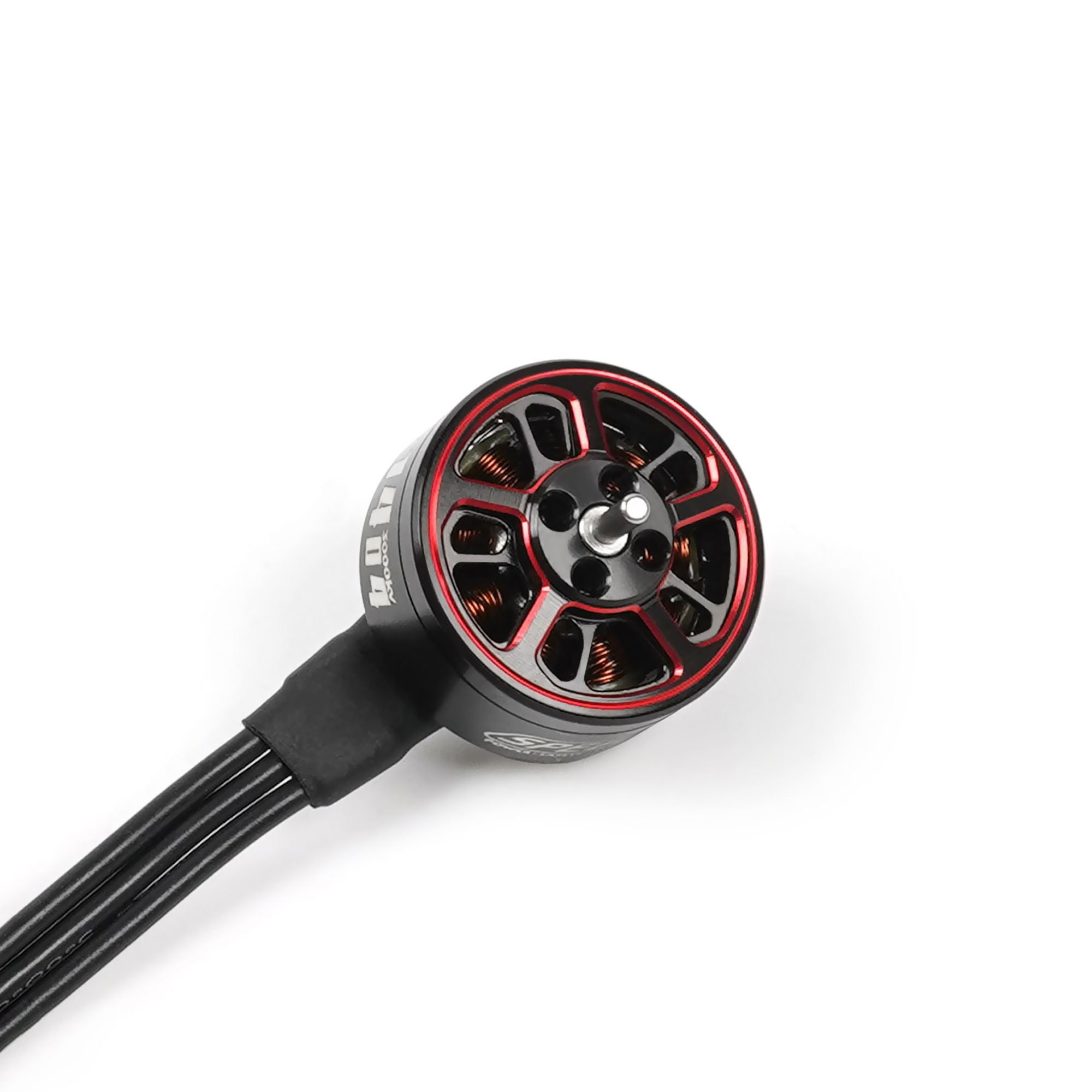
With props removed and the airframe secured, use the Motors tab to activate one motor at a time. Compare the spinning motor to the numbering diagram for your selected mixer. An ESC connector or motor output can be remapped during a repair. A quad with four healthy motors can still flip immediately if Betaflight commands the wrong corner.
Step 3: Confirm the actual rotation direction
Check every motor against the selected normal or reversed motor-direction diagram. Do not assume that a previous props-out setup survived an FC reset. If direction is wrong, correct it using the appropriate ESC or motor-direction workflow and retest with props removed.
Step 4: Install the correct propeller on each corner
Match propeller pitch orientation to motor rotation and confirm the propellers will push air downward. Clockwise and counterclockwise props can look almost identical when placed on the bench. Check the blade’s leading edge and the manufacturer’s markings rather than relying on color.
Step 5: Inspect the hardware after a crash or rebuild
Look for a motor bell rubbing a frame screw, damaged winding, loose stack screws, soft-mount damage and wiring touching the gyro. If the problem started after replacing an arm or flight controller, concentrate on what changed. Do not mask a mechanical defect by raising filtering or altering PID gains.
Illustrated logic: where the command goes wrong
Betaflight estimates aircraft movement using the gyro, computes the required correction and sends updated outputs to the four ESCs. If a motor is mapped to the wrong output, the response can amplify rather than reduce the error. The same is true when the propeller spins in the correct direction but is mounted to produce upward rather than downward thrust. This explains why a quad may look perfect in the Motors tab yet fail immediately when actual props are installed. Changing PID terms would only hide the genuine mismatch.
| Component | Expected bench evidence | Failure clue |
|---|---|---|
| Gyro orientation | On-screen model follows hand pitch, roll and yaw | Movement appears reversed or on the wrong axis |
| Motor order | Each selected number spins the matching arm | A different corner activates |
| Motor rotation | Each bell matches the selected motor-direction diagram | One or more motors spin against the diagram |
| Propeller pitch | Blade geometry directs thrust downward | Prop is installed on the wrong motor or upside down |
For a second perspective on the system’s protections, review our Betaflight arming flag guide and motor mounting damage checklist.
What not to do
- Do not disable runaway protection just to force a takeoff.
- Do not perform powered propeller tests indoors or near people.
- Do not flash random CLI dumps from a different FC target.
- Do not assume a failed takeoff proves the ESC is dead.
When to investigate deeper
Once orientation, motor mapping, rotation and propeller direction all agree, inspect receiver inputs, vibration, gyro health and available Blackbox logs. If the failure only occurs during abrupt low-throttle recovery rather than initial lift-off, Dynamic Idle and ESC desync deserve a separate diagnosis: they are not the same problem as a quad that immediately flips at takeoff.
Frequently asked questions
Why do motors race when I arm without propellers?
The controller tries to correct an attitude error, but without propeller thrust the airframe cannot respond. Rising motor output on a prop-less bench test is not, by itself, proof of a bad PID tune.
Should I turn off runaway takeoff prevention?
No. Identify the configuration or hardware mismatch first. The protection is there to reduce the consequences of a dangerous takeoff.
Could the gyro be mounted 90 degrees off?
Yes. Verify the on-screen model’s response to hand movements and correct the alignment before flight.
Technical references
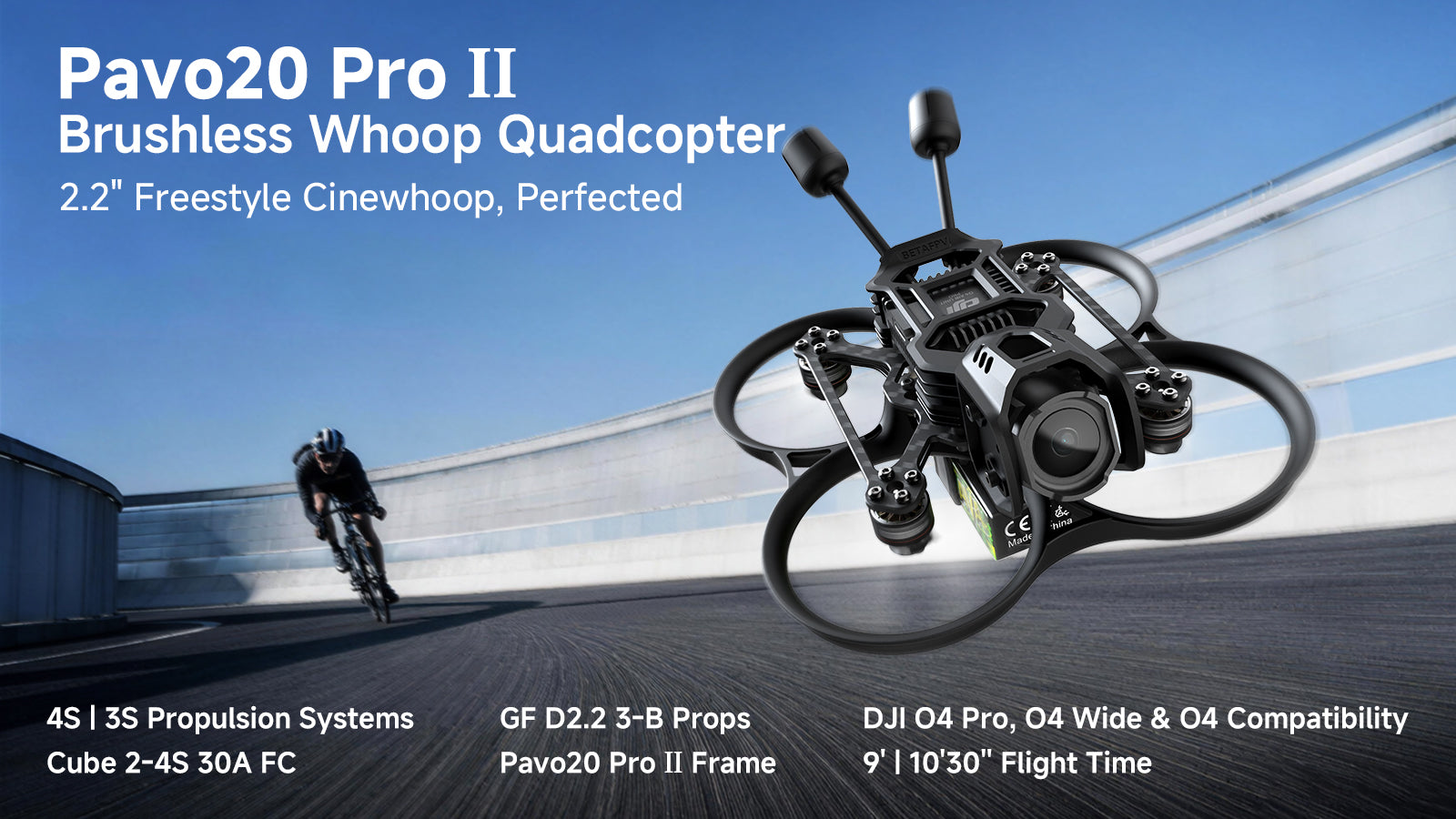
Betaflight official troubleshooting and Betaflight Dynamic Idle documentation. For replacement parts, browse FalconFly’s own product catalogue (related equipment: BETAFPV Pavo20 Pro II O4 Pro 3S ELRS) and verify fit against your airframe and motor specification.

















