


FPV Motor Size Explained: 0702 vs 1104 vs 1404 Beyond the KV Number

FALCONFLY UAV • EXPERT BUYING & TROUBLESHOOTING GUIDE
A first FPV build often starts with browsing motor labels such as 0702, 1104 and 1404. The numbers describe stator dimensions, not the complete aircraft class, and KV alone cannot tell you whether a motor will work with your battery or propeller. This guide explains the practical implications of stator volume, weight, shaft fit, efficiency and flight style.
Fast technical comparison
| Condition / model | Meaning or specification | Practical buying implication |
|---|---|---|
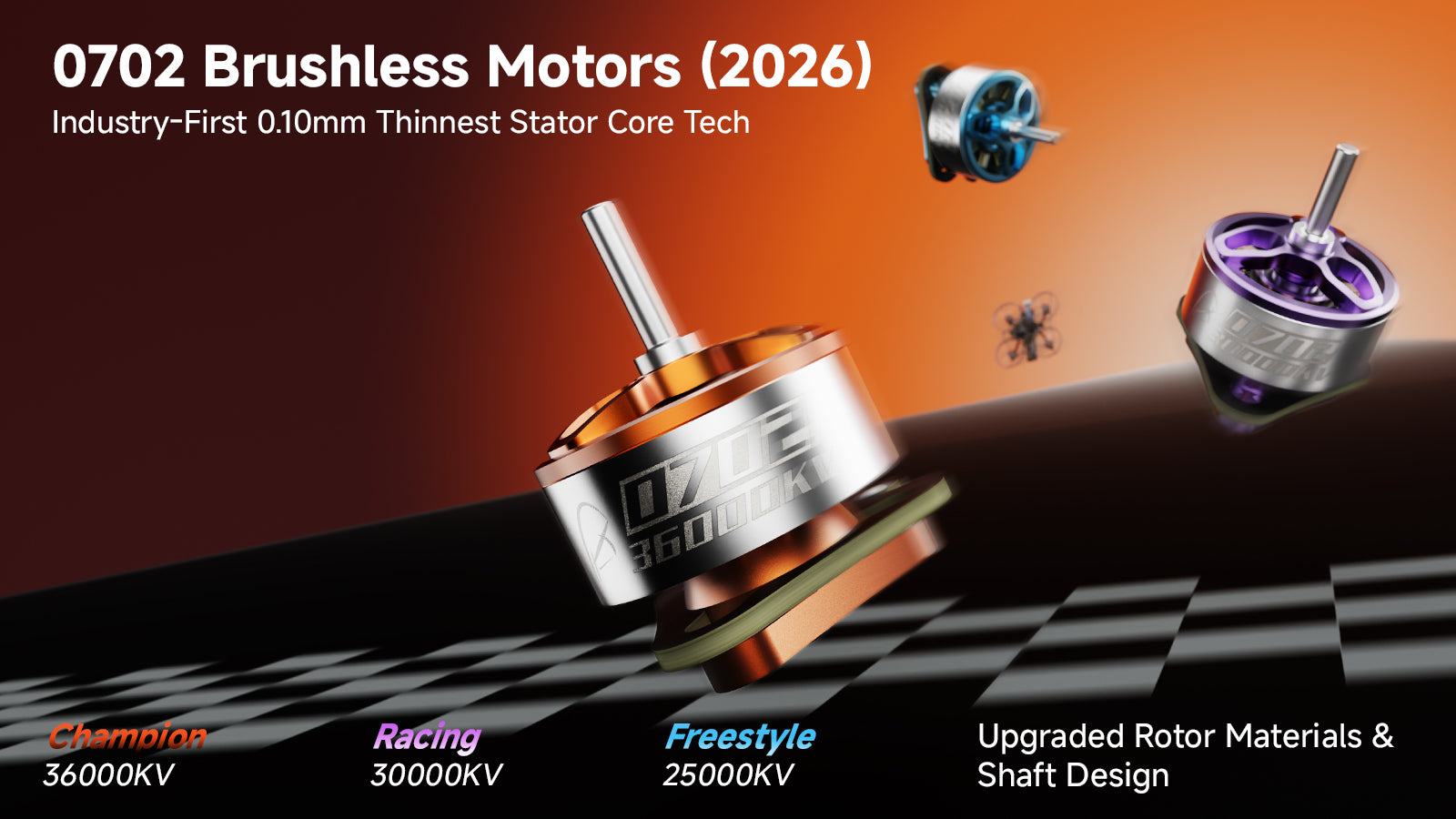
| 0702 | 7mm stator diameter, 2mm stator height | Ultralight micro/whoop applications |
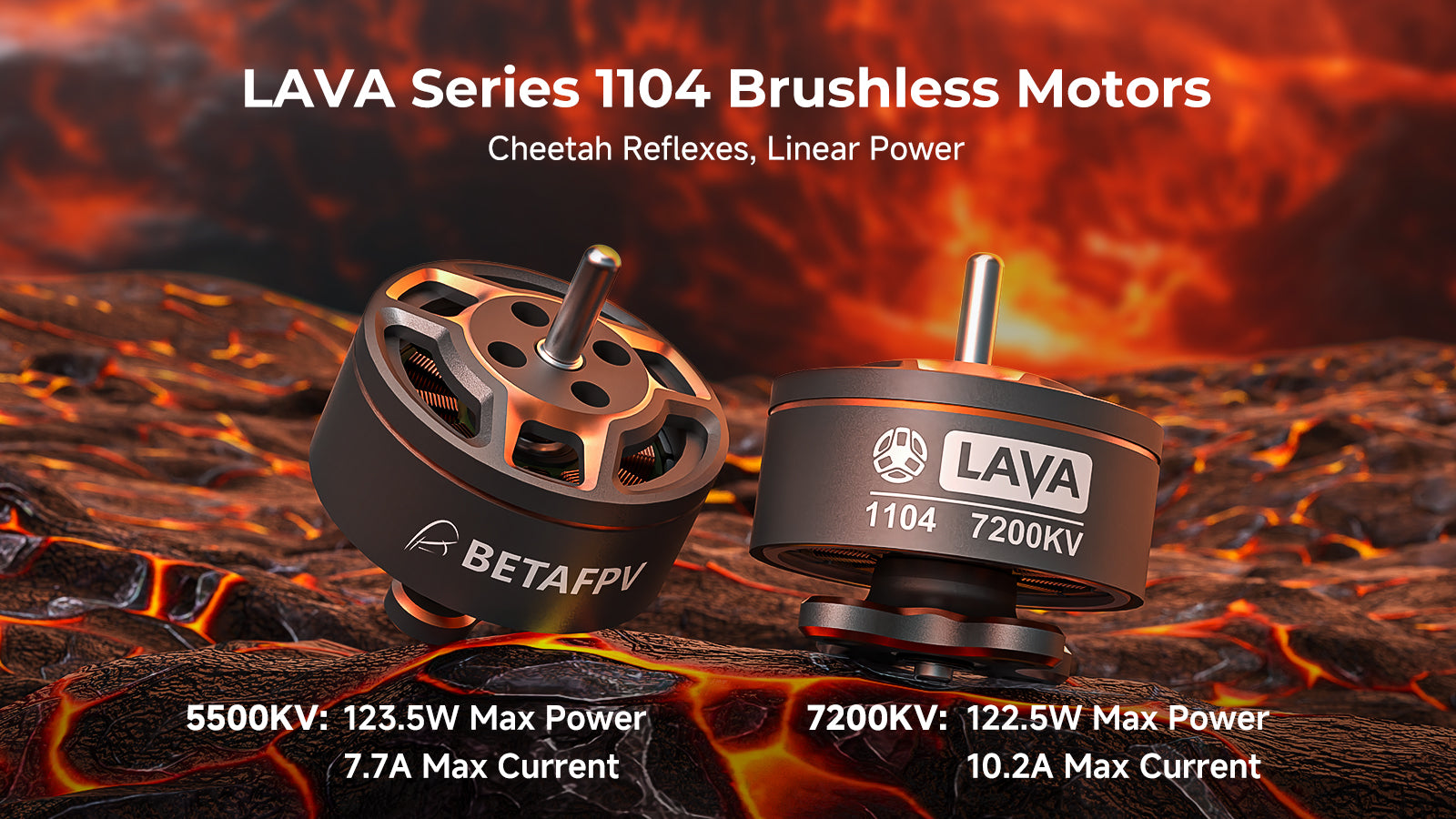
| 1104 | 11mm diameter, 4mm height | Small, efficient cinewhoop propulsion |
| 1404 | 14mm diameter, 4mm height | Heavier micro builds with more torque demand |
| KV | Approx. no-load RPM per applied volt | Must be assessed with prop and voltage |
1. How the motor code is constructed
In conventional small brushless motor nomenclature, the first two digits describe stator diameter in millimeters and the final two its height. A larger stator typically offers a different torque and thermal envelope, but winding design, magnets, steel, bearings and cooling also matter. Never infer exact current limits from dimensions alone.
2. 0702: the extremely light end of the spectrum
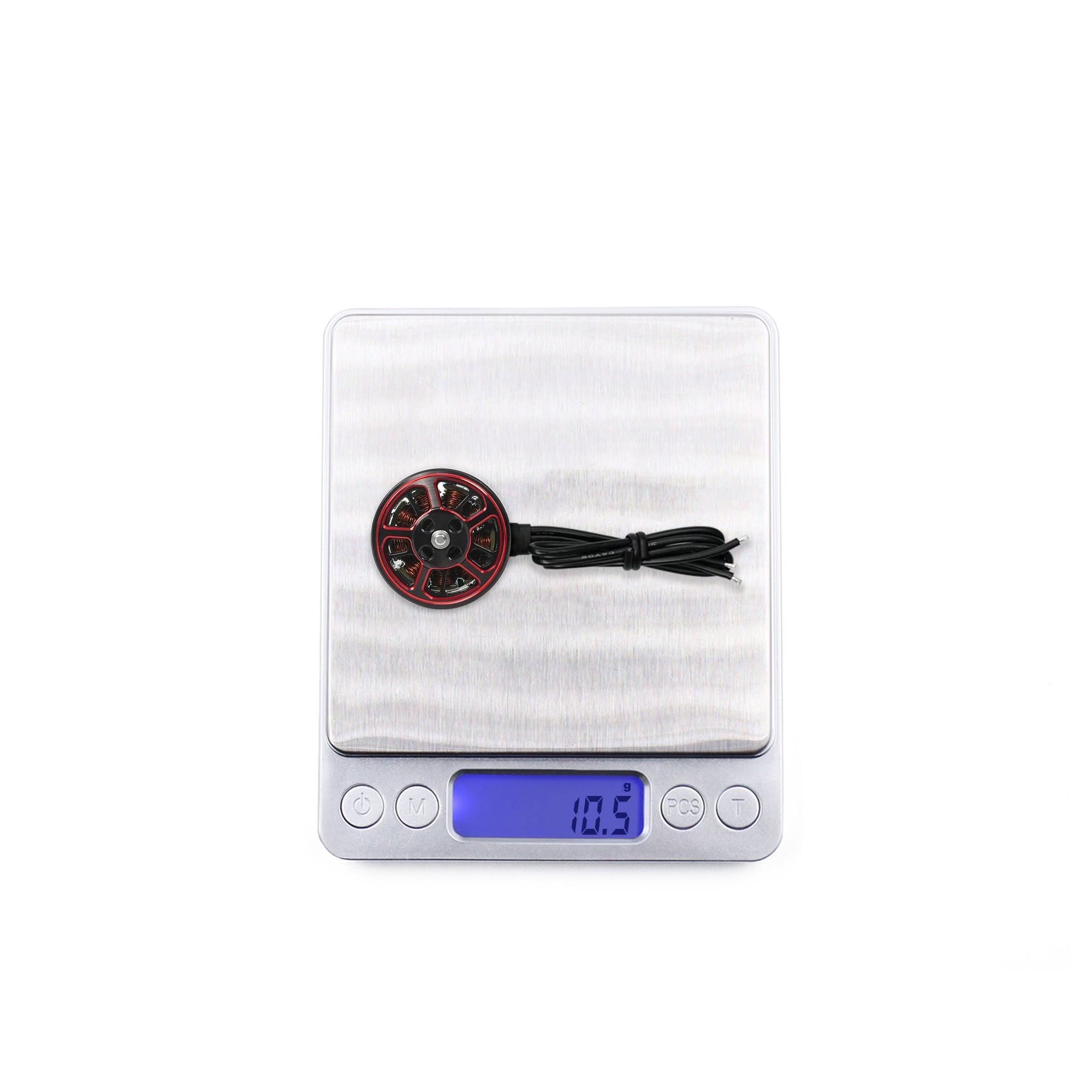
Small 0702 motors are found in highly weight-sensitive micro aircraft. They suit tiny propellers and battery systems specified by the builder, where adding grams can fundamentally change handling. Their limited thermal mass means impacts, bent props and aggressive loading can become obvious quickly. Use the product’s recommended prop diameter and battery chemistry rather than a rule borrowed from a larger drone.
3. 1104: an intermediate format with varied duties
An 1104 motor can serve lightweight 2–2.5-inch cinewhoop platforms, but KV and prop selection change the outcome. BETAFPV’s Pavo20 Pro II illustrates how the same stator size can have different KV ratings for 3S versus 4S variants. A higher KV label does not mean one variant must be faster in every real-world test.
4. 1404: larger stator, different mounting and heat behavior
A 1404 motor provides a bigger stator cross-section than an 1104, yet requires checking frame mounting holes, bolt sizes, shaft design and propeller compatibility. On a small frame, additional motor mass affects agility and available battery energy. For heavier camera platforms, the trade-off may be worthwhile if approved by the manufacturer.
5. Stator volume is a useful comparison, not a rating
An approximate cylinder volume scales with diameter squared times height. A 1404 has roughly 1.62 times the nominal stator volume of an 1104 (14²×4 versus 11²×4). This is only a geometry comparison; it is not 62% more guaranteed torque, efficiency or power.
6. Mechanical fit failures to avoid
Inspect mounting pattern, screw intrusion depth, shaft diameter and propeller hub. Screws that touch the windings can short the motor even if they feel mechanically tight. A motor that fits the carbon arm may still foul a duct or demand more clearance than the frame provides.
7. How to choose for a specific build
Start with your frame, propeller envelope, battery cell count and all-up mass. Find the airframe maker’s tested motor recommendation and compare supported thrust/current curves. Choose within the ESC’s verified limits, then test temperatures conservatively. Avoid matching components only by their size or maximum advertised output.
Safety and pre-purchase checklist
- Verify your precise product revision, connector, voltage rating and physical dimensions before ordering.
- Cross-check claims against the manufacturer’s current documentation; avoid relying on a generic listing photo.
- On any aircraft diagnostic, remove propellers, disconnect flight power before inspecting wiring and avoid touching hot components.
- Change and test one variable at a time, and keep a baseline to distinguish the true cause from a coincidence.
- Follow local UAE regulations and use a safe authorized site for any required flight validation.
Common questions answered
Is 1404 always more powerful than 1104?
Not in all contexts. Motor construction, KV, prop load, voltage and thermal conditions determine practical performance.
Can I replace 0702 with 1104 on the same whoop?
Usually not without extensive mechanical and electrical changes; verify the complete build.
Can I select a motor using KV alone?
No. Stator size, propeller, voltage, frame mounting and ESC limits must also be matched.
Technical reference: https://betafpv.com/products/pavo20-pro-ii-brushless-whoop-quadcopter. Always follow the current manual for your exact model and configuration.
FIELD NOTES • PRACTICAL APPLICATION
Geometry comparison without unrealistic power claims
A simple stator-volume proxy proportional to diameter squared times height helps visualize the gap. By this geometry, a 1404 stator has about 1.62 times the nominal volume of an 1104 and about eight times that of a 0702. This is not a torque rating: copper fill, winding resistance, magnetic circuit and motor cooling vary substantially. Treat this comparison as an explanation for physical scale, not as a motor-performance spreadsheet.
Build example: why the smallest motor cannot simply be upsized
Imagine a tiny whoop with lightweight 0702 motors and press-fit propellers. Changing to 1104 would require checking a different bolt pattern, larger stator and motor mass, an appropriate propeller and enough ESC current. Its small frame might not have the necessary mounting geometry or propulsion clearance. What looks like a quick power upgrade may really mean changing the aircraft class and the battery system.
Read thrust charts more critically
Manufacturer thrust curves are usually measured with specific propellers, voltage and test conditions. The peak thrust figure means little without associated current, electrical efficiency and temperature. For a camera platform, focus on useful hover and maneuvering ranges rather than a brief maximum-output point. Check shaft compatibility and motor screw depth before comparing KV. A component’s fit in the catalog is not a guarantee of system compatibility.

















