


ESC Desync vs Damaged Motor: Diagnose Sudden FPV Throttle Drops


A motor that jerks, momentarily stops or produces a harsh squeal during a throttle change might have lost synchronization with the ESC, but the same symptom can arise from a damaged winding, loose phase wire, bent bell or supply-voltage problem. Replacing the ESC immediately can waste money and leave a safety-critical defect unresolved. Start with physical inspection and non-propeller diagnostics rather than repeatedly forcing the failure in the air.
What ‘desync’ means
In a brushless setup, the ESC must commutate the motor phases in synchrony with rotor position. A loss of synchronization can interrupt torque, producing a sudden stumble or stop. High load, electrical noise, motor/ESC configuration and hardware damage can all contribute. A crash that causes one motor to drag mechanically may look similar to a software desync.
If a quad unexpectedly loses a motor during flight, discontinue flying until a cause has been identified. An uncontrolled multirotor may not remain airworthy on three motors.
Inspect for mechanical damage first
With power disconnected, rotate each bell by hand and compare resistance between motors. Inspect shafts, bearings, cracked magnets, wire insulation and screws that may touch the windings. Look for burned connector contacts or damaged ESC pads. Motor heat immediately after a normal flight can offer clues, but never run a suspected failed motor in order to warm it up for a test.
Compare the symptom against likely causes
| Clue | Investigate |
|---|---|
| One motor scrapes by hand | Bearing, bell or foreign material |
| Problem began after solder repair | Phase wiring and joint integrity |
| Several motors stumble as battery sags | Power path and battery condition |
| Only on aggressive throttle changes | ESC timing/configuration, tune and electrical load |
| Motor smells burnt or has damaged insulation | Stop use and replace/repair professionally |
Capture useful diagnostic evidence
Preserve blackbox data if supported and record the exact point of failure, battery, propeller type, ESC firmware and temperature. If ESC telemetry is available, compare motor RPM behavior during a benign, propeller-free diagnostic. Do not increase throttle or disable safeguards to reproduce a suspected failure. A motor anomaly is a higher-priority safety issue than tuning perfection.
What not to change blindly
Randomly changing ESC PWM frequency, timing, startup power or motor protocol can introduce new behavior. Work only from your ESC’s supported firmware documentation and keep the original profile backed up. If you suspect a single motor, compare known-good hardware under competent supervision with disconnected power during any rewiring. Avoid treating every twitch as a PID problem.
Return-to-flight gate
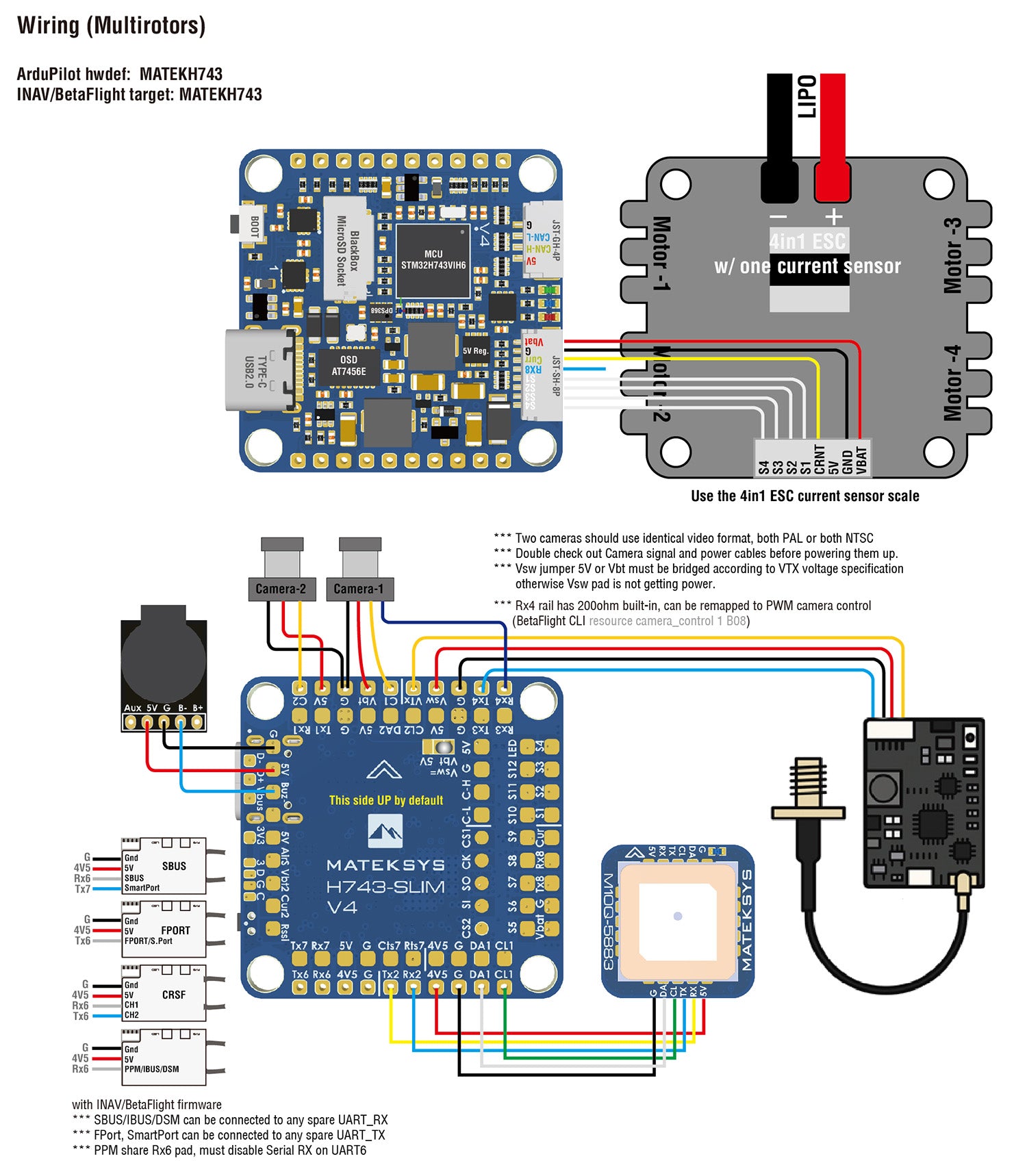
Require smooth mechanical rotation, sound phase joints, compatible ESC settings and repeatable safe bench results. Do not fly if one motor still exhibits jerking or unusual heating. Verify overall component ratings against this FC/ESC matching guide and correct the motor/prop electrical load if the system is overstressed.
Safety and ordering checklist
- Verify the exact model, revision and rated installation conditions.
- Document the original setup before making any configuration change.
- Keep propellers off during electronic or motor bench diagnostics.
- Do not ignore unusual heat, smoke, intermittent control or physical damage.
- Fly only when the aircraft is fully checked and local flight authorization permits it.
Differentiate desync from an ESC that is actually damaged
An ESC output stage may fail partially or completely, creating behavior that resembles a synchronization event. Visible burn marks, scorched odor or heat-damaged PCB traces are reasons to remove the stack from service immediately. A motor winding short can also damage a new ESC if it is attached without inspection. When replacing components, verify the cause of the first failure before installing a second unit.
Record which motor position exhibits the event and whether a mechanical rough spot is present when disconnected. Compare the actual physical motor temperature only after a normal safe flight has ended, without touching a hot or rotating part. A consistent anomaly in one corner directs investigation toward that powertrain branch.
Why aggressive filtering changes can mislead
Some pilots see an unexpected motor interruption and begin changing Betaflight filtering or RPM telemetry without confirming the motor and ESC health. A flight controller can request smooth output while the ESC fails to deliver torque because of a loose phase or commutation failure. PIDs cannot repair poor solder joints. Conversely, a mechanically intact propulsion system may show high-frequency oscillation from tuning; logging and repeatable symptoms help distinguish the cases.
Keep a backup of both FC settings and supported ESC firmware configuration before making any change. Never reduce safety features to force the aircraft to keep flying during an intermittent failure.
Frequently asked questions
Can too large a propeller trigger desync?
Excess motor load can contribute to commutation difficulty, but it is not proof that desync is the underlying problem.
Is a twitching motor always faulty?
No. ESC configuration, phase wiring and power stability can produce similar symptoms.
Should I fly again if the problem disappears?
Not until the cause is understood, repaired and safely validated on the bench.

















