An extra 2,048 Wh battery is attractive when a drone crew needs a longer day on location, but buying the expansion unit before checking the base station’s SDC port and firmware can be a costly mistake. DJI Power 1000, Power 1000 V2 and Power 2000 have different maximum extension counts, and Power 500 is not in the supported list.
Scope: This is the model-by-model DJI Expansion Battery 2000 compatibility, firmware and capacity guide. To first estimate the watts, watt-hours and charging workflow your drone operation needs, read our broader DJI Power field-charging planning guide.
Compatibility is model-specific, not determined by the brand name
DJI’s official store explicitly identifies Power 1000, Power 1000 V2 and Power 2000 as compatible hosts for Expansion Battery 2000. Power 500 is not supported. Some older FAQ snippets omit V2, but the newer product-page specifications and official Power 1000 V2 manual describe the expansion connection. Always use the instructions for your exact revision rather than treating an abbreviated FAQ as a full compatibility chart.
The expansion battery is not a general-purpose standalone AC generator. It connects to the host power station via a designated cable. The host manages AC output and charging; the expansion module increases the energy pool. Buying only an expansion battery therefore does not replace owning a compatible main station. For product-specific details, see the DJI Power Expansion Battery 2000 product page.
Capacity calculation for a real field setup
A Power 1000-class station begins at approximately 1,024 Wh and each Expansion Battery 2000 adds 2,048 Wh nominally. The first expansion creates 3,072 Wh nameplate capacity; five expansions bring a Power 1000 or V2 system to 11,264 Wh. Power 2000 starts at 2,048 Wh and supports up to ten expansion batteries for 22,528 Wh nominally. These are stored-energy figures, not delivered AC energy.
To estimate runtime, divide the realistically usable Wh after conversion and temperature losses by the average steady load in watts. For example, a notional 3,072 Wh setup with 80% end-to-end usable energy and a continuous 300 W load yields around 8.2 hours. Real loads and power station management reduce the precision of such estimates.
Correct cable and port arrangement
The current DJI documentation specifies the SDC connection rather than the SDC Lite port on a Power 1000-class host. The expansion unit provides upper and lower SDC connectors that support the designated arrangement of host station, expansion batteries and certain approved chargers. Observe the ordering diagram in the manual; do not infer compatibility by physical connector appearance alone.
For the original Power 1000, DJI instructs users to update to the latest supported firmware through DJI Assistant 2 before using an expansion battery for the first time. Power 1000 V2 and Power 2000 have a different setup requirement according to DJI’s newer product listing. Verify the latest support page immediately before connecting.
Host power station
Expansion Battery 2000
Maximum modules
DJI Power 1000
Compatible; firmware update first
5
DJI Power 1000 V2
Compatible
5
DJI Power 2000
Compatible
10
DJI Power 500
Not supported
0
What actually changes when you add capacity
More batteries extend energy storage but do not automatically create limitless inverter power. Host AC output is bounded by its model and operation mode. DJI states that the Expansion Battery 2000 can improve supported continuous output capabilities with certain host models under laboratory conditions; use the actual host/accessory combination rating and temperature limitations rather than the expansion battery capacity alone.
A drone battery hub that demands 600 W still demands roughly that electrical power whether the station has one battery or five. For high-current charging, total station power limits, hub input limitations and efficiency are still the first constraints.
Choose the expansion plan before buying
For a two-hour outdoor shoot, a single station and carefully budgeted spare batteries may be the most portable option. For multi-day off-grid production, compare additional expansion batteries with a larger base station, available mains/vehicle/solar charging and team transport capacity. Adding capacity can lower charging interruptions but adds mass, volume and more connectors to manage.
Record a simple power budget per device, expected hours and recharge window. That calculation often matters more than an impressive maximum-Wh headline. Keep the station shaded and ventilated in UAE heat, within DJI’s documented ambient operating conditions.
Field takeaway
Record a simple power budget per device, expected hours and recharge window. That calculation often matters more than an impressive maximum-Wh headline. Keep the station shaded and ventilated in UAE heat, within DJI’s documented ambient operating conditions.
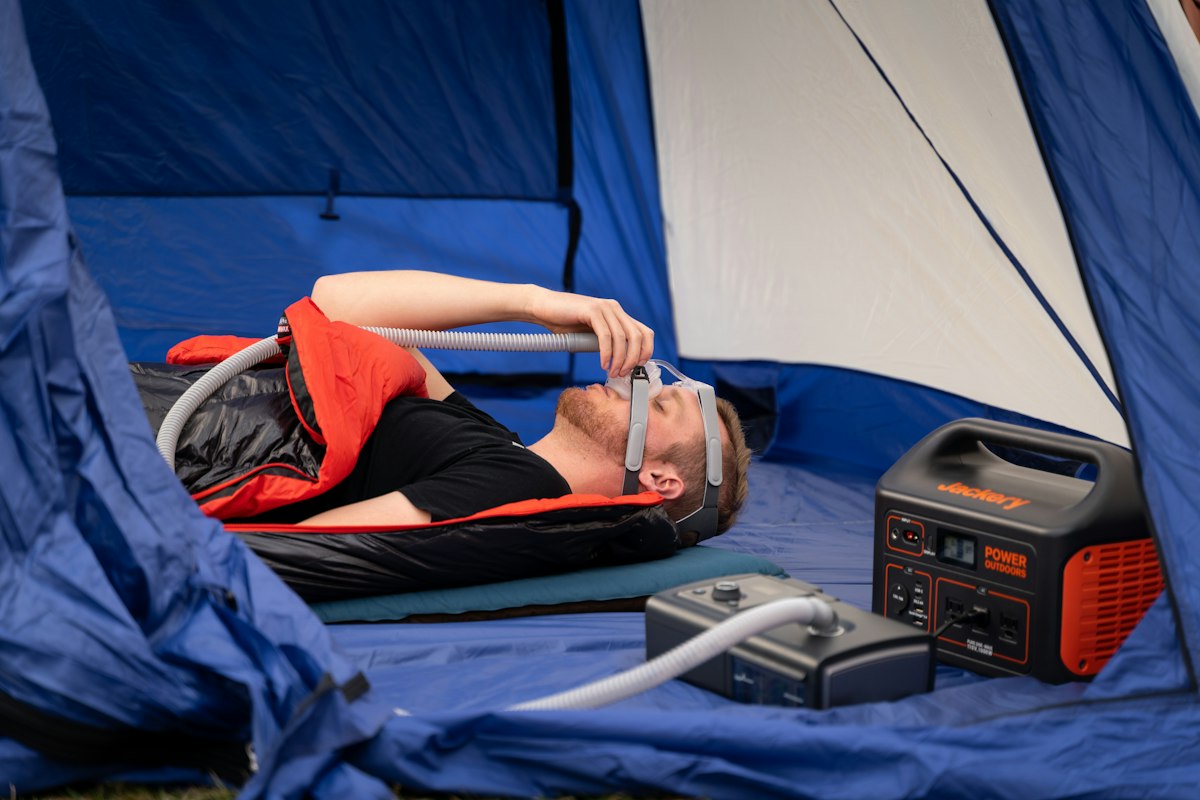
Illustrative power station, not a photograph of DJI Expansion Battery 2000.
Read the exact host model before buying any expansion battery
The expansion module is not a self-contained wall-outlet power station. It is an additional energy store that connects to a supported DJI Power host through the designated expansion cable. According to DJI’s current store compatibility information, Power 1000, Power 1000 V2 and Power 2000 can use Expansion Battery 2000. The Power 500 is not listed as a compatible host. Some older DJI FAQ text mentions only Power 1000 and Power 2000, so a customer reading one cached page may reach a different conclusion from a newer store compatibility chart. Confirm the exact SKU and current official instructions before paying.
Inspect which port the host provides. The expansion uses the proper SDC connection, not the SDC Lite connector. A connector that looks related is not evidence that a different port is electrically or logically suitable. Use the designated original cable, respect the specified chain arrangement and avoid improvised extension or adapter wiring. Do not use a third-party cable simply because it fits. When connecting multiple modules, use the connection order in the appropriate DJI manual and secure the equipment against being pulled off a work surface.
Understand the different firmware prerequisites
DJI specifies an additional preparation step for the original Power 1000: update its firmware through the appropriate DJI Assistant 2 desktop procedure before the expansion is used for the first time. The current product information does not impose that same DJI Assistant 2 connection step on Power 1000 V2 or Power 2000. This distinction is important when customers buy a used original station and a new expansion battery. Do not assume the expansion is defective because a host with old firmware refuses to recognize it.
Record the current firmware and read the relevant manual before making changes. Perform updates using reliable power, with an appropriate cable and a computer that meets the tool’s requirements. Do not disconnect the unit in the middle of a firmware procedure. If the host later identifies the expansion but does not deliver expected output, distinguish recognition and communication from inverter limits and downstream load requirements. They are different classes of fault, and neither should be diagnosed by experimenting with unapproved cable arrangements.
Compute capacity for a real equipment list
Each expansion module stores a nominal 2,048 Wh. A Power 1000-class station begins at approximately 1,024 Wh, so one expansion produces about 3,072 Wh nominal total, and five expansions yield DJI’s quoted maximum of 11,264 Wh. Power 2000 starts at 2,048 Wh and, with ten modules, reaches 22,528 Wh. These figures describe nameplate energy storage, not usable energy at an AC outlet. Inverter conversion, temperatures, battery-management limits and the varying efficiency of chargers all reduce energy actually delivered to connected equipment.
For a simple planning calculation, assume an illustrative 80 percent end-to-end usable fraction, without treating it as a fixed DJI guarantee. A nominal 3,072 Wh configuration then gives around 2,458 Wh usable. A steady 300 W equipment load would theoretically run for about 8.2 hours. Real cameras, charging hubs and tools are not always steady loads, so log actual wattage during a typical job. Use realistic demand rather than labeling every connected charger by its maximum advertised input.
More stored energy does not remove output limits
Customers sometimes expect each expansion battery to multiply the available AC wattage. Capacity and output power are different specifications. The base station’s inverter and its model-specific supported operating mode determine the power it can supply continuously. DJI’s official product notes describe certain higher supported continuous-output ratings with an expansion attached to a Power 1000 or 1000 V2, but those are stated for specified combinations and laboratory conditions. Do not extrapolate them to every power station, ambient temperature or battery count.
A drone-battery charging hub that needs several hundred watts still demands that power while running. Adding storage extends how long the hub can operate; it does not automatically make the hub charge faster. The hub may also limit its own charging rate depending on the batteries’ state of charge, cell temperature and selected mode. For a team charging multiple aircraft at a field location, measure aggregate draw and leave reasonable margin for startup and peak events. If the output overloads, reduce concurrent demand instead of assuming the expansion is faulty.
Temperature, mass and transport change the economics
The Expansion Battery 2000 alone weighs approximately 16.5 kg according to DJI’s specification, so a multi-module setup quickly becomes substantial field equipment. That affects vehicle loading, carrying by staff and the stability of stacked units. Use the designated mounting hardware where required and follow DJI’s ventilation and spacing instructions. Keep all equipment within the manufacturer’s ambient operating limits. An enclosed vehicle in UAE summer heat is a poor default location for power equipment, even if it appears shaded from direct sun.
Storage temperature and charging temperature limits are not interchangeable: a battery may be allowed to be stored under conditions in which charging is not permitted. DJI lists distinct environmental ranges for power supply, charging and storage. Do not charge a battery that is too cold or too hot merely because it still displays remaining energy. For remote shoots, reserve room for cooling and weather protection, and avoid extended salt fog or moisture exposure. Reliability matters more than maximizing a headline battery capacity in an unsuitable environment.
Use a purchasing worksheet instead of guessing battery count
List each planned consumer: drone charging hubs, a laptop, live monitor, communications equipment and any lighting. Estimate average watts, maximum simultaneous watts, daily hours and the recharge opportunities available between sessions. A crew with mains access during lunch may need fewer expansion modules than a crew working continuously without grid power. Compare the weight, bulk and total purchase cost of extra expansions with a larger base station or additional independent power stations. Independence can also reduce the impact of one equipment fault.
Before purchasing, verify host compatibility, required cable, current firmware, permitted battery count and electrical limits against official DJI information. Decide how equipment will be secured during travel and whether operators can safely lift it. For users who need uninterrupted computer or network operation, also distinguish a portable power station’s transfer behavior from an online UPS. Storage capacity alone does not guarantee zero interruption when mains power fails; check the actual load and transfer requirements rather than relying on a generic ‘backup power’ label.
Frequently asked questions
Does Expansion Battery 2000 work with Power 1000 V2?
Yes. DJI’s current store compatibility notes and Power 1000 V2 manual explicitly support that pairing.
Can I use SDC Lite instead of SDC?
No. DJI specifies the full SDC connection for the expansion battery.
Does a larger battery multiply the maximum AC output?
Not generally. The permitted output depends on the exact power station, accessory combination and temperature conditions.
Always verify model, firmware and regional operating requirements using the manufacturer’s current instructions. Forums can highlight symptoms, but they are not a substitute for the official safety procedure.