


Flying Drones Near the Sea in Dubai: Sand, Salt and Heat Maintenance


Beach filming introduces a different maintenance problem from an ordinary dry-land flight. Fine sand can migrate into motors and camera joints; airborne salt can accelerate corrosion; humidity can create condensation when equipment moves between cold indoor air and the outdoor heat; and a parked car can overheat batteries long before the first takeoff. None of these risks requires the aircraft to fall into seawater. This field guide covers prevention, early symptoms and the safe point at which cleaning should stop and professional service should begin.
1. Before you leave the workshop: exposure planning
Check the weather, coastal wind and local flight permissions before planning any beach operation. Flying over uninvolved people, roads or restricted zones can be unlawful even if the drone can physically do it. Pack a clean landing mat so the aircraft does not start or land directly in loose sand. Bring a lens cloth, protective case, a clean dry soft brush recommended for the equipment, and separate compartments for used and fresh batteries. Keep bags closed between flights so wind-blown sand does not coat unused equipment.
Inspect all motor bells, propeller roots and camera tilt axes while the drone is still in a clean environment. A grain caught in a rotating part can create vibration, and an already-damaged motor bearing is more vulnerable to contamination. Install only manufacturer-approved propellers and accessories, and protect exposed connectors without blocking ventilation.
2. Salt spray is different from visible splashes
Salt-laden moisture can settle on metallic terminals and small circuit-board areas, then contribute to conductive deposits and corrosion over time. Wind direction and distance from breaking waves matter. A drone may look dry after flight while its exposed connector housings have been exposed to aerosolized salt. Wipe accessible exterior surfaces gently according to the aircraft manufacturer’s cleaning guidance; avoid blowing contamination deeper into bearings or connectors with excessive pressure.
Do not rinse an ordinary non-waterproof drone under a tap. Do not spray lubricant into a motor or gimbal to ‘flush’ salt out: many chemicals attack plastics, adhesives or electronic parts. If seawater actually enters electronics or the battery, disconnect the system when safe, do not try repeated power-ups, and consult a qualified service provider. A saltwater-exposed lithium battery is a separate fire and disposal concern.
3. What fine sand does to FPV hardware
| Component | Warning sign | Next action |
|---|---|---|
| Brushless motor | Grinding, unusual drag, visible particles | Stop; inspect without power and seek correct service |
| Camera and gimbal | Stiff movement, tilt errors, focus problems | Do not force the joint; follow approved cleaning |
| ESC and FC | Dirty cooling path, residue on exposed PCB | Disconnect and inspect professionally if contaminated |
| Battery connector | Grit, pitting, discoloration | Remove from service until verified safe |
| Cooling vents | Restricted airflow | Clean only as the manufacturer specifies |
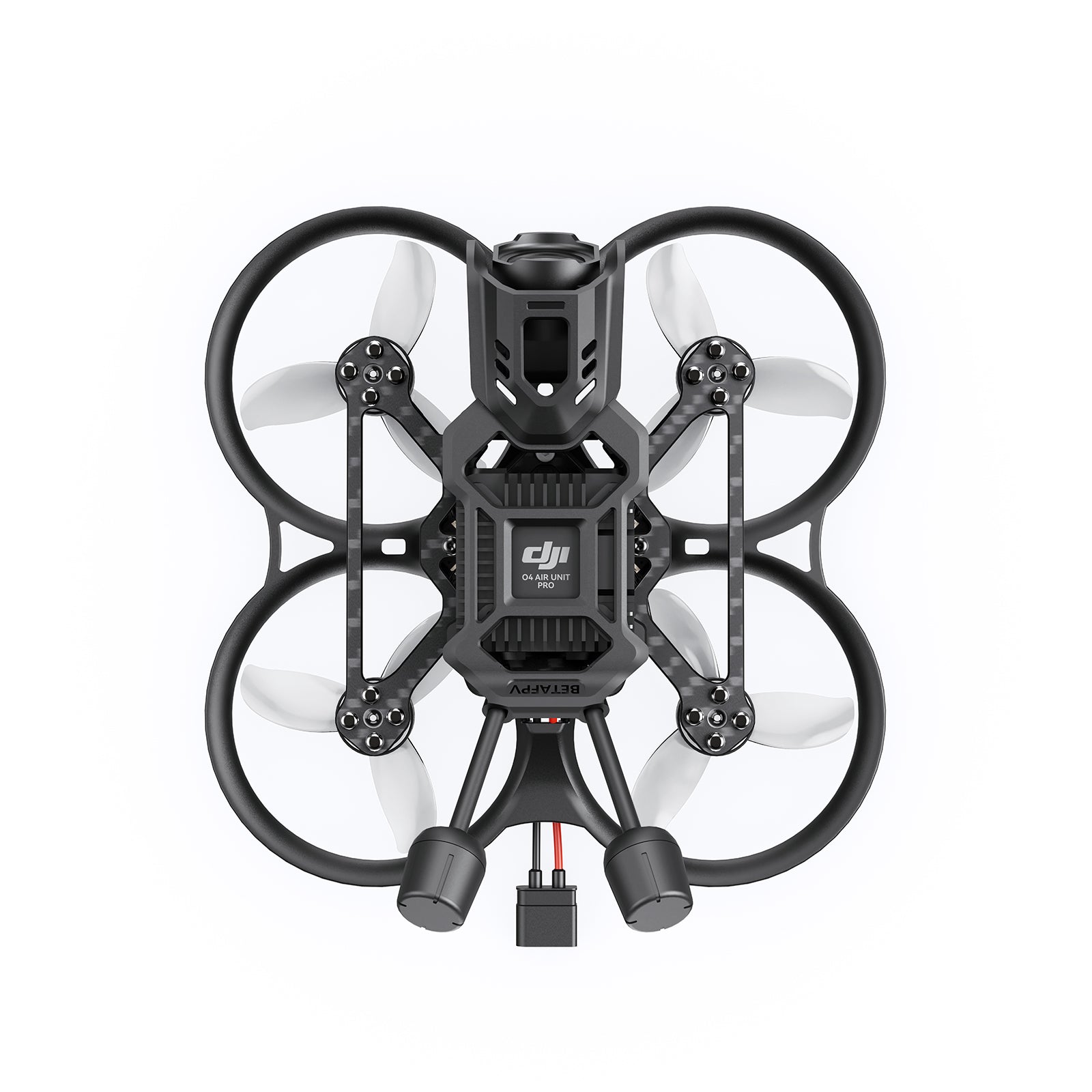
On ducted cinewhoops, sand can collect along duct edges and camera brackets. A tiny particle stuck where a propeller nearly touches the guard may produce buzzing or video jello. Listen for mechanical changes after a flight and reject any chipped propeller, especially before the next high-speed run.
4. Condensation when leaving air-conditioning
Moving a cold drone from a heavily air-conditioned room or vehicle into hot, humid outside air can lead to condensation on cold surfaces. Do not assume that electronics are safe to energize immediately. Keep equipment protected during transitions and allow it to reach suitable conditions before powering on, consistent with the model’s operating limits. If moisture is visible in the lens or connectors, postpone the flight rather than trying to clear it by running the motors.
Storage protection differs from waterproofing. A tightly sealed bag can keep out sand during transport but also trap moisture if a wet aircraft is packed inside. Inspect and dry cases according to material compatibility, and avoid storage in a baking-hot car.
5. A five-minute post-flight sequence
- Power down safely and remove the battery; separate the aircraft from loose sand.
- Inspect propeller tips, motor housings and frame edges visually; do not spin a grit-contaminated motor at speed.
- Check accessible camera and connector surfaces for residue, moisture or damage.
- Clean with a soft, manufacturer-approved method and avoid water exposure to unsealed electronics.
- Check pack temperature, physical condition and latch security before storing or charging.
- Write down anomalies for the next workshop inspection rather than hiding them with a firmware reset.
6. When replacement beats cleaning
Grinding bearings, discolored contacts, repeated gimbal overload warnings, swollen batteries, damaged seals or visibly corroded connectors are reasons to suspend use. A unit that powers on after contamination is not necessarily safe for flight; corrosion can progress beneath components. Document the exposure and affected hardware, and have a competent service center assess it. Do not ship compromised batteries in ordinary parcels.
Practical scenario: sunset filming from a beach
For a two-hour coastal session, lay out the landing mat on firm clean ground away from breaking surf and sand gusts. Keep spare packs in a shaded insulated case within manufacturer storage limits rather than on hot concrete. Use a spotter to monitor people and obstacles. After each sortie, pause to check the airframe for particles and battery heat instead of turning around immediately. Once indoors, inspect again before placing electronics in a closed storage case. Operational discipline generally saves more hardware than any ‘waterproofing spray’ applied after the damage.
Frequently asked questions
Can I use compressed air to blast sand from a motor?
High-pressure air can push abrasive material deeper into a bearing or electronics. Follow the manufacturer-approved cleaning method, or obtain service when contamination is significant.
Is a drone safe after it briefly touches seawater?
Do not assume so. Power down when safe and arrange professional inspection; water-damaged lithium batteries need special handling.
Should I charge a pack immediately after a hot coastal flight?
No. Follow its permitted charging-temperature range and let it cool naturally in a safe environment.

















