


Betaflight Turtle Mode Won’t Flip Your FPV Drone? Diagnose It Safely

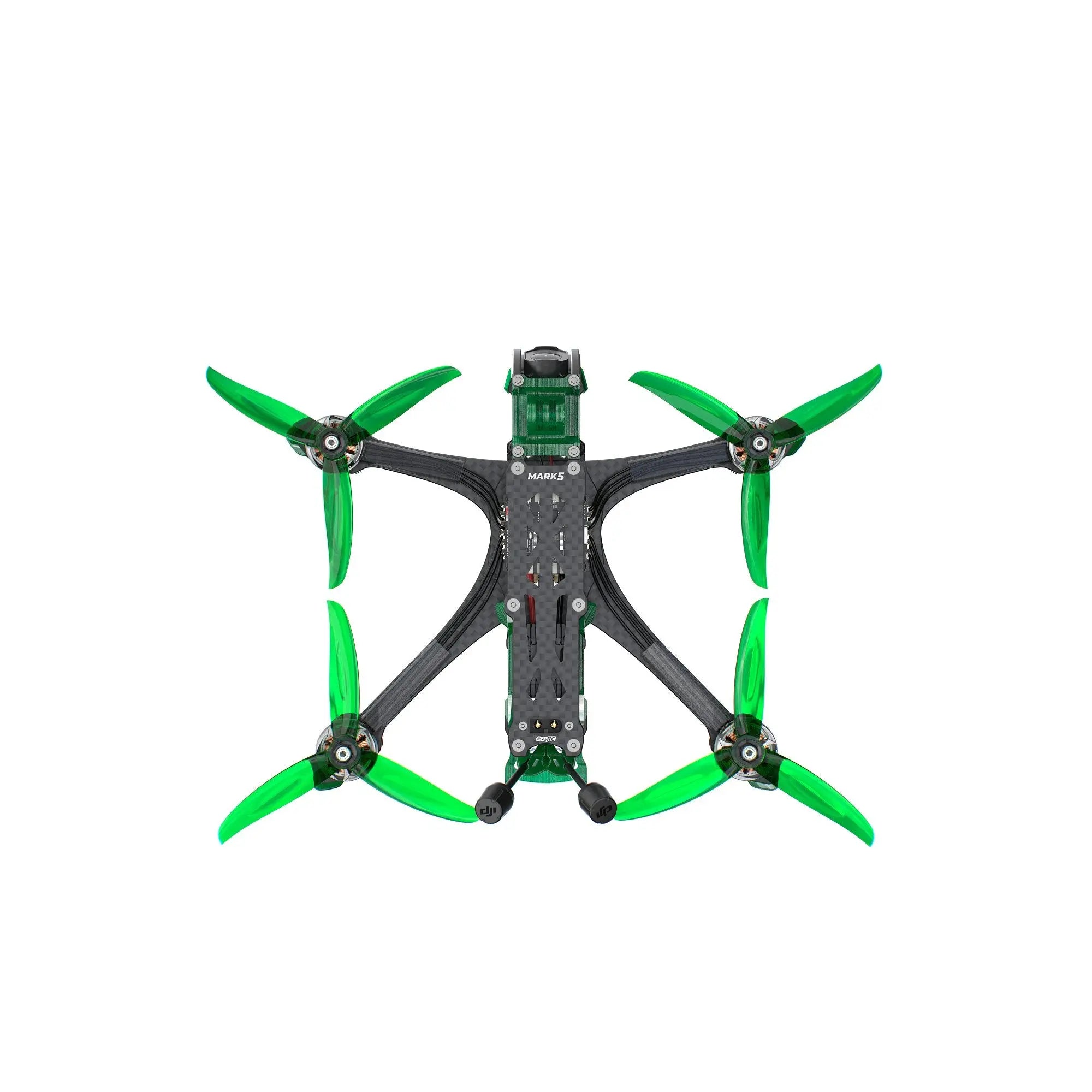
You land upside down in grass, flick the turtle-mode switch and nothing happens. Or the motors twitch and the quad rotates in the wrong direction. On a clear bench it would be tempting to keep raising the throttle until it moves. In the field, that is exactly how a stuck propeller overheats a motor or ESC. The safe solution is to distinguish a configuration problem from a physically obstructed aircraft before commanding another flip.
First question: can the propellers rotate freely?
From a safe distance, inspect whether the propellers are buried in grass, wrapped around a cable or pressed firmly into soil. Turtle mode reverses selected motors to roll the aircraft upright; it is not designed to force tangled props through an obstruction. If you cannot establish that the rotors are clear, retrieve the drone manually after making the scene safe. Never use the function near people or a loose camera strap. Disarm immediately if the craft fails to move or the motors stall.
Confirm the correct Betaflight mode and motor protocol
Betaflight calls the feature Flip Over After Crash. It needs a compatible digital motor protocol such as DShot. In the Modes tab, the assigned auxiliary channel should enter the mode’s active range only when intended. Check receiver input in the Receiver tab before assuming the switch position is being transmitted. The arm switch, pre-arm logic and maximum-arm-angle protection can also affect behavior depending on firmware and configuration. Back up the FC configuration before modifying safety-related settings.
Why the aircraft may spin rather than flip
A wrong motor order, misidentified flight-controller orientation or incorrect prop/motor setup can produce surprising movement. A damaged propeller may grip the ground instead of pushing the airframe toward its intended direction. Recent Betaflight versions add crash-flip controls such as rate limitation, but their defaults and availability depend on the installed firmware. Don’t paste a configuration from an unrelated drone. Compare the aircraft diagram with what the FC thinks is front and right.
Use this fault-isolation table
| Symptom | Likely place to look first | Safer action |
|---|---|---|
| Switch does nothing | AUX channel and mode range | Test receiver movement with props removed |
| No reverse thrust | ESC protocol or motor configuration | Verify DShot and supported firmware |
| One motor growls | Jammed prop, winding or ESC fault | Disarm and retrieve manually |
| Craft flips the wrong way | FC orientation or motor order | Bench-check props off |
A field routine that prevents repeat damage
Practise the switch workflow with an instructor and props removed before attempting a controlled recovery at a suitable site. After a real crash, inspect motor bells, frame arms and battery retention before flying again. Turtle mode may save a walk, but recovering a drone with a cracked arm or loose battery is not a successful recovery. If a motor became unusually hot during the attempt, stop and inspect the propulsion system rather than immediately arming for another flight.
Example: the upside-down drone on a soft football pitch
A pilot crashes on flat grass, sees the camera still transmitting and assumes recovery should be automatic. The quad is partly buried, however, with two propellers pressed against the turf. The correct decision is not to keep applying motor power. The pilot disarms, retrieves the aircraft only when it is safe, and checks the propellers for bending and contamination. At the bench, the same pilot can test the mode’s AUX switch with propellers removed and confirm that the receiver and configurator agree. This separates the earlier field obstruction from the software setting, which may have been fine all along.
A failure to flip is therefore not a single diagnostic category. It can be a missing input, incompatible motor protocol, blocked rotor, incorrect FC attitude or a safety interlock. Record which of those you actually observed. Where the feature is supported, the exact firmware’s documented crash-flip settings should be used rather than copying an aggressive throttle value from another frame.
When replacement parts—not settings—are the answer
If a crash broke an arm, motor mount or blade, do not use turtle mode as a workaround. Inspect the frame and propulsion hardware before further operation. For examples of a suitable complete FPV airframe and replacement structure, compare FalconFly’s MARK5 O4 Pro with the matching frame kits. A correct software mode cannot compensate for damaged mechanical parts.
Questions customers ask
Can Turtle Mode work with analog PWM ESC protocols?
The Betaflight feature requires compatible DShot-based motor control; it is not a universal feature of all ESC protocols.
Should I enable automatic re-arming after a flip?
That can introduce unexpected takeoff risk. Keep deliberate manual control unless you fully understand and can safely manage the feature.
Can Turtle Mode release a drone stuck in a tree?
Do not use motor thrust against obstructed propellers. Retrieve the drone safely instead.
Betaflight arm flags · motor direction after repair · post-crash inspection
Technical reference: official documentation.

















